Why Winter is Hard for Construction
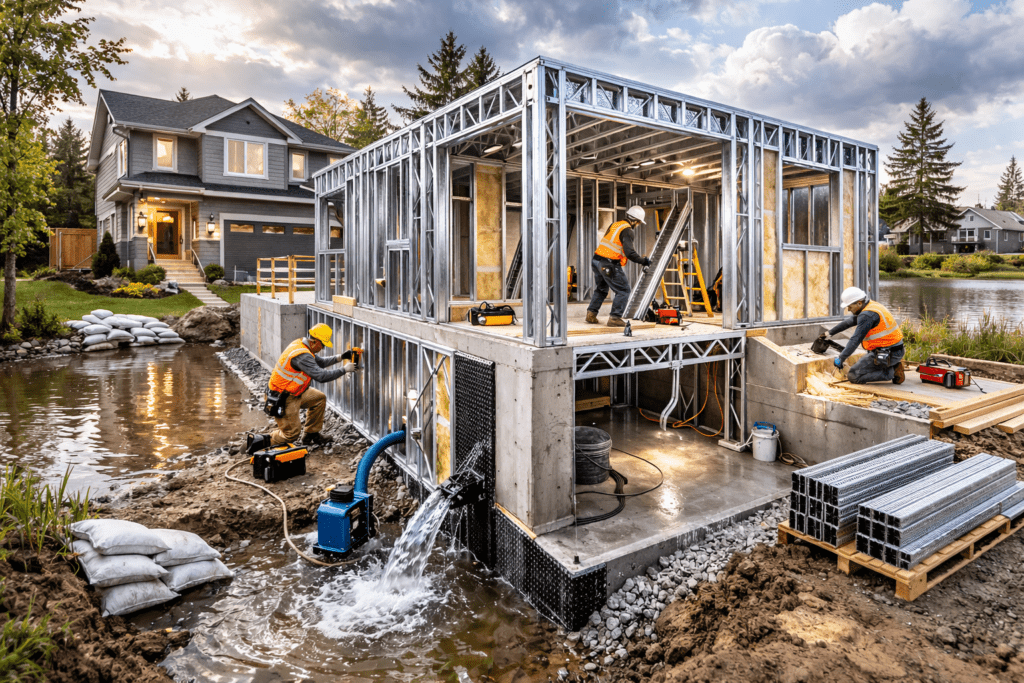
Canadian winters bring subzero temperatures, snow and ice that slow jobs and drive up costs. Outdoor tasks take longer in heavy winter gear, as crews must clear snow and warm up equipment before work. Major snowfalls can shut down sites for days, eating into schedules and budgets. Even simple concrete pours get trickier: a pour taking two days in August may need extra days, heated enclosures and higher labor in November. Interior work often stalls too, since crews may have to halt work until the structure is enclosed. All these factors make winter one of the most difficult seasons for construction.
Cold-Formed Steel Framing in Freezing Conditions
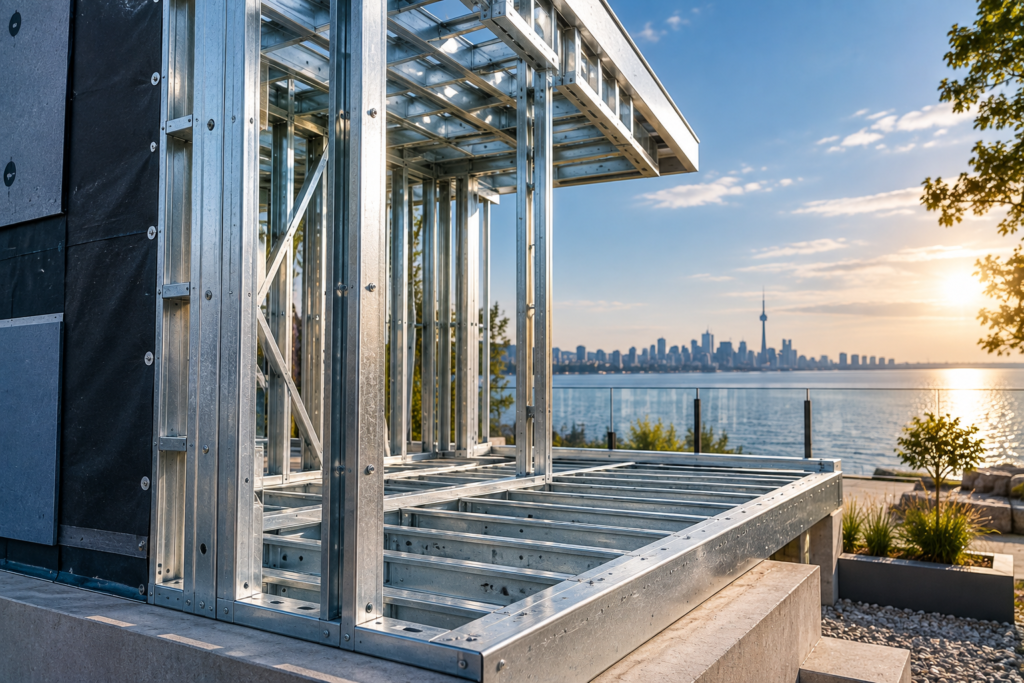
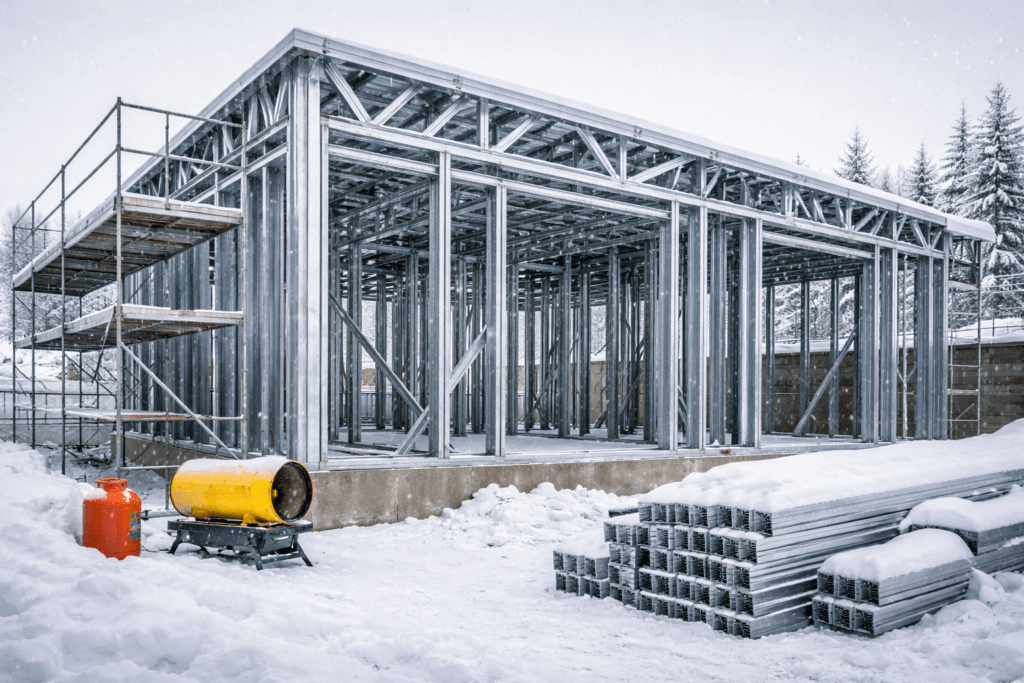
Cold-formed steel framing (CFS) is inherently resilient in cold, damp environments. Steel studs and tracks remain dimensionally stable in freezing weather: they do not warp, twist or split from moisture or temperature changes. This means framing stays true to design tolerances under ice and snow. Unlike concrete or lumber, cold-formed steel needs no warm cure time. As the Steel Framing Industry Association notes, CFS “does not require certain temperatures to dry, set or cure”. Contractors have even erected entire steel-framed buildings in –20 °C without heaters, maintaining progress when other methods stall.
Cold-Formed Steel Framing vs Wood and Concrete
Compared to wood and concrete, cold-formed steel excels in winter. Wood framing absorbs moisture and can swell or warp as it dries. Lumber under heavy snow or ice may bend or crack, and accumulated moisture risks rot and mold. In contrast, steel holds its shape and strength regardless of weather. Concrete and masonry face even bigger issues: fresh concrete cannot be allowed to freeze during its initial 24-hour set time. If the cement-aggregate bond fails, ice formation can cause cracks and drastically reduce strength. To prevent this, builders often add admixtures, warm water or insulated blankets for curing. Steel framing has none of these constraints – walls go up year-round without special additives or enclosures.
Practical Winter Advantages of Cold-Formed Steel Framing
No special curing or heating: Cold-formed steel requires no minimum temperature to install. Unlike cast-in-place concrete (which needs heated tents to cure) or chemically treated masonry, CFS framing goes up without extra heat or waiting. This cuts winter heating bills and labor costs, keeping projects on budget.
Dimensional stability: Steel studs and joists stay true to size in any weather. CFS “will not warp, split, crack or creep when exposed to the elements”. By contrast, wood shrinks and swells with moisture, and concrete shrinks and cracks as it dries. Stable steel members mean faster, more accurate assembly in winter and less rework.
Prefabrication and speed: Factory-built CFS panels and components speed up the job. Off-site panelization of wall panels and floor systems cuts on-site labor and waste. The predictability of precision steel parts allows crews to erect framing quickly. For example, one steel-framed student housing project finished six months faster than the comparable concrete alternative.
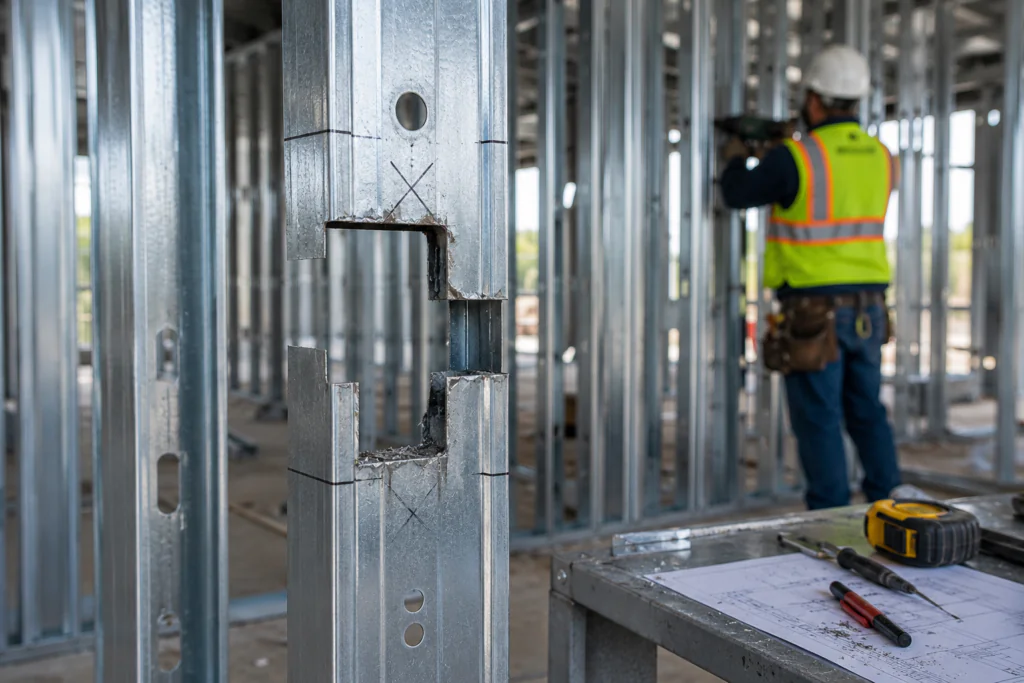
Streamlined trades: CFS systems often include factory-placed openings for plumbing, electrical and HVAC. MEP crews can work immediately without drilling through framing in the cold. This coordination means the whole project moves forward on schedule, even as winter sets in.
Weatherproof reliability: Steel is non-porous, non-combustible and impervious to rot or pests. It can handle heavy snow loads and freeze-thaw cycles without damage. In one real-world example, a new residence for Sheridan College in Ontario used cold-formed steel walls through –10 to –20 °C weather. Crews maintained the construction schedule and saved on heating costs, completing the project on time.
Year-Round Construction with LSF Pro
Cold-formed steel framing is the clear choice for reliable, year-round building. Its resistance to cold and moisture means your projects stay on track even in deep winter. LSF Pro specializes in engineered CFS framing systems built for Canada’s climate. Our factory-fabricated panels and components speed assembly and eliminate weather delays. With LSF Pro, your crews can install walls and floors without stopping for cold snaps. Contact LSF Pro to see how our weather-ready framing solutions will help you meet deadlines and budgets, no matter the forecast.