In Canadian construction, steel floor joists are emerging as a game-changer over traditional wood joists. Builders across Canada are switching to cold-formed steel framing for its superior strength and consistency. This switch is driven by practical benefits: steel joists can span longer distances, eliminate squeaky floors, and resist the issues that plague wood. The result is a faster build with straighter, sturdier floors that keep clients happy. Let’s compare steel vs wood floor joists and see why many Canadian builders and developers now prefer steel for residential and low-rise projects.
Bigger Spans and Flexible Layouts with Steel Joists
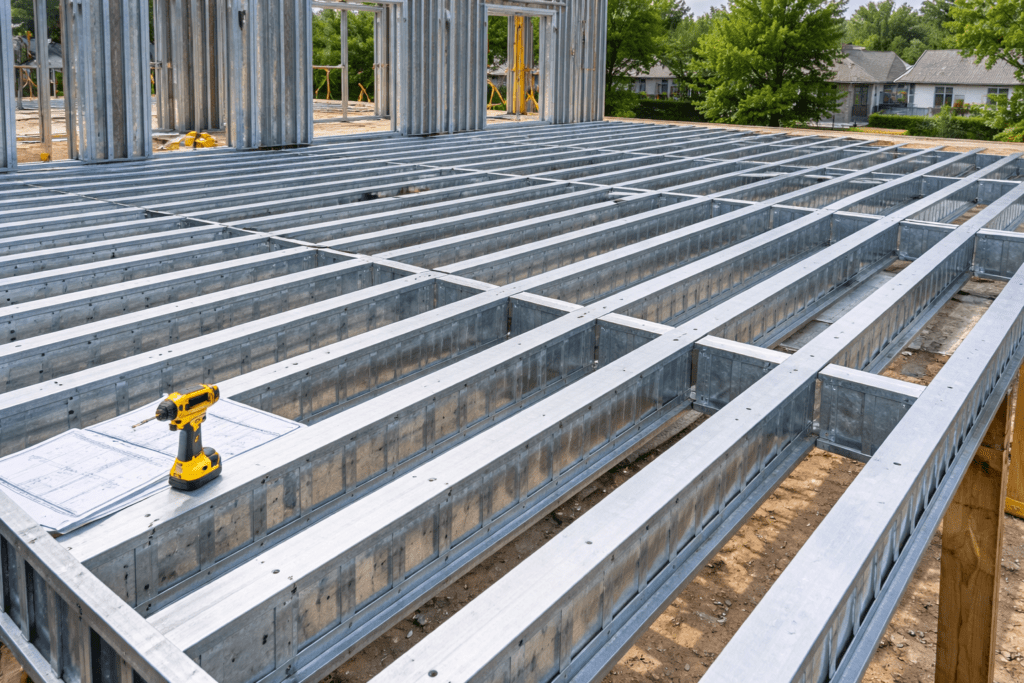
Steel floor joists offer superior span strength that wood simply can’t match. A steel joist can cover much longer distances without needing intermediate supports, enabling wide-open floor plans. Builders love that high-strength steel joists allow for big, open rooms – you can span large areas with fewer beams or columns disrupting the space. In one case, wood joists might max out at around 6–10 meters (20–33 feet) before sagging, whereas steel joists can stretch over 20 meters (~66 feet) with no mid-span posts. This means it’s easier to create modern open-concept designs and clear-span spaces like great rooms or wide garages.
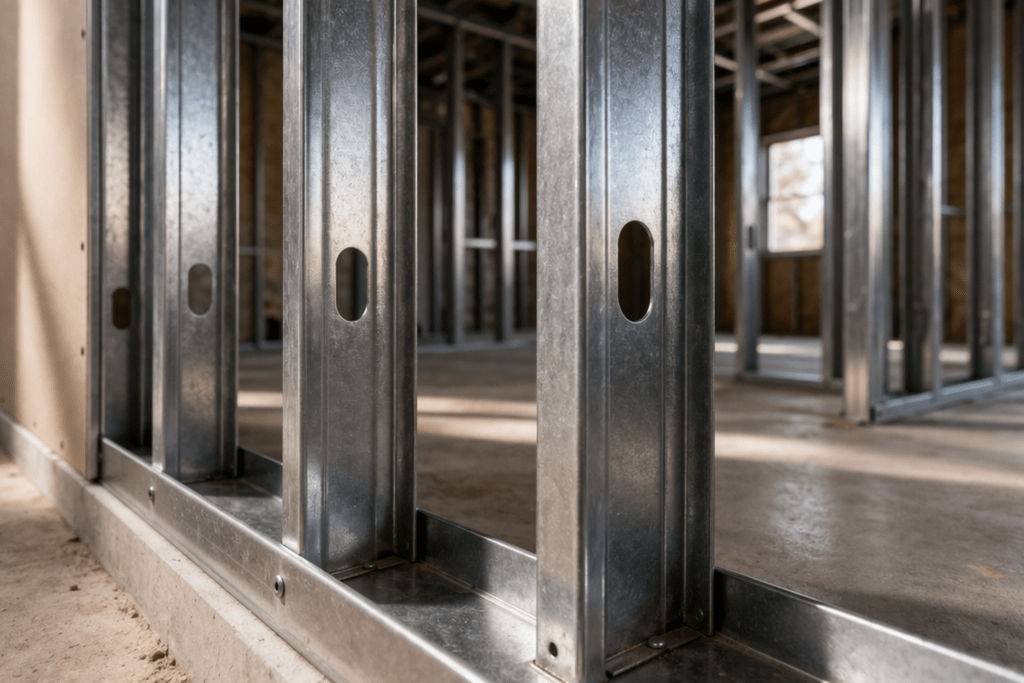
The layout flexibility of steel is a huge advantage. Because steel joists are lighter and stronger for their size, architects can design longer cantilevers or wider room spans that wood would struggle with. Need to run ducts or plumbing? Steel joists often come with pre-punched holes or can be easily fabricated to accommodate services, so you can route utilities without hacking up framing. You get more freedom to design bold, spacious layouts. With steel, your floor structure supports creative architecture rather than limiting it.
Squeak-Free Floors That Stay Quiet and Solid
One of the biggest headaches with wood-framed floors is the squeak. Over time, wood can shrink and nails can loosen – you’ve probably walked on a wood floor that creaks underfoot. Steel floor joists eliminate this problem. Steel doesn’t shrink or swell with humidity, so the fasteners stay tight and the floor stays quiet. Builders who switch to steel notice that their floors feel solid and don’t develop those annoying squeaks over the years. Your clients will appreciate walking on a firm, silent floor.
Not only are steel-framed floors quiet, they also stay level and true. Wood joists can warp or crown, leading to uneven spots or bouncy floors. In contrast, steel joists remain straight, keeping the floor flat with no surprises. According to builders, floors built with steel come out extremely level – no shimming is needed to get things even. That precision means fewer drywall pops in ceilings below and no callbacks to fix uneven flooring. Steel joists deliver rock-solid performance, giving homeowners a sturdy floor that feels as stable as a concrete slab (minus the weight!).
No Warping, Rot, or Pests – Steel’s Durability Edge
Choosing steel floor joists sets you up for long-term durability. Unlike wood, steel won’t warp, rot, or get chewed up by pests. Wood joists are organic – they absorb moisture, they can mold or decay, and they’re a tasty treat for termites or carpenter ants. Canada’s climate can be tough on wood: moisture from rain or freeze-thaw cycles can twist lumber and weaken it. Steel, however, is inorganic and galvanized to resist corrosion. It doesn’t absorb water, so it won’t swell, rot, or develop mold. Steel joists stay dimensionally stable and true to shape for decades, even in damp coastal air or humid summers.
Pests are also a non-issue. Termites cause millions in damage to wood structures, even in parts of Canada, but steel is 100% termite-proof. Builders don’t have to worry about insects or rodents gnawing at steel framing – and no chemical treatments are needed. Additionally, steel is non-combustible, a key safety advantage. Steel joists won’t catch fire or add fuel to a blaze, which is crucial for meeting fire codes in multi-unit buildings. In fact, light-gauge steel framing is often required or preferred for projects that need non-combustible structure, such as 4-6 storey apartments or builds close to property lines. By using steel floor joists, you get peace of mind that your structure can withstand moisture, pests, and even fire exposure far better than wood. It’s a durable choice that keeps performing year after year, with no surprises lurking in the floors.
Faster, Cleaner Installation and Fewer Callbacks
Prefabrication Speeds Up Framing
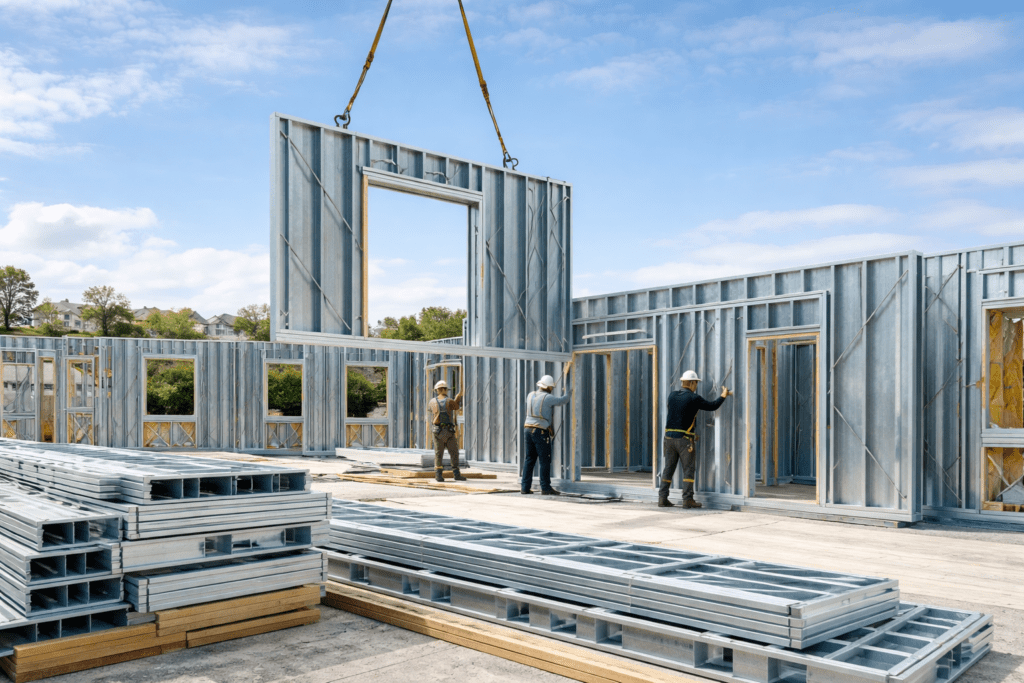
Steel floor joist systems aren’t just strong — they simplify your job site. Many Canadian builders are switching to prefabricated steel floor systems to reduce framing time. These joists and panels are precision-cut, labeled, and often pre-punched for services. Crews simply screw them together on-site, like assembling a kit. Since they’re lighter than lumber, the components are easy to handle, and framing progresses faster.
Builders report that switching to panelized steel floor cassettes can dramatically shorten project timelines. Getting to dry-in faster means you can move onto interior work quickly — crucial in Canada’s unpredictable weather.
Clean Install, Minimal Waste
Steel joist installations create cleaner, more organized job sites. With parts made to spec, there’s little cutting and almost no on-site waste. You skip the piles of sawdust and off-cuts common with wood framing. Steel scraps are minimal and recyclable, keeping your site efficient and tidy.
Fewer Callbacks for a Better Reputation
Because steel joists stay straight and don’t shrink or settle, issues like nail pops, uneven flooring, and drywall cracks are rare. That means fewer post-construction callbacks and warranty repairs. One Ontario builder saw a significant drop in drywall fixes after switching to steel. This improves customer satisfaction and strengthens your reputation for quality.
Better Performance for Infill, Multiplexes, and Laneway Homes
Infill Lots: Maximize Tight Spaces
Urban infill projects face tight constraints. Steel joists work perfectly in narrow spaces thanks to their strength and slim profiles. You can build more usable interior space without sacrificing structural performance. Their precision also speeds up work in confined job sites.
Multiplex Builds: Stronger, Safer Floors
In multi-unit buildings, steel joists support stacked loads without sagging. Their strength-to-weight ratio makes them ideal for 2–6 storey projects. Plus, steel’s non-combustible nature simplifies code compliance in tight neighborhoods. Builders can design confidently, knowing they’re meeting fire and structural requirements.
Laneway and Garden Homes: Built for Small Lots
Laneway homes often require framing above garages or over narrow spaces. Steel joists span these gaps without extra supports. Prefab steel floor systems install quickly and cleanly, even with limited site access. This is perfect for secondary units like garden suites where fast, efficient building is essential.
Build Faster, Straighter, More Reliable Floors with LSF Pro
Steel floor joists are changing the way Canadians build – delivering bigger spans, squeak-free floors, and reliable performance that wood can’t match. They empower builders to create open, modern designs while avoiding the common issues of wood framing. The payoff is huge: faster construction, fewer headaches, and happier homeowners. It’s time to embrace the future of framing. Ready to upgrade to steel? LSF Pro’s prefabricated steel floor systems make it easy to build faster, straighter, and more reliably. Our team provides high-quality light steel joists and panels custom-made for your project, so you can hit the ground running. Don’t settle for floors that might squeak or sag – take advantage of steel’s strength and precision. Contact LSF Pro Structures today to discover how steel floor joists can elevate your next build, and start building better with steel. Your projects – and your clients – will thank you!