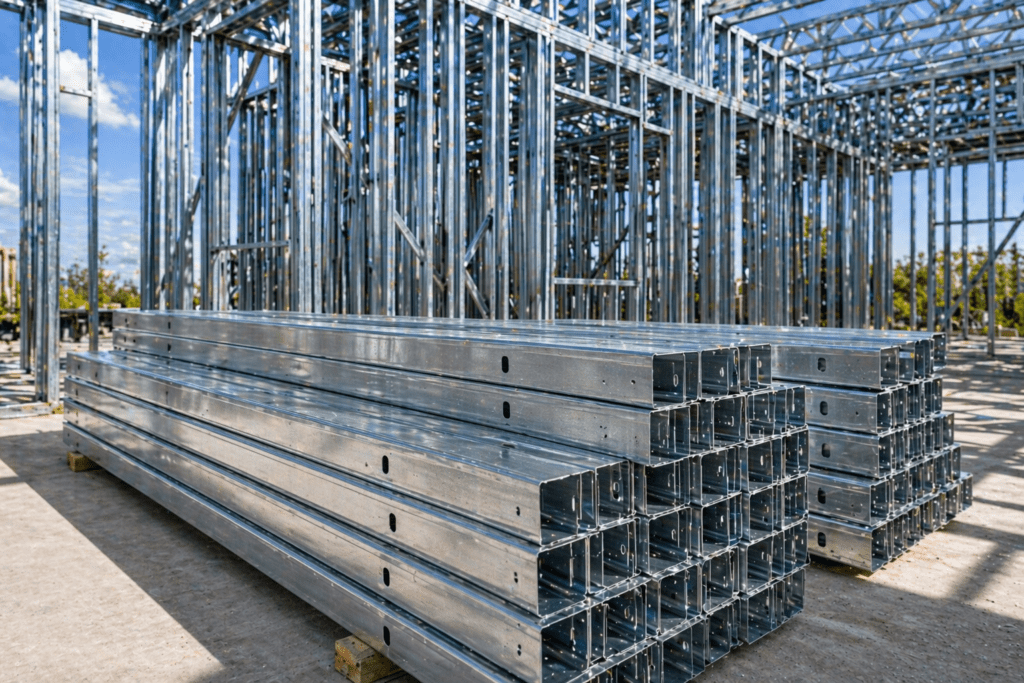
When selecting materials for steel framing projects, one detail is often misunderstood but critically important: galvanized steel studs and their coating specifications.
In Canada, choosing between G60 and G90 is not just a preference. It directly impacts durability, compliance, and long-term performance. For builders and developers working in Ontario, understanding these differences is essential to avoid costly mistakes and inspection issues.
This guide explains what G60 and G90 mean, how they perform, and what CSA standards actually require.
What Are Galvanized Steel Studs?
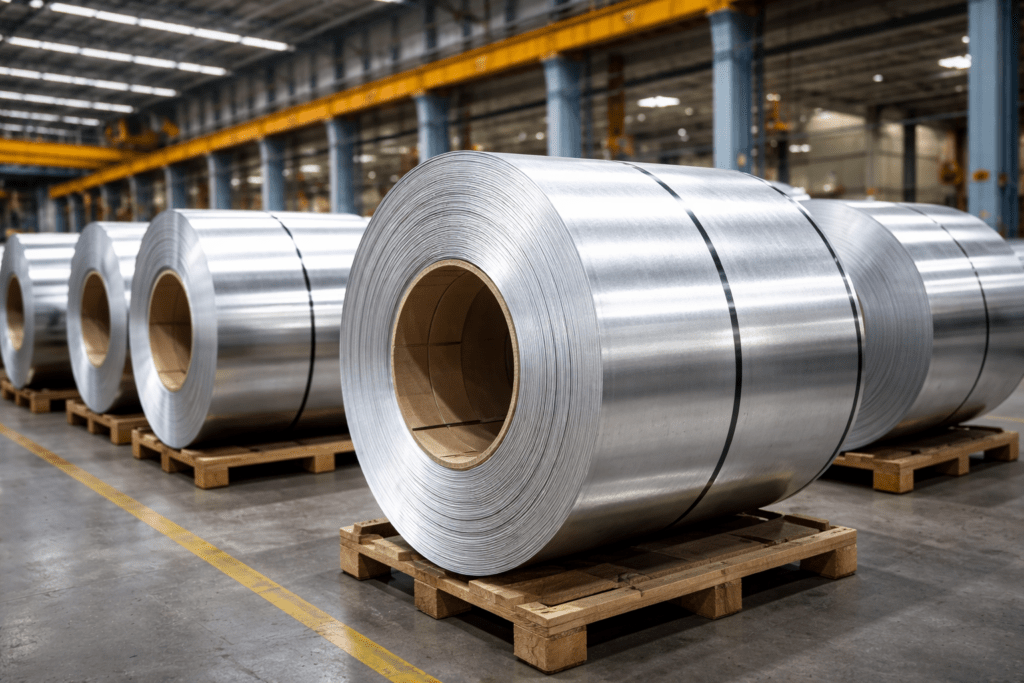
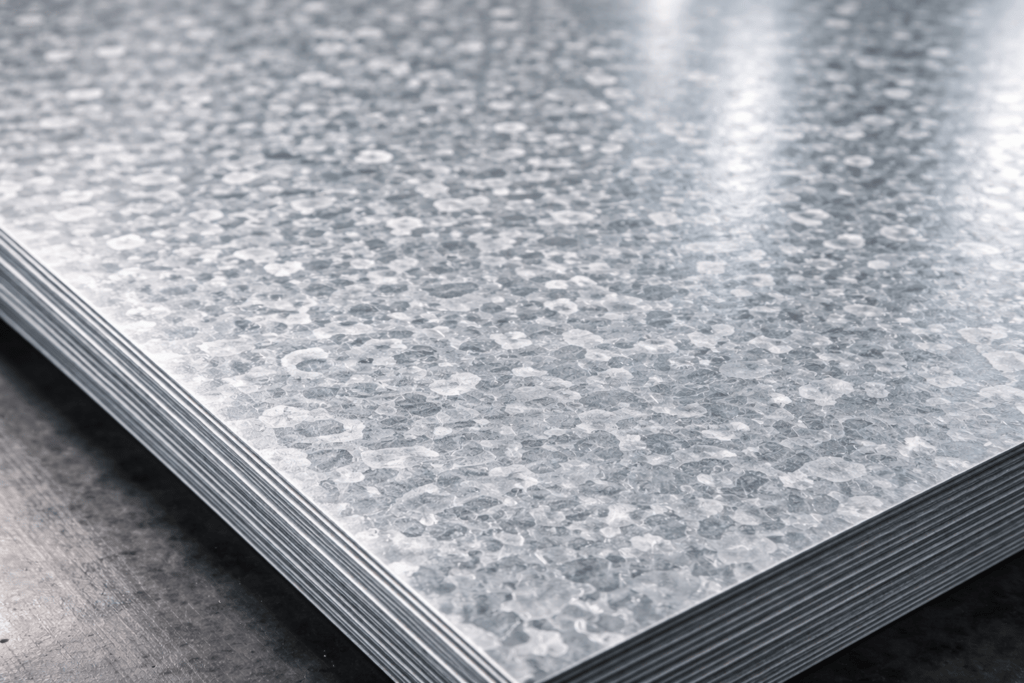
Galvanized steel studs are cold-formed steel members coated with zinc to protect against corrosion.
The zinc coating acts as both:
- A barrier against moisture and air
- A sacrificial layer that corrodes before the steel
This protection is especially important in Canadian climates, where humidity, condensation, and seasonal changes can accelerate corrosion if materials are not properly specified.
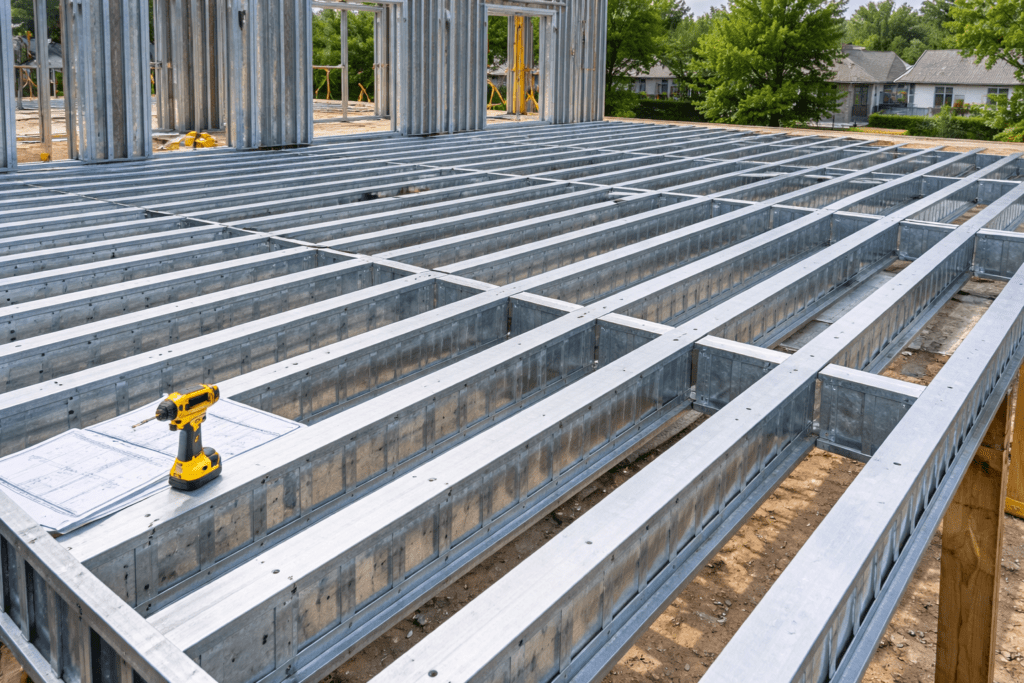
For most framing applications, galvanized steel studs are the standard choice because they provide durability without requiring additional treatment.
What Do G60 and G90 Mean?
The “G” designation refers to the weight of the zinc coating applied to the steel.
- G60 means 0.60 ounces of zinc coating per square foot of steel
- G90 means 0.90 ounces of zinc coating per square foot
This coating is applied to both sides of the steel sheet.
The key takeaway is simple: G90 provides significantly more corrosion protection than G60.
However, the choice between the two is not just about durability. It depends on application, environment, and code requirements.
Key Differences Between G60 and G90
The main difference between G60 and G90 galvanized steel studs is the level of corrosion resistance.
G60 is typically used in dry interior environments where exposure to moisture is minimal. It is suitable for non-load-bearing partitions and controlled conditions.
G90, on the other hand, is designed for more demanding applications. It is commonly required for:
- Structural framing
- Exterior walls
- Areas with potential moisture exposure
- Multi-unit residential and commercial projects
In Ontario construction, G90 is often the safer and more widely accepted specification, especially when inspections and long-term performance are considered.
What CSA Standards Require
In Canada, galvanized steel studs must comply with CSA A653 for material specifications and CSA S136 for structural design.
CSA A653 defines:
- Minimum coating requirements
- Material properties
- Quality standards for galvanized steel
CSA S136 governs how these materials are used structurally, including load capacity and performance.
While CSA standards allow different coating levels depending on application, G90 is commonly specified for structural members and projects where durability is critical.
In many cases, engineers and inspectors will expect G90 unless there is a clear justification for using a lower coating level.
When G60 Is Acceptable
G60 galvanized steel studs can be used in specific situations where conditions are controlled.
These include:
- Interior, non-load-bearing walls
- Dry environments with no exposure to moisture
- Temporary or low-risk applications
However, even in these cases, builders must ensure that the environment will remain dry over time. Any unexpected moisture exposure can reduce the lifespan of G60-coated steel.
For this reason, many developers avoid G60 altogether in multi-unit housing projects.
Why G90 Is the Preferred Choice in Ontario
In real-world construction, G90 is often the default specification.
This is because it provides:
- Higher corrosion resistance
- Better long-term durability
- Greater acceptance during inspections
- Reduced risk of future issues
Ontario’s climate, combined with strict building standards, makes G90 the more reliable option for most applications.
Even if initial costs are slightly higher, the long-term benefits and reduced risk make it the more cost-effective choice.
Impact on Project Performance
The choice of galvanized steel studs affects more than just corrosion resistance.
It influences:
- Structural reliability over time
- Maintenance requirements
- Inspection outcomes
- Overall project lifespan
Using the correct coating ensures that the framing system performs as intended throughout the life of the building.
In multi-unit housing, where long-term performance is critical, this becomes even more important.
Common Mistakes to Avoid
One of the most common mistakes is assuming that all galvanized steel studs are the same.
Builders sometimes select G60 to reduce upfront costs without considering long-term exposure conditions. This can lead to premature corrosion and costly repairs.
Another issue is failing to match specifications with project requirements. If drawings call for G90 and G60 is used instead, it can result in failed inspections and delays.
Clear coordination between design, procurement, and construction is essential to avoid these problems.
Practical Recommendation for Builders
For most projects in Ontario, especially multi-unit residential and structural applications, G90 galvanized steel studs should be the standard choice.
G60 should only be used when:
- The application is clearly non-structural
- The environment is fully controlled
- There is confirmation that lower coating levels are acceptable
Taking a conservative approach reduces risk and ensures compliance with Canadian standards.
Why This Matters in Canadian Construction
As building standards continue to evolve, material selection is becoming more critical.
Understanding galvanized steel studs and the difference between G60 and G90 allows builders and developers to:
- Avoid compliance issues
- Improve durability
- Reduce long-term costs
In a competitive market like Ontario, making the right decisions early leads to better project outcomes.
Work with LSF Pro Structures
At LSF Pro Structures, we provide galvanized steel studs and light steel framing systems designed to meet CSA standards and perform in Canadian conditions.
From material selection to full project support, we help ensure your framing system is built right from the start.
If you need guidance on galvanized steel studs or want to ensure your project meets all requirements, contact LSF Pro Structures today.