Light steel framing is widely used for exterior walls, floor systems, roofs, balconies, and other building components across Canada. But builders often ask an important question: Can light steel framing be used outdoors?
The short answer is yes—but the exposure conditions and corrosion protection must be properly considered.
Cold-formed steel framing is typically manufactured from galvanized steel, which provides excellent corrosion resistance under appropriate conditions. However, galvanized steel should not automatically be considered suitable for every permanently exposed outdoor environment.
For Ontario builders, understanding the difference between an exterior application and direct environmental exposure is essential when designing durable light steel framing systems.
Galvanized Steel Is Designed to Resist Corrosion
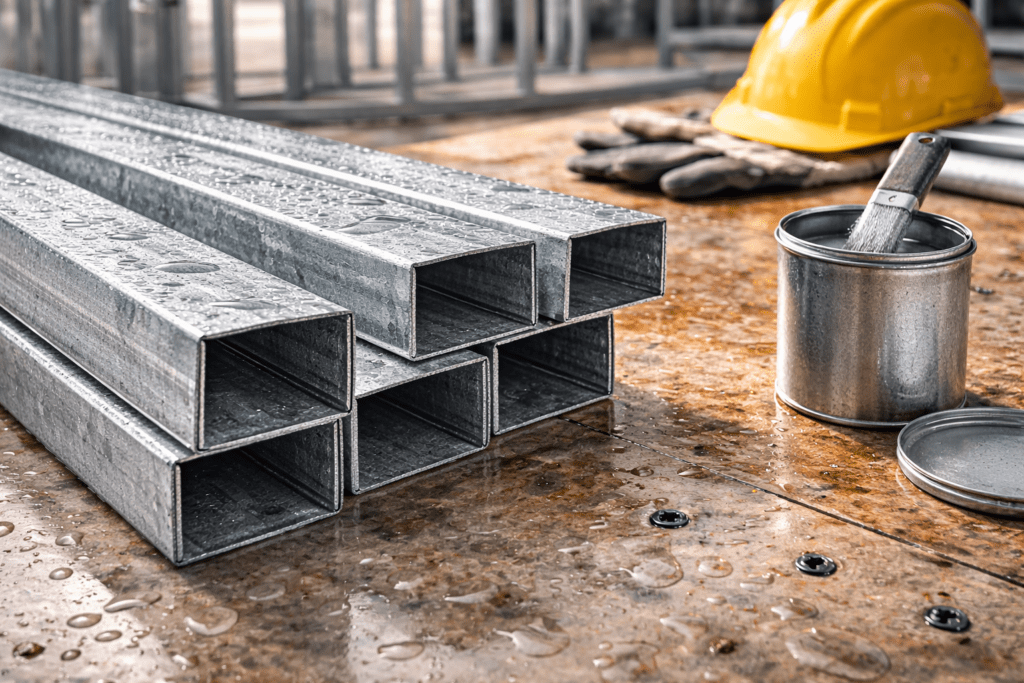
Most structural cold-formed steel framing receives a metallic zinc coating that protects the underlying steel from corrosion.
The zinc coating provides two important forms of protection. First, it creates a physical barrier between the steel and the surrounding environment. Second, zinc provides sacrificial protection, meaning it can help protect exposed steel at small scratches and cut edges.
This is one reason galvanized cold-formed steel performs effectively in properly designed building assemblies.
However, corrosion resistance does not mean corrosion immunity.
The durability of light steel framing outdoors depends on factors such as moisture exposure, coating type, drainage, ventilation, environmental conditions, and construction detailing.
Exterior Does Not Always Mean Exposed
This distinction is extremely important.
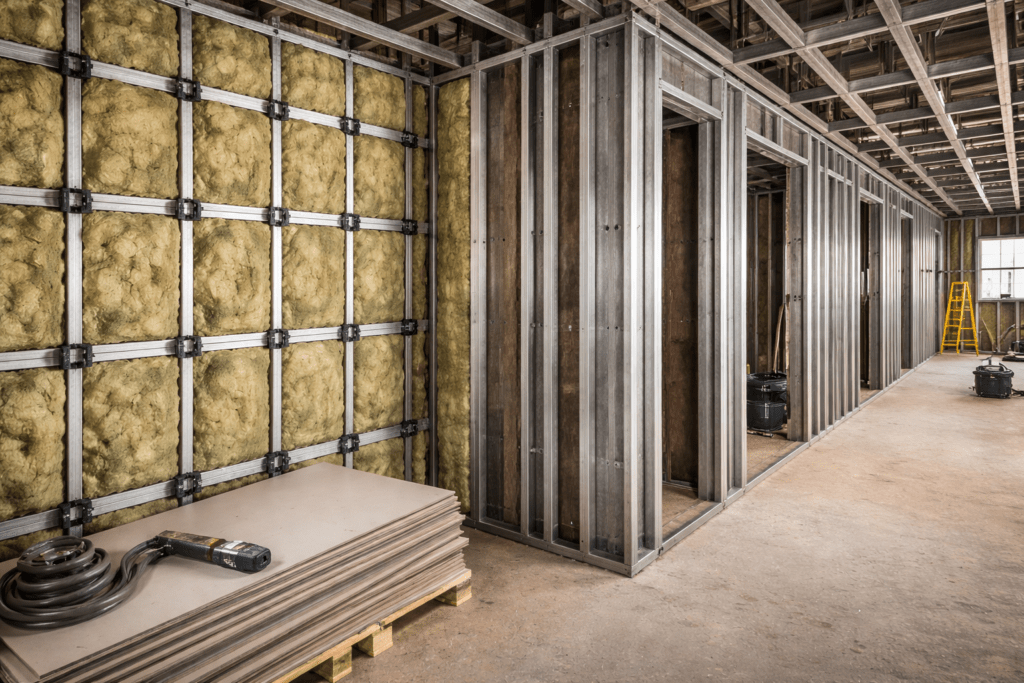
A steel-framed exterior wall is technically part of the exterior building envelope, but the framing itself is normally protected by other building materials. Sheathing, membranes, insulation, cladding, flashings, and other components prevent the structural framing from experiencing continuous direct exposure to the weather.
That is very different from installing galvanized steel joists, studs, or tracks where rain and snow can repeatedly contact them.
Therefore, builders should not assume that because a steel member is galvanized, it can simply remain uncovered outdoors indefinitely.
The entire assembly must be designed for its actual exposure conditions.
What Happens When Galvanized Steel Gets Wet?
Occasional contact with moisture does not necessarily create a corrosion problem. Galvanized coatings exist specifically to protect steel.
Problems become more likely when moisture remains trapped against the steel or when members experience repeated wetting without adequate drying.
Poor drainage, standing water, trapped condensation, and continuously damp materials in contact with the framing can all increase corrosion risk.
The objective should therefore be more than simply preventing water from touching the steel. Good design should also allow water to drain and the assembly to dry when moisture enters.
Outdoor Decks Require Special Attention
Decks are a good example of where questions about light steel framing outdoors frequently arise.
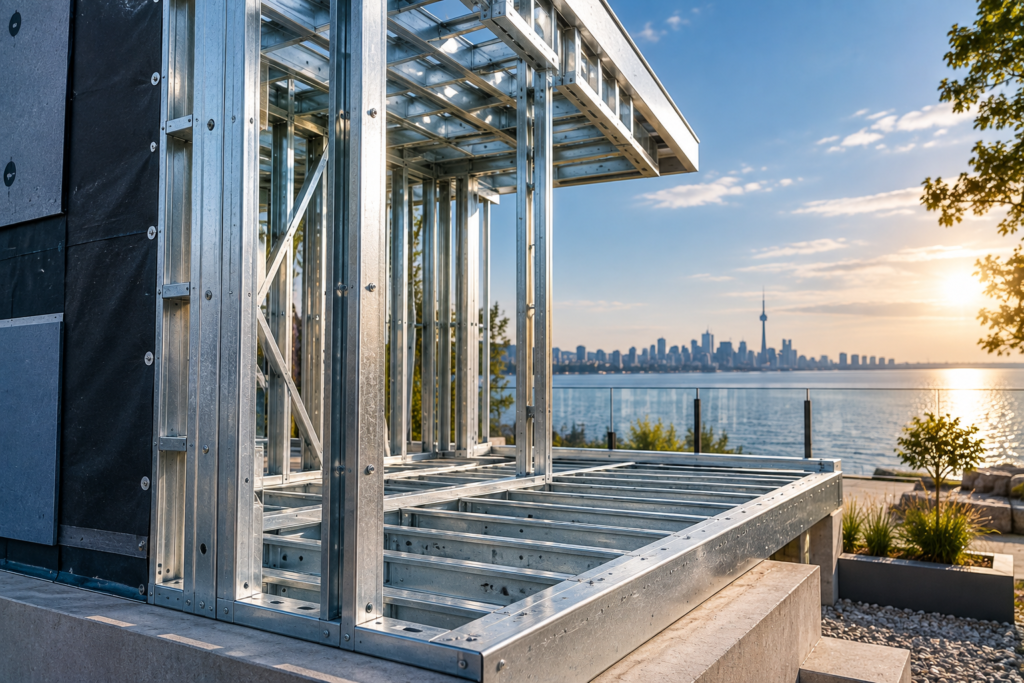
Cold-formed steel can provide an excellent structural solution for deck joists because it is dimensionally stable, does not rot, and is not vulnerable to termites. However, an outdoor deck creates very different environmental conditions from an enclosed floor system.
Joists may experience rain, melting snow, freeze-thaw cycles, condensation, and moisture around connections.
For these applications, the engineer and project team should determine the appropriate coating and protection system for the specific exposure.
Depending on the design, additional membranes, protective coatings, flashing, or other methods may be required.
Road Salt and Coastal Environments Increase Corrosion Risk
Not every outdoor environment affects galvanized steel equally.
A protected residential wall in Ontario experiences very different conditions from steel located near a roadway where de-icing salts are present.
Chlorides can accelerate corrosion. The same consideration applies to coastal environments where airborne salts may reach building components.
Industrial environments can also expose steel to chemicals or contaminants that require additional protection.
For this reason, corrosion protection should always reflect the actual service environment rather than relying on a one-size-fits-all approach.
Cut Edges, Fasteners and Connections Matter Too
Corrosion protection is not only about the studs and joists.
Connections are part of the same structural system.
Fasteners, brackets, clips, anchors, and other accessories should be compatible with both the steel framing and the environmental conditions.
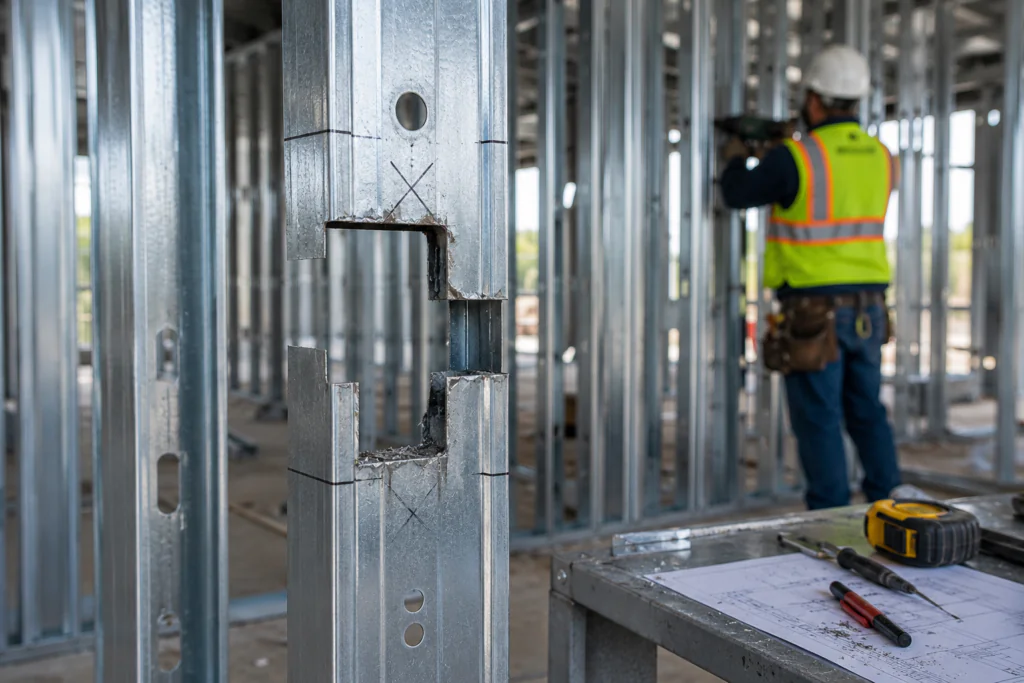
Builders should also pay attention to field cuts, penetrations, damaged coatings, and areas where water could collect around connections.
A well-protected joist does little good if an inappropriate connector becomes the weak point of the assembly.
Good corrosion protection therefore requires thinking about the complete system rather than individual steel members.
Avoid Trapping Water Against Steel Framing
One of the most important principles in exterior construction is moisture management.
Water should have a path out of the assembly.
Horizontal surfaces, poorly detailed tracks, improperly installed membranes, and locations where debris can accumulate may create areas where moisture remains against the steel.
Proper flashing and drainage details can greatly reduce this risk.
The same principle applies when other materials contact galvanized steel. Designers should consider whether those materials retain moisture or could create an incompatible environment.
Durability comes from good detailing as much as from the galvanized coating itself.
Galvanized Coating Selection Matters
Different projects may require different levels of metallic coating protection.
Specifications such as G60 and G90 refer to zinc coating designations commonly encountered with galvanized steel products. A heavier zinc coating generally provides a greater reserve of corrosion protection, but choosing the appropriate coating should depend on the application, applicable standards, engineering requirements, and expected exposure.
Simply specifying the heaviest available coating does not replace good building-envelope design.
A properly protected and drained assembly remains essential.
Light Steel Framing Has an Important Advantage Over Wood
Moisture creates different problems for steel and wood.
Wood can absorb moisture, swell, warp, decay, and support biological deterioration when conditions allow. Cold-formed steel does not experience these problems in the same way.
Steel remains dimensionally stable and does not rot.
However, steel has its own durability consideration: corrosion.
The solution is not to assume one material is unaffected by moisture. Instead, builders should understand how each material behaves and design the assembly accordingly.
With appropriate corrosion protection and moisture management, light steel framing can provide excellent long-term durability.
Temporary Exposure During Construction Is Different
Builders should also distinguish between temporary construction exposure and permanent service conditions.
Framing may encounter rain or snow while a building is under construction. This is different from designing the framing to remain directly exposed to weather throughout the building’s service life.
Even during construction, however, water should not be allowed to remain trapped inside tracks or assemblies for extended periods.
Good site practices, drainage, storage, and protection remain important.
Once the building envelope is completed, properly designed exterior assemblies protect the framing from prolonged environmental exposure.
So, Can Light Steel Framing Be Used Outdoors?
Yes. Light steel framing can be used for outdoor and exterior applications, provided the framing system is designed for the actual environmental exposure.
The key question should not simply be, “Is the steel galvanized?”
Builders should instead ask:
How will this steel be exposed, how will water be managed, and what corrosion protection does this particular application require?
A galvanized member installed inside a protected exterior wall is very different from a deck joist exposed to rain, snow, road salt, or persistent moisture.
Understanding that difference is essential for long-term performance.
Practical Takeaway for Ontario Builders
Light steel framing offers excellent durability, dimensional stability, structural efficiency, and resistance to rot and pests. These characteristics make it suitable for many exterior applications across Ontario.
However, galvanized steel should not automatically be treated as a permanently weather-exposed material.
Successful light steel framing outdoors requires the right combination of galvanized coating, compatible fasteners and connections, drainage, flashing, moisture management, and—where necessary—additional protective systems.
When exposure conditions are considered during the engineering and detailing stages, cold-formed steel can provide a durable solution for a wide range of exterior construction applications.
Work with LSF Pro Structures
At LSF Pro Structures, we manufacture precision cold-formed steel framing systems for residential, commercial, and multi-unit construction throughout Ontario.
Our team works with builders, developers, designers, and engineers to provide light steel framing solutions for walls, floors, roofs, and other structural applications, with material specifications selected according to project requirements.
Planning an exterior project using light steel framing? Contact LSF Pro Structures to discuss your project, framing requirements, and the appropriate solution for your application.