Moisture management is one of the biggest concerns in Canadian construction, and it often leads to a common question from builders and developers: does steel framing prevent mold?
The short answer is that steel framing does not “eliminate” mold on its own, but it can dramatically reduce the conditions that allow mold problems to develop.
That distinction matters.
When properly designed and detailed, steel framing prevent mold performance becomes a major advantage over traditional framing systems, especially in Ontario’s climate, where humidity, condensation, and seasonal temperature swings create real challenges.
This guide explains why light steel framing is increasingly viewed as a mold-resistant building strategy and what builders need to know to get the full benefit.
Why Mold Is a Construction Problem in Canada
Canada’s climate creates ideal conditions for moisture-related issues.
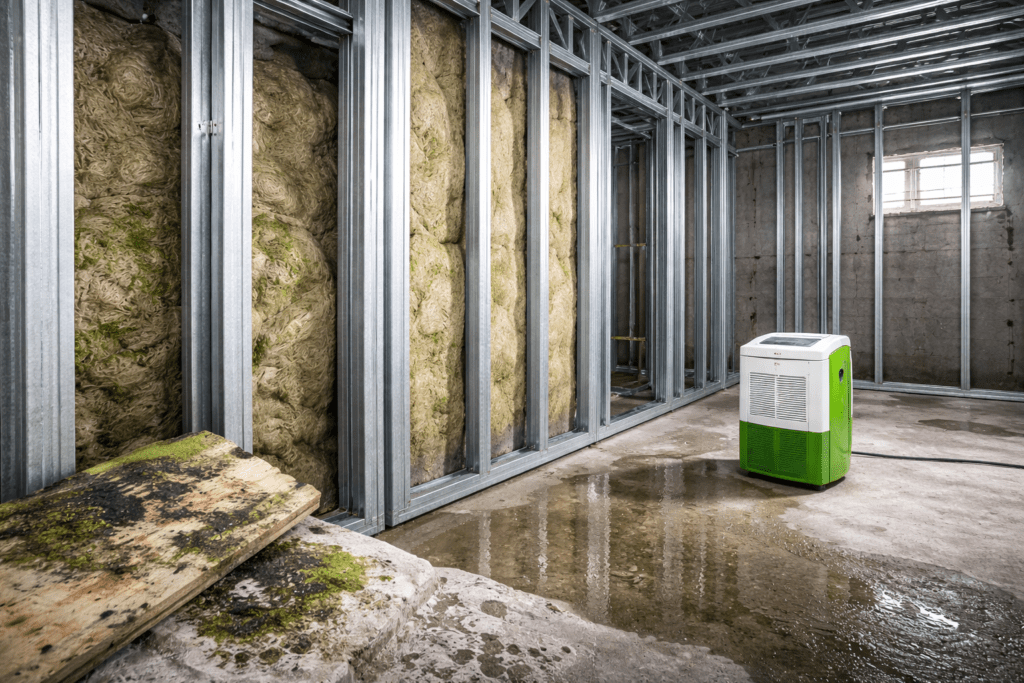
Freeze-thaw cycles, high indoor humidity during winter, summer condensation, and poorly managed building envelopes can all create hidden moisture accumulation inside wall systems.
Once moisture is trapped, mold can develop.
For builders, mold creates serious consequences:
- Costly remediation
- Occupant health concerns
- Warranty claims
- Long-term durability problems
That is why material choice plays a major role in risk reduction.
Why Steel Framing Changes the Equation
The reason many builders associate steel framing prevent mold benefits with cold-formed steel is simple:
Steel does not provide organic material for mold growth.
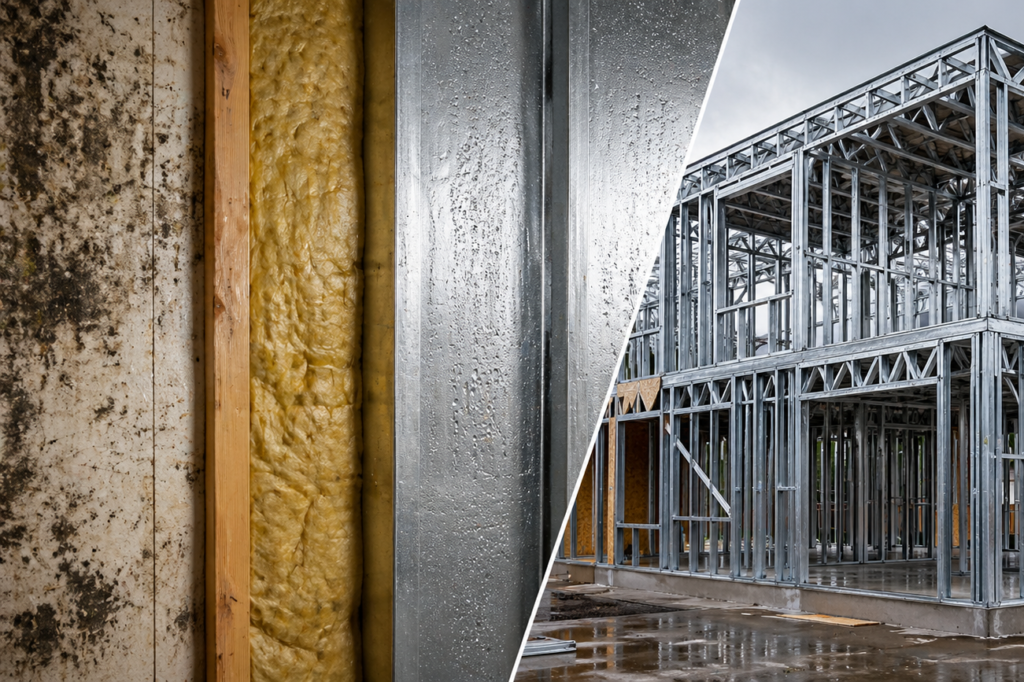
Mold feeds on organic matter. Wood can become a food source when moisture is present.
Galvanized light steel framing does not.
That alone removes one major risk factor.
But the advantage goes beyond that.
Steel framing also remains dimensionally stable. It does not absorb moisture, swell, shrink, or warp the way wood can when exposed to changing moisture conditions.
That stability helps maintain the integrity of wall systems over time.
Mold Resistance Starts With Moisture Control
It is important to be clear:
Steel framing does not prevent mold if the wall assembly is poorly designed.
If moisture enters a wall and remains trapped, mold can still develop on other materials such as drywall, insulation facings, or dust accumulation.
What steel framing does is reduce the framing-related conditions that contribute to mold problems.
When combined with proper moisture management, it becomes a powerful strategy.
That includes:
- Proper air barriers
- Vapor control where required
- Correct insulation detailing
- Effective drainage planes
- Thermal bridge management
This is where good building science matters.
Why Steel Performs Well in Canadian Climates
Ontario and other Canadian regions place heavy demands on wall assemblies.
Condensation control is especially critical in cold climates where warm interior air can meet cold surfaces inside assemblies.
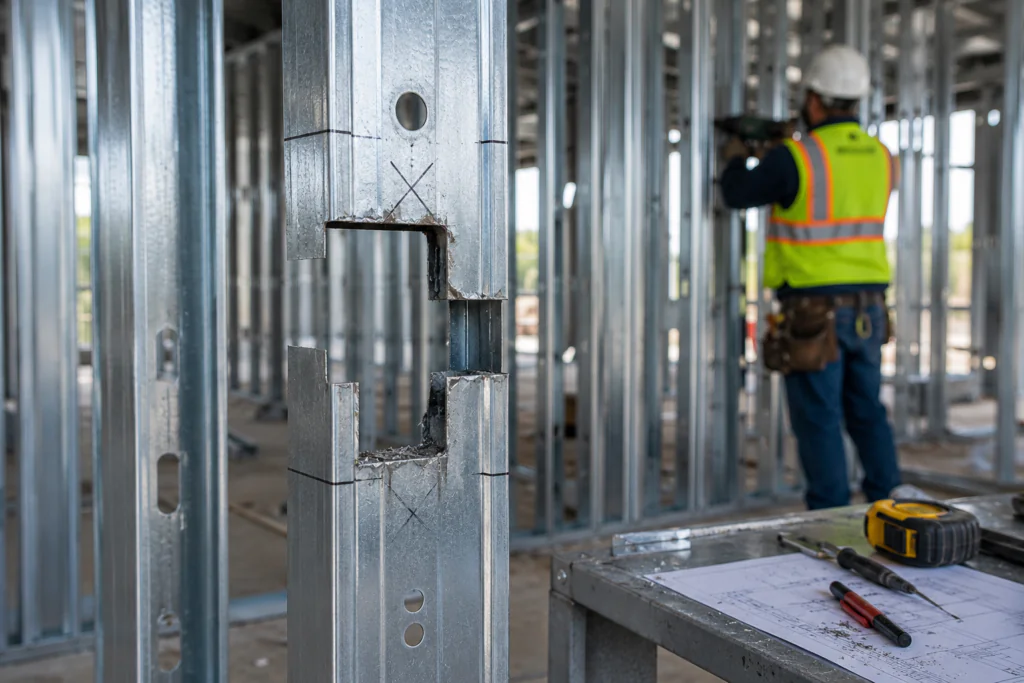
Light steel framing works well in these conditions because it supports precise, engineered assemblies that can be detailed for moisture control much more consistently.
Because members are straight and dimensionally stable, air barrier systems and insulation systems often perform more predictably.
That contributes directly to long-term mold resistance.
Steel Framing and Indoor Air Quality
There is also an indoor environmental benefit.
Reducing mold risk supports healthier buildings.
For multi-unit housing, schools, healthcare facilities, and residential projects, this has become an increasingly important consideration.
Builders are no longer evaluating materials only on structure and cost. They are looking at occupant performance too.
That is one reason steel framing prevent mold searches continue to grow among developers and designers.
The Role of Galvanized Protection
Another factor often overlooked is corrosion protection.
Galvanized steel framing, especially properly specified coatings such as G90, adds durability in moisture-prone environments.
While galvanization is about corrosion resistance rather than mold itself, it supports long-term performance in assemblies exposed to humidity or occasional moisture.
That durability matters in real-world buildings.
Common Misconception About Mold and Steel
A common misconception is that using steel framing automatically solves moisture problems.
It does not.
Poor flashing, bad air sealing, or poorly detailed assemblies can still create mold issues.
Steel is not a substitute for good enclosure design.
It is a better framing platform for executing good enclosure design.
That is an important difference.
Builders who understand that get much better outcomes.
Why Builders Use Steel in Moisture-Sensitive Applications
There is a reason steel framing is often preferred in applications where moisture performance matters.
It is commonly used in:
- Multi-unit housing
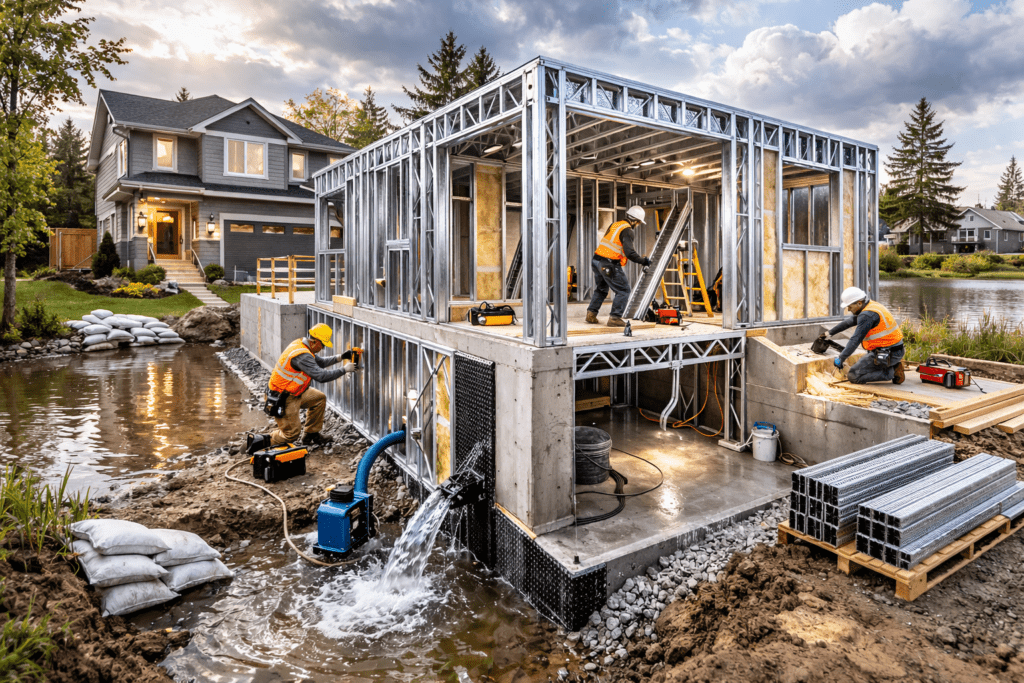
- Basements and lower levels
- Healthcare buildings
- Institutional projects
- Areas with strict durability requirements
These sectors prioritize long-term risk reduction, and steel helps support that.
That is not accidental.
It reflects how the material performs.
Structural Stability Also Helps Finishes Perform Better
Another indirect mold-related advantage is movement control.
Wood movement can contribute to cracking, air leakage, and pathways for moisture intrusion.
Steel framing remains stable.
That helps finishes, air barriers, and moisture control layers remain intact over time.
Again, it is another example of how steel framing prevent mold performance is often tied to broader building durability.
Why This Matters for Canadian Builders
As energy codes tighten and buildings become more airtight, moisture management becomes even more important.
That makes material selection more important too.
For many projects, light steel framing offers:
- Reduced mold-related risk
- Better dimensional stability
- Strong support for high-performance wall assemblies
- Improved long-term durability
That combination is why more builders across Canada are moving toward steel.
Practical Takeaway
Does steel framing prevent mold?
Not by itself.
But when properly detailed within a well-designed building envelope, it can significantly reduce the conditions that lead to mold problems.
For Canadian builders, that makes it a very practical choice.
Work with LSF Pro Structures
At LSF Pro Structures, we provide light steel framing systems designed for Canadian performance, including moisture-resistant assemblies that support durability and healthier buildings.
If you are planning a project and want to understand how steel framing can reduce mold-related risk, contact LSF Pro Structures today.