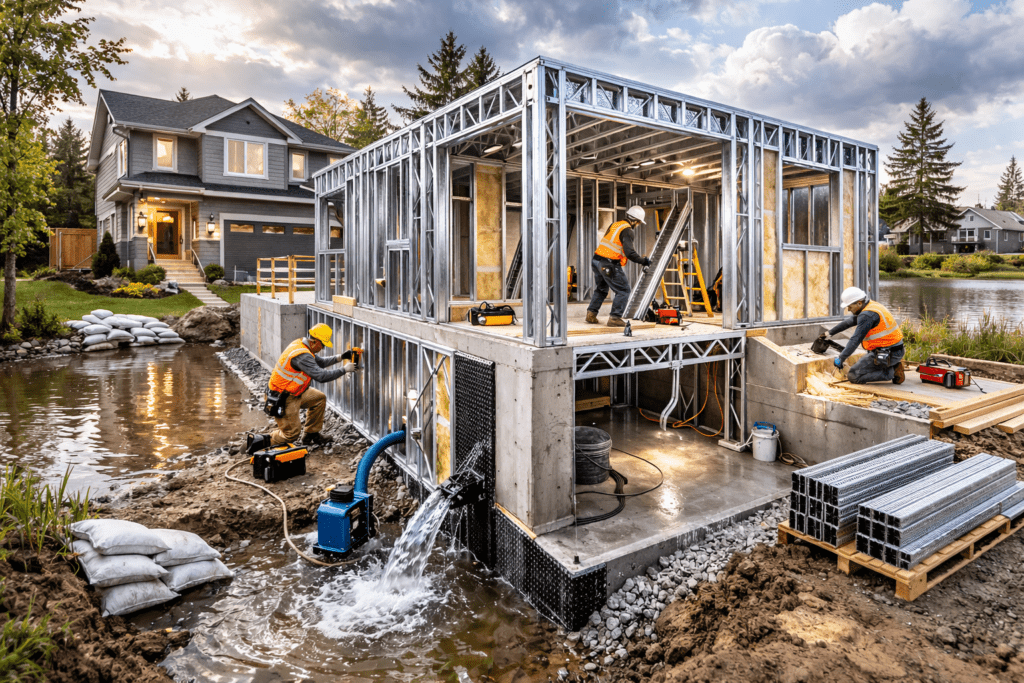
Why Flood Resilience Matters More Than Ever in Canada
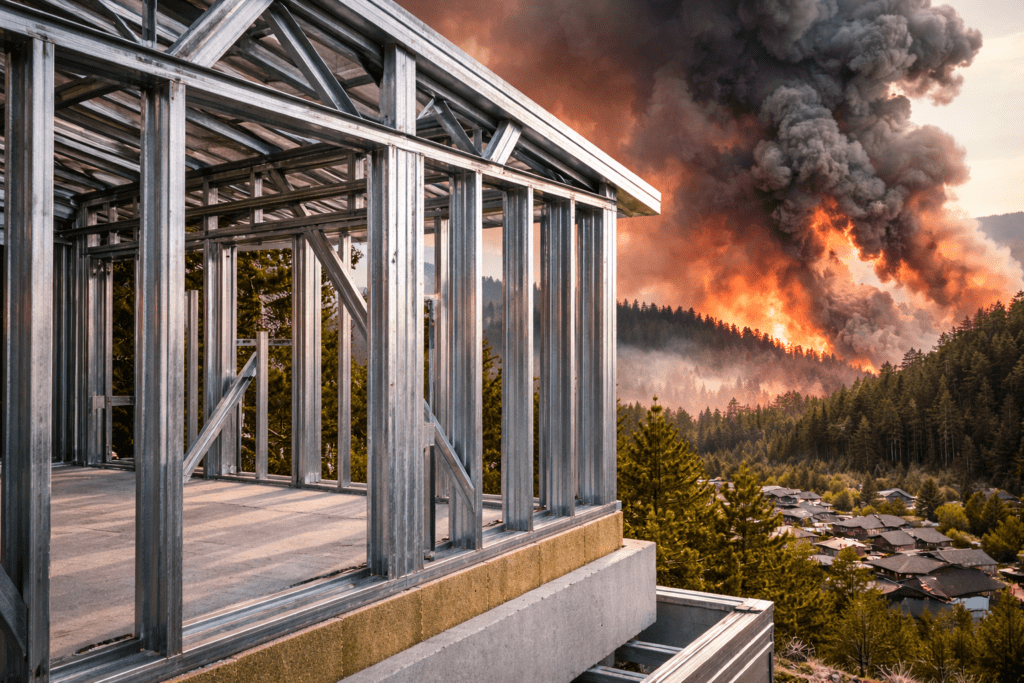
Flooding is no longer a rare event in Canada. Intense rainfall, rapid snowmelt, and overwhelmed municipal systems now affect both urban and suburban communities. Ontario, British Columbia, Alberta, and Quebec have all seen major flood events in recent years.
For builders and developers, this shift changes the conversation. Clients now ask tougher questions:
Will this home survive basement flooding?
What happens if water enters the wall system?
How expensive will repairs be after a storm?
Traditional construction methods struggle under these conditions. Wood framing absorbs water, swells, and creates long-term structural and health risks. As climate risks increase, builders must think beyond basic code compliance. They must design for resilience.
This is where flood-resilient cold-formed steel framing becomes a strategic advantage.
The Problem with Wood Framing in Flood Zones
Wood remains common in residential construction. However, it performs poorly when exposed to water.
When flooding occurs, wood framing:
Absorbs moisture quickly
Swells and distorts
Loses structural integrity
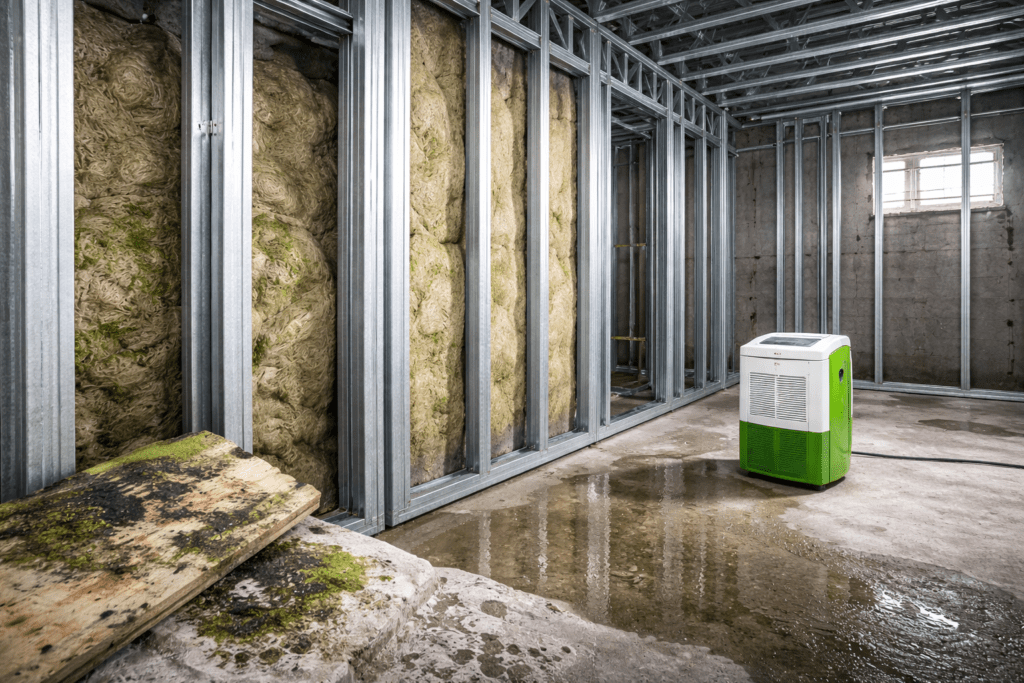
Becomes a breeding ground for mold
Even after drying, wood can remain compromised. Hidden moisture leads to rot, fastener corrosion, and long-term durability issues. In many flood-damaged homes, contractors must remove large portions of wall framing. This increases labor costs, material waste, and project timelines.
Wood also traps contaminants carried by floodwater. Sewage, chemicals, and debris often penetrate framing cavities. That contamination makes remediation more complex and expensive.
In flood-prone regions, these risks create liability for developers and stress for homeowners.
Builders need a framing material that resists water damage instead of absorbing it.
How Cold-Formed Steel Framing Solves Flood Risks
Flood-resilient cold-formed steel framing offers a fundamentally different response to water exposure.
Steel does not absorb water. It does not swell, warp, or rot. Galvanized coatings protect it from corrosion, even in damp environments. When water recedes, steel framing dries quickly and maintains its structural strength.
This changes the recovery process dramatically.
Instead of removing structural framing, contractors often only need to:
Replace insulation
Replace drywall
Clean and disinfect surfaces
The core structural system remains intact.
Steel also prevents one of the biggest post-flood problems: mold growth. Because it is inorganic, steel does not feed mold. This reduces long-term indoor air quality issues and protects occupants from health risks.
From a structural standpoint, steel maintains dimensional stability. Walls remain straight. Fasteners stay secure. Floors do not sag or shift after drying.
In short, steel framing supports faster recovery and lower rebuild costs.
Practical Advantages for Builders and Developers
Choosing flood-resilient cold-formed steel framing is not only about durability. It also delivers measurable business benefits.
1. Reduced Repair and Replacement Costs
After a flood event, wood-framed buildings often require extensive structural removal. Steel-framed buildings usually require far less demolition. This reduces insurance claims and reconstruction timelines.
Developers benefit from faster tenant return in rental properties. Homeowners benefit from lower restoration bills.
2. Lower Long-Term Liability
Buildings in known flood-risk areas face increasing scrutiny. Developers who use water-resistant structural systems reduce exposure to future legal and financial risk.
Marketing flood-resilient construction can also differentiate a project in competitive housing markets.
3. Insurance and Risk Assessment Benefits
Insurance providers increasingly evaluate structural resilience. Non-combustible, water-resistant framing improves a building’s overall risk profile. In some cases, developers may see improved insurance terms over time.
4. Structural Integrity After Water Events
Steel retains strength after drying. It does not degrade the way organic materials do. This ensures that post-flood inspections are simpler and structural certifications are easier to obtain.
Builders can confidently stand behind their work.
Where Flood-Resilient Steel Framing Makes the Most Sense
Certain project types benefit most from cold-formed steel in flood-sensitive environments.
Basements and Below-Grade Walls
Basements face the highest flood exposure. Using steel studs for foundation wall framing dramatically reduces mold and rot risk. Even minor seepage will not compromise the structure.
Urban Infill and High-Density Sites
City lots often rely on aging stormwater infrastructure. In heavy rainfall, localized flooding becomes common. Steel framing ensures durability in tight urban developments.
Coastal and River-Adjacent Housing
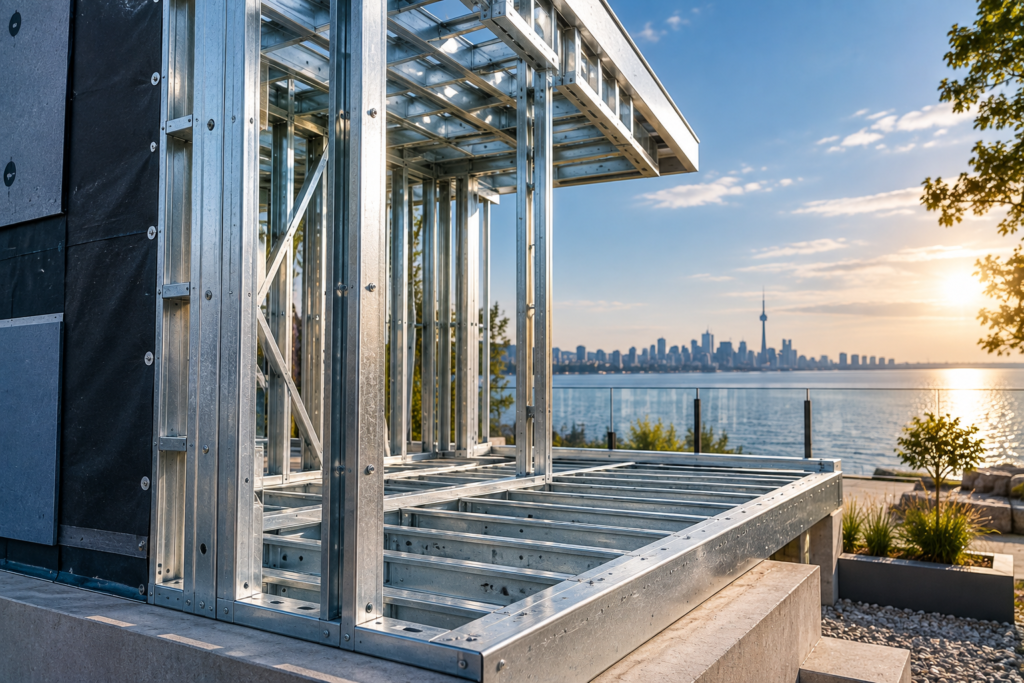
Communities near rivers, lakes, and coastal areas face recurring flood events. Designing with steel from the start reduces long-term structural vulnerability.
Affordable and Rental Housing
Developers of rental properties must control maintenance costs. Steel framing limits recurring repairs related to moisture and water damage, improving lifecycle performance.
Building Climate-Resilient Projects with LSF Pro
LSF Pro works with Canadian builders who want stronger, smarter framing systems for climate-sensitive projects.
We provide:
Engineered cold-formed steel framing layouts
Custom structural designs tailored to flood-prone sites
Precision-manufactured steel components
Technical support for code-compliant, resilient builds
Our team understands Canadian environmental conditions. We help you design structures that go beyond minimum requirements and address real-world climate risks.
If you are building in an area exposed to heavy rainfall, rising water tables, or flood risk, now is the time to rethink traditional framing systems.
Contact LSF Pro today to discuss how flood-resilient cold-formed steel framing can strengthen your next residential or multi-unit project. Build ready for the future.