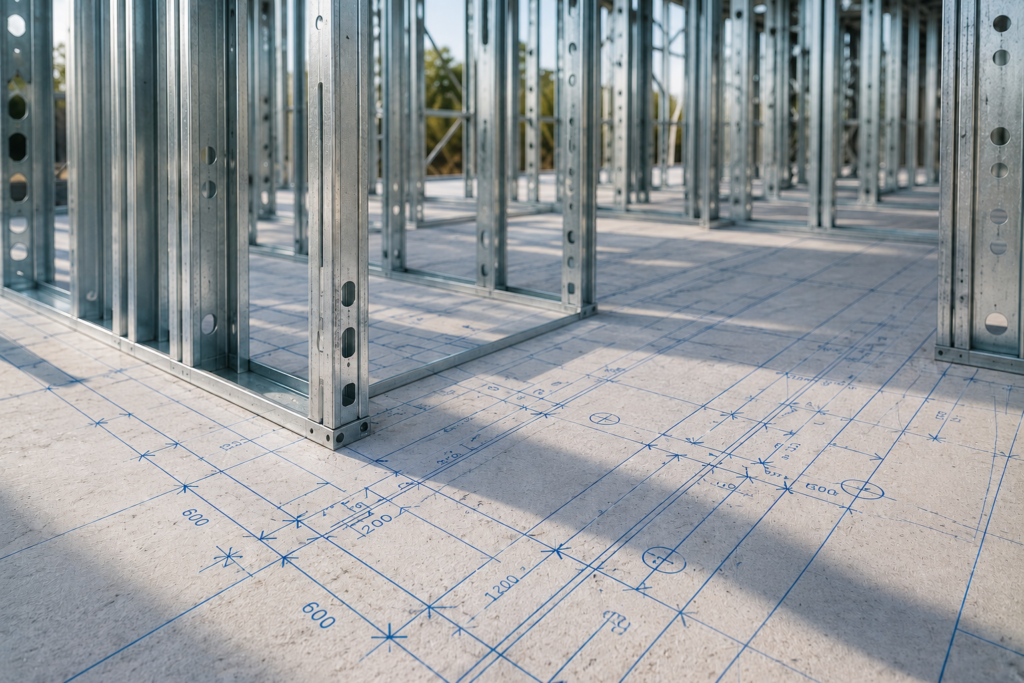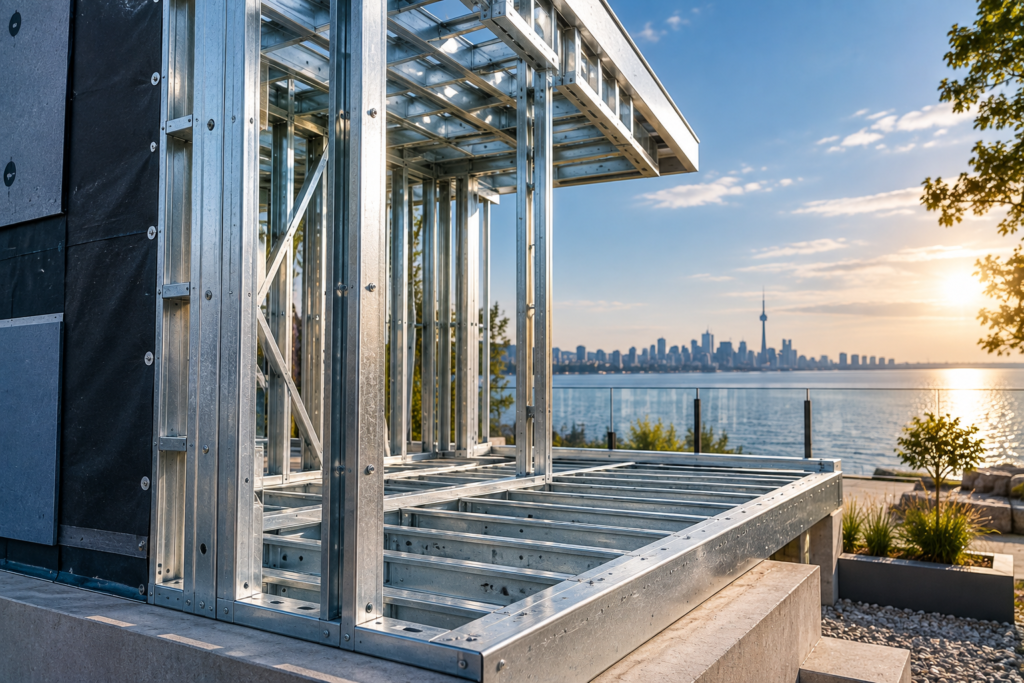
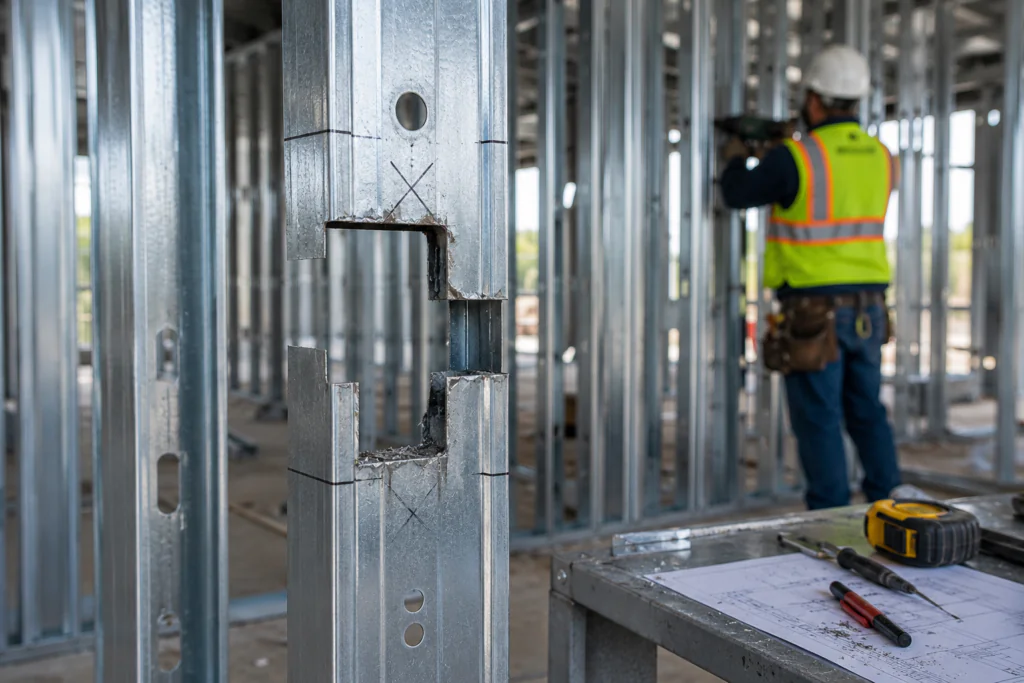
Light steel framing is engineered for precision. Every stud, track, connection, and opening is designed to work as part of a complete structural system.
That is why field modifications in steel framing can create serious problems when they are done without proper engineering review.
On many construction sites, changes happen quickly. A hole gets enlarged for a pipe. A stud gets cut to make room for mechanical equipment. A connection is shifted slightly to solve a coordination issue.
These adjustments may appear minor in the moment, but in cold-formed steel systems, even small modifications can affect structural performance in ways that are not immediately visible.
For builders and developers in Ontario, understanding these risks is critical.
Why Light Steel Framing Depends on Precision
Unlike traditional framing systems that may tolerate a certain amount of field improvisation, cold-formed steel framing relies heavily on exact geometry and engineered load paths.
Each component is designed with:
- Specific thicknesses
- Defined load capacities
- Precise connection details
- Calculated spacing and alignment
When one part of that system changes, the behavior of the structure changes as well.
That is why field modifications in steel framing are not just construction decisions. They are structural decisions.
The Most Common Field Modifications
Most modifications happen for practical reasons during construction.
Mechanical, electrical, and plumbing trades often need additional space or routing adjustments. This leads to:
- Enlarged service holes
- Additional cuts in studs
- Relocated framing members
- Modified connections
In some cases, components are trimmed or adjusted simply to speed up installation or resolve site conflicts.
The problem is that these changes are often made without understanding how they affect load transfer and structural stability.
Why Small Changes Can Have Large Effects
Cold-formed steel members are thin by design. Their strength comes from geometry, shape, and load distribution rather than mass.
This makes them efficient, but it also means they are more sensitive to modifications.
Cutting part of a stud web, enlarging a hole, or removing material near a connection changes how forces move through the member.
Even a relatively small cut can:
- Reduce axial load capacity
- Increase buckling risk
- Disrupt load paths
- Create localized stress concentrations
The issue is not always immediate failure. Often, the structure continues to stand while performance gradually degrades over time.
Service Hole Modifications Are a Major Risk
One of the most common examples involves service holes.
Factory-punched holes are designed and positioned intentionally. Their size and location are accounted for during engineering calculations.
Field-modified holes are different.
When holes are enlarged or new openings are cut without review, the original structural assumptions no longer apply.
This is especially dangerous in load-bearing walls where studs are carrying significant vertical loads.
The risk increases further when modifications are repeated throughout a project.
Connection Alterations Create Hidden Problems
Connections are another vulnerable area.
Cold-formed steel framing relies on many small fastened connections working together as a system. If fastener spacing changes or connections are relocated, load transfer can be affected.
In the field, installers sometimes shift connections to accommodate other trades or simplify installation.
But even small alignment changes can alter the intended load path.
This can create overstressed areas that were never designed to carry additional force.
Load Paths Can Be Accidentally Disrupted
Every building depends on a continuous load path from the roof and floors down to the foundation.
Field modifications often interrupt that path.
For example, if a load-bearing stud is cut or offset without proper reinforcement, the load may shift unpredictably into adjacent members or connections.
This creates uneven force distribution across the structure.
The result may include:
- Excessive movement
- Deflection
- Cracking in finishes
- Reduced long-term structural reliability
These issues are often difficult to trace back once the building is complete.
Why These Problems Are Often Missed Initially
One reason field modifications in steel framing are so dangerous is that the effects are not always immediately visible.
The building may appear stable during construction. Problems often emerge later as loads accumulate and the structure experiences normal movement over time.
That delayed response makes these issues particularly difficult and expensive to correct.
In many cases, the cost of repairing hidden structural problems far exceeds the time saved by making unauthorized field changes.
Multi-Unit Projects Amplify the Risk
In multi-unit housing, repeated mistakes multiply quickly.
A single modified detail may seem insignificant. But when the same modification occurs across dozens or hundreds of units, the structural impact becomes much larger.
This is why consistency and quality control are essential in panelized and repetitive construction systems.
Field improvisation undermines one of the biggest advantages of light steel framing: precision.
Prefabrication Reduces Modification Risk
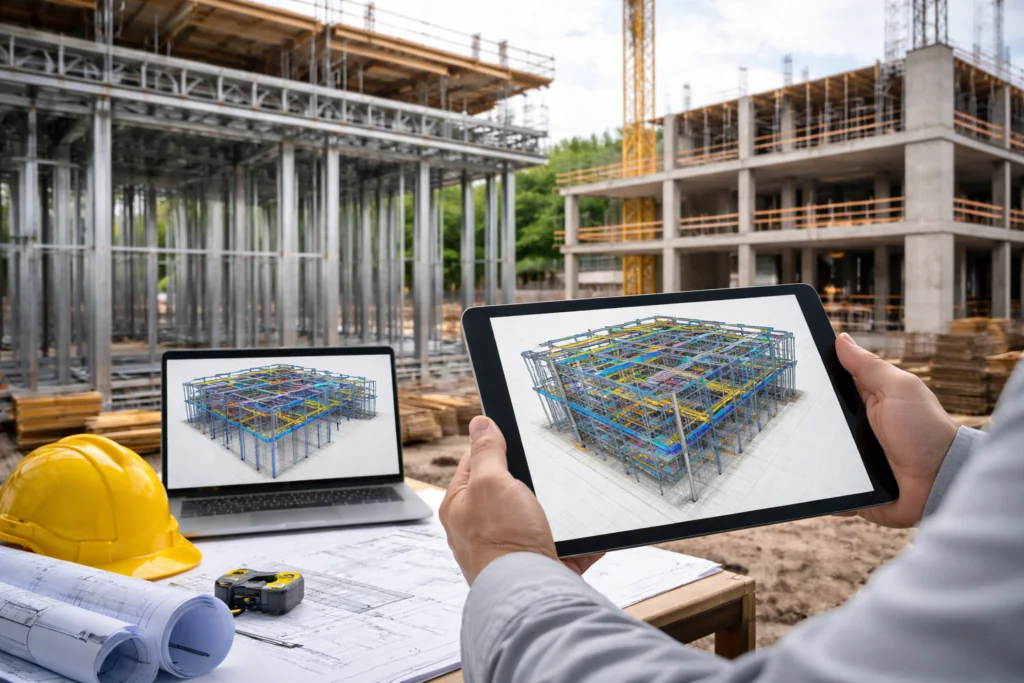
One of the reasons prefabricated steel framing systems are gaining popularity is because they reduce the need for field changes.
When framing is coordinated digitally before manufacturing:
- Service openings are pre-planned
- Connections are engineered
- Trade coordination happens earlier
This minimizes conflicts during installation and reduces the temptation for on-site modifications.
For Ontario projects facing labour shortages and schedule pressure, this creates a much more controlled construction process.
The Importance of Engineering Review
Not every field modification is unacceptable.
The key issue is whether the modification has been properly reviewed.
If changes are necessary, they should be evaluated by the project engineer before implementation.
A small amount of planning can prevent major structural consequences later.
This is especially important for:
- Load-bearing walls
- Concentrated load areas
- Connection zones
- Mid-rise and multi-unit projects
Why This Matters in Canadian Construction
Canada’s building environment places significant demands on structural systems.
Temperature changes, snow loads, building movement, and long-term durability all depend on framing systems performing exactly as designed.
Field modifications introduce uncertainty into that system.
Builders who understand and control these risks deliver more reliable projects with fewer long-term issues.
Practical Takeaway
Field modifications in steel framing should never be treated casually.
What appears to be a small adjustment on site may have a significant structural impact.
Maintaining the integrity of the engineered system is critical. That means:
- Avoiding unauthorized cuts or enlargements
- Coordinating trades early
- Reviewing modifications with engineers
- Prioritizing precision during installation
These steps protect both structural performance and project quality.
Work with LSF Pro Structures
At LSF Pro Structures, we provide engineered light steel framing systems designed to minimize site conflicts and reduce the need for risky field modifications.
Our integrated approach to design, manufacturing, and coordination helps ensure your project performs exactly as intended.
If you want to avoid the hidden structural risks of field modifications in steel framing, contact LSF Pro Structures today.