As construction timelines tighten across Ontario, builders and developers are paying closer attention to efficiency. One comparison is becoming increasingly important: panelized light steel framing vs stick-built systems.
Both approaches can produce quality buildings, but they operate very differently. The choice affects speed, labour requirements, project coordination, and long-term performance.
For developers working on multi-unit housing, mid-rise projects, or fast-track construction, understanding these differences is critical.
What Is a Stick-Built Framing System?
Stick-built framing is the traditional approach used on many construction sites.
Materials arrive in standard lengths and are assembled piece by piece in the field. Crews measure, cut, align, and fasten members directly on site.
This method has been widely used for decades because it offers flexibility during construction. Adjustments can be made in real time, and smaller crews can handle relatively simple projects without extensive preplanning.
However, the system depends heavily on:
- Site conditions
- Labour availability
- Crew consistency
- Weather exposure
As projects become larger and more complex, these factors can create inefficiencies.
What Is Panelized Light Steel Framing?
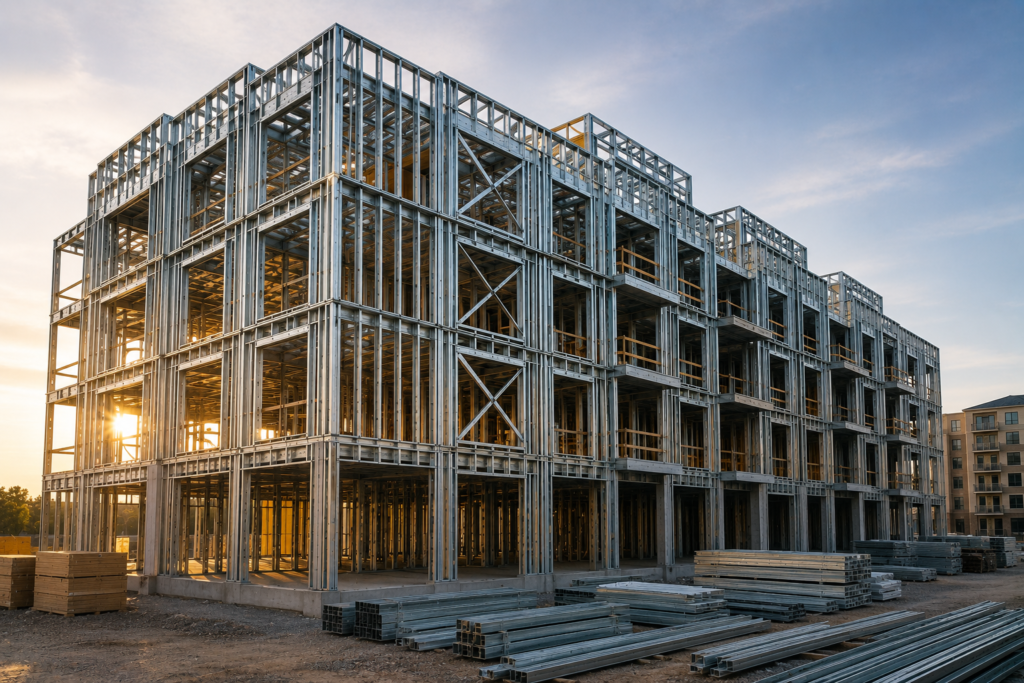
Panelized light steel framing takes a different approach.
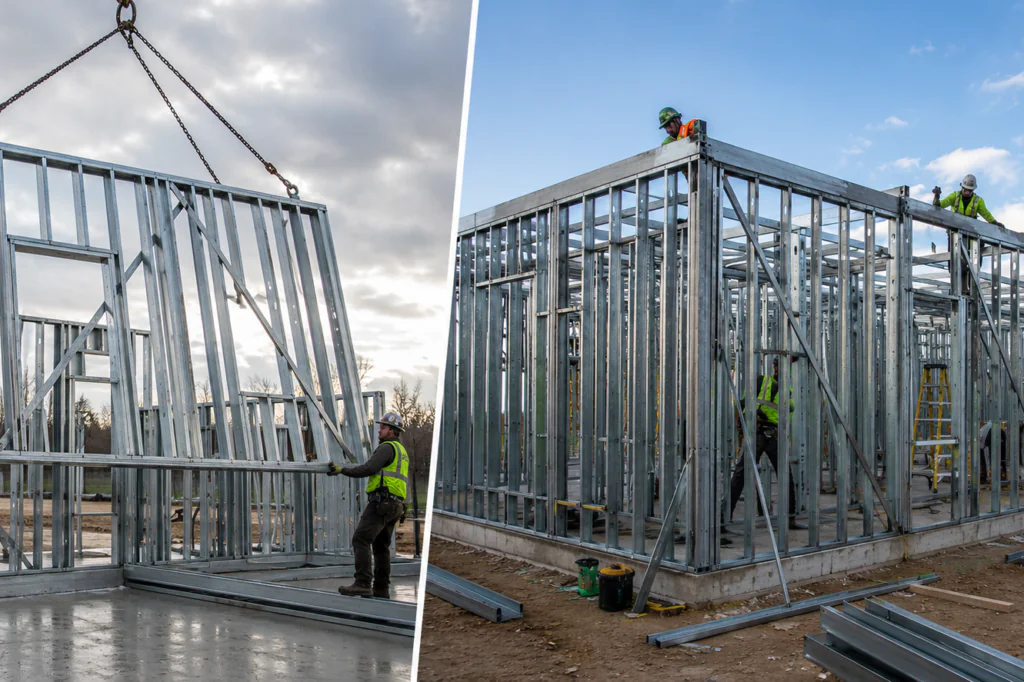
Instead of assembling walls entirely on site, framing panels are manufactured in a controlled facility using engineered production systems. These panels are then delivered to site ready for installation.
Each panel is produced to exact dimensions based on the project’s digital design model.
This means:
- Wall sections arrive pre-built
- Openings and service holes are already positioned
- Components are labeled and coordinated for assembly
The site process shifts from fabrication to installation.
That difference changes the entire workflow of a project.
Speed of Construction
One of the biggest advantages in the panelized light steel framing vs stick-built systems comparison is construction speed.
Panelized systems dramatically reduce on-site framing time. Since wall sections are already assembled, crews can erect large portions of the structure quickly.
This creates a cascading effect across the project.
Faster framing means:
- Earlier enclosure of the building
- Faster start for mechanical and electrical trades
- Reduced schedule overlap issues
- Earlier completion overall
In Ontario’s climate, this is especially valuable. Reducing exposure to weather can prevent major delays during colder months.
Stick-built systems, by comparison, require more on-site labour hours and slower sequential progress.
Precision and Quality Control
Panelized systems also provide much greater consistency.
Because manufacturing happens in a controlled environment, dimensions remain accurate and repeatable across all panels. This improves alignment, straightness, and overall quality.
In stick-built systems, precision depends largely on field conditions and crew performance. Even experienced teams can produce slight inconsistencies from wall to wall.
Over a multi-unit project, those inconsistencies add up.
They can affect:
- Drywall finishing quality
- Alignment of openings
- Mechanical coordination
- Overall fit and finish
Panelization reduces these variables significantly.
Labour Efficiency and Site Coordination
Ontario’s construction industry continues to face labour shortages.
This is where panelized framing becomes increasingly attractive.
By shifting much of the work off-site, panelized systems reduce the amount of skilled labour required in the field. Site crews spend less time measuring and cutting, and more time assembling.
This improves productivity and reduces scheduling pressure.
Stick-built systems rely much more heavily on large on-site crews and trade coordination. As labour availability becomes less predictable, this creates additional risk.
Waste Reduction and Material Efficiency
Material waste is another important difference.
Panelized manufacturing systems optimize material usage because components are cut precisely according to digital models. This reduces excess waste and improves inventory control.
Stick-built construction generates more offcuts and field waste due to manual cutting and adjustments.
For developers focused on cost control and sustainability, this efficiency becomes increasingly important.
Structural Consistency and Performance
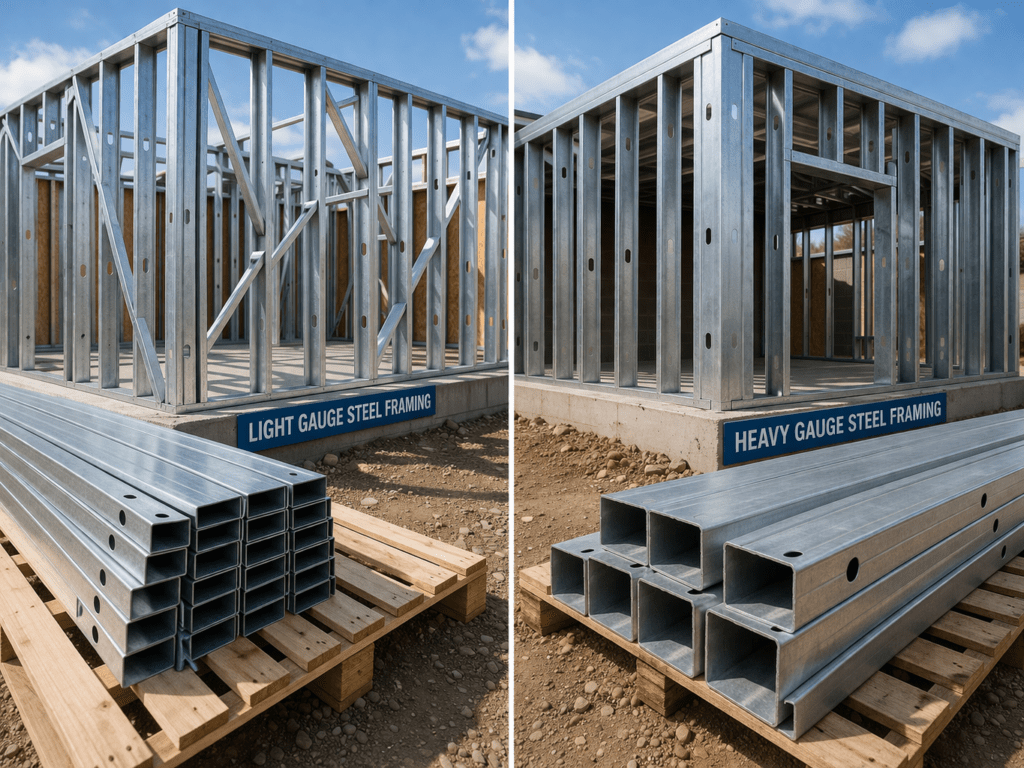
Light steel framing already offers strong dimensional stability compared to traditional materials.
Panelization takes this further by ensuring that:
- Connections are consistent
- Members are aligned properly
- Load paths are maintained accurately
This improves structural reliability across the project.
In stick-built systems, variations in assembly can affect consistency, especially on larger projects with multiple crews working simultaneously.
Flexibility During Construction
Stick-built systems do have one advantage: flexibility during active construction.
Because assembly happens on site, crews can adapt more easily to unexpected conditions or late-stage design changes.
Panelized systems require more coordination and planning upfront. Once manufacturing begins, changes become more difficult and costly.
This means panelization works best when projects are well coordinated early in the design process.
Why Panelization Fits Ontario’s Market
Ontario’s market is increasingly focused on:
- Faster delivery
- Better quality control
- Labour efficiency
- Predictable timelines
Panelized light steel framing aligns directly with these priorities.
As projects scale up and timelines tighten, developers are looking for systems that reduce variability and improve execution.
That is why panelized framing is gaining momentum across the province.
The Real Question Is Not Just Speed
The comparison between panelized light steel framing vs stick-built systems is not only about how fast walls go up.
It is about:
- Predictability
- Labour exposure
- Coordination efficiency
- Long-term project control
For many modern projects, especially multi-unit residential developments, those factors matter more than ever.
Practical Takeaway
Stick-built systems can still work well for smaller or highly customized projects.
But for developers looking to scale efficiently, reduce labour dependency, and accelerate schedules, panelized light steel framing offers major advantages.
The more repetitive and schedule-sensitive the project becomes, the more valuable panelization becomes.
Work with LSF Pro Structures
At LSF Pro Structures, we specialize in advanced panelized light steel framing systems designed for Ontario’s construction environment.
Our prefabricated solutions help developers reduce build times, improve quality control, and streamline project execution from start to finish.
If you are evaluating panelized light steel framing vs stick-built systems for your next project, contact LSF Pro Structures today.