Steel studs are widely used in modern construction across Ontario and Canada, offering strength, consistency, and long-term durability. However, not all steel studs serve the same purpose. One of the most common mistakes in light steel framing projects is misunderstanding the difference between structural and non-structural studs.
Choosing the wrong type can lead to serious performance issues, failed inspections, and costly corrections. For builders, contractors, and developers, understanding this distinction is critical for both compliance and efficiency.
What Are Steel Studs?
Steel studs are cold-formed steel members used to create wall systems in residential, commercial, and industrial buildings. They are manufactured with precise dimensions and consistent quality, which makes them ideal for modern framing systems.
Unlike wood, steel studs do not warp, shrink, or crack over time. This stability allows for more accurate construction and better long-term performance.
However, steel studs are divided into two main categories: structural and non-structural. Each serves a different role in the building.
What Are Structural Steel Studs?
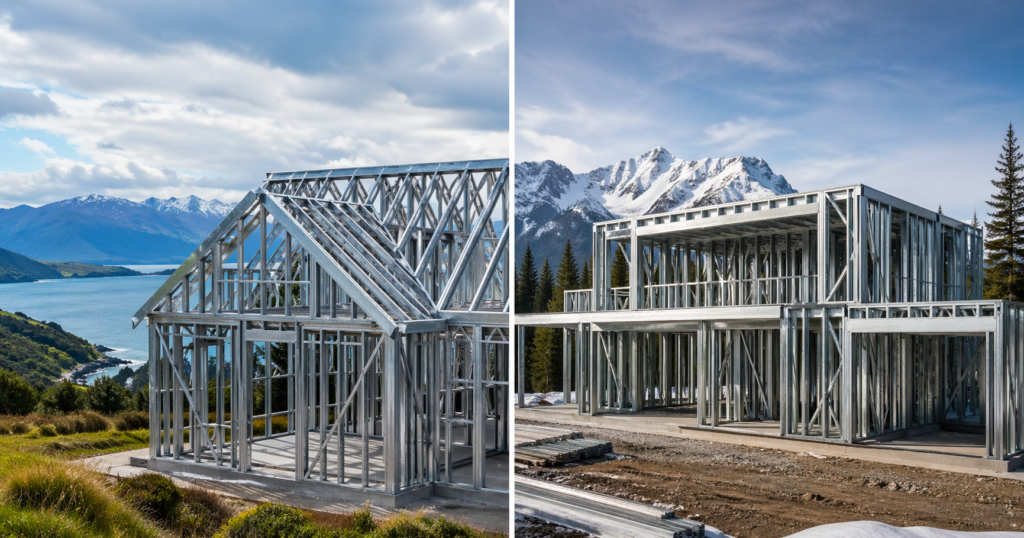
Structural steel studs are designed to carry loads. They are used in parts of the building where strength and structural integrity are critical.
These studs are typically found in:
- Load-bearing walls
- Exterior walls
- Floor systems
- Roof structures
They are engineered to support vertical loads such as floors and roofs, as well as lateral forces like wind pressure. Because of this, structural studs must meet strict engineering and code requirements.
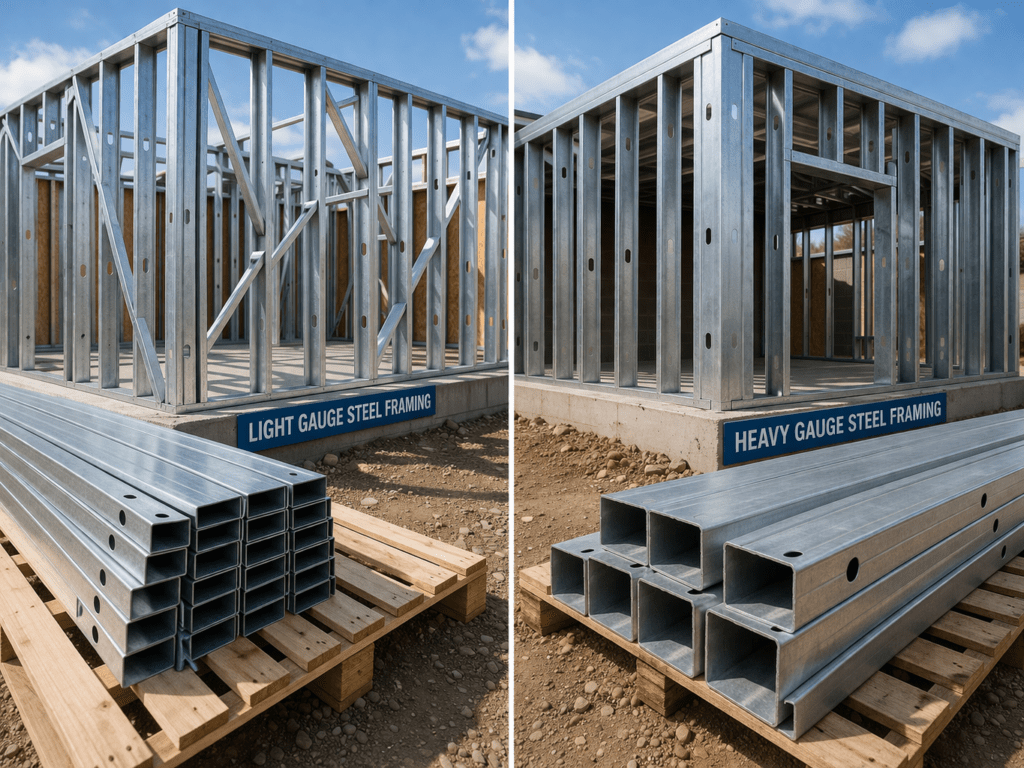
Their thickness, also known as gauge, is significantly higher than non-structural studs. This added strength allows them to handle the stresses placed on them throughout the life of the building.
What Are Non-Structural Steel Studs?
Non-structural steel studs, often referred to as drywall studs or partition studs, are used for interior walls that do not carry any load.
These studs are commonly used for:
- Interior partitions
- Office layouts
- Drywall framing
- Ceiling systems
Their primary purpose is to support finishes such as drywall rather than structural loads. Because of this, they are thinner and lighter than structural studs.
Non-structural studs are easier to handle and install, which makes them ideal for fast interior work. However, they should never be used in load-bearing applications.
Key Differences Between Structural and Non-Structural Steel Studs
The most important difference comes down to load capacity. Structural studs are engineered to support weight and resist external forces, while non-structural studs are not.
This difference affects several aspects of construction.
Structural studs are manufactured with thicker steel, which gives them higher strength and rigidity. They are designed based on engineering calculations and must comply with Canadian standards such as CSA S136.
Non-structural studs, on the other hand, are lighter and thinner. They are not designed to carry loads and are used strictly for partitioning spaces within a building.
Another major difference is in code requirements. Structural studs must be part of an engineered system and are subject to strict inspections. Non-structural studs have fewer regulatory requirements but must still meet basic standards for safety and performance.
Installation methods also differ. Structural systems require precise alignment, proper fastening, and full adherence to engineered drawings. Non-structural installations are more flexible but still require accuracy for proper finishing.
Why This Difference Matters in Ontario Construction
In Ontario, building codes are strict, and inspections are thorough. Using the wrong type of steel stud can result in immediate compliance issues.
For example, if non-structural studs are mistakenly used in a load-bearing wall, the structure may fail to meet safety requirements. This can lead to project delays, redesigns, and increased costs.
On the other hand, using structural studs where they are not needed can increase material costs unnecessarily. While this does not create a safety issue, it reduces overall project efficiency.
Builders must balance performance and cost by selecting the correct type of stud for each application.
Common Mistakes to Avoid
One of the most common mistakes is assuming that all steel studs are interchangeable. This often happens when teams are not fully familiar with light steel framing systems.
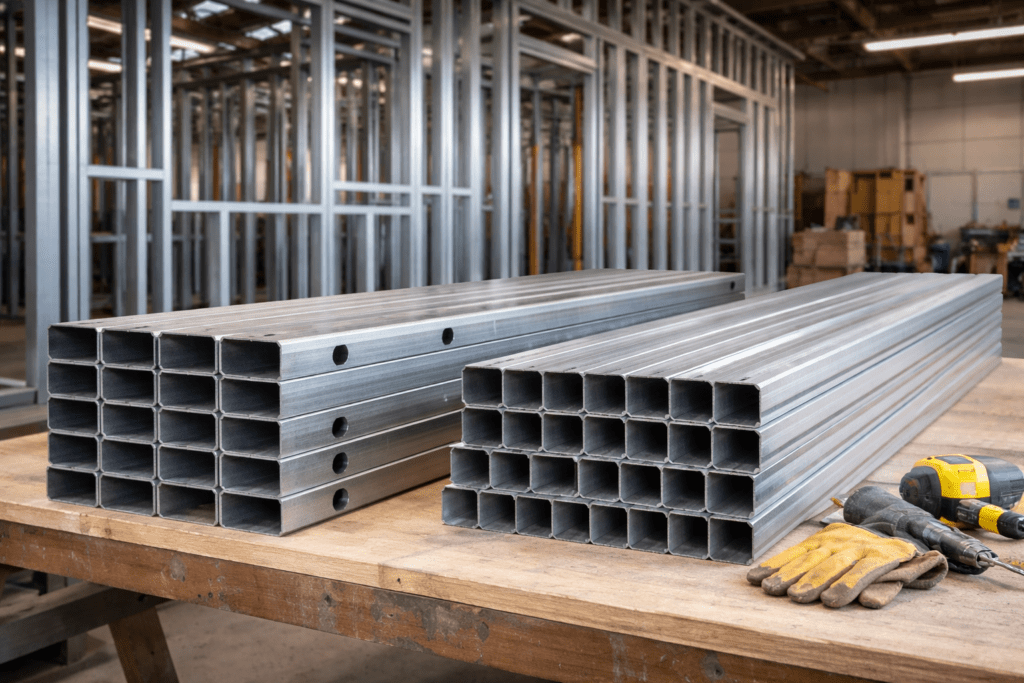
Another issue is relying on visual similarity. Structural and non-structural studs can look similar at a glance, but their thickness and load capacity are very different.
Lack of coordination between design and installation teams can also lead to errors. If installers do not follow engineered drawings carefully, incorrect materials may be used in critical areas.
These mistakes are avoidable with proper planning and clear communication.
How to Choose the Right Steel Stud
Selecting the correct stud type starts at the design stage. Engineers and designers must clearly define which walls are load-bearing and which are not.
From there, manufacturers produce the appropriate components based on these specifications. Builders and installers must then follow the provided drawings without deviation.
Working with experienced suppliers and framing specialists ensures that the correct materials are used throughout the project.
In complex projects, this coordination becomes even more important. Every component must align with both structural requirements and building code standards.
The Role of Steel Studs in Modern Construction
Steel studs have become a key part of modern building systems in Canada. Their strength, precision, and durability make them ideal for both structural and non-structural applications.
As construction continues to move toward prefabrication and engineered systems, the importance of using the right components becomes even greater.
Understanding the difference between structural and non-structural studs is a basic requirement for any builder working with light steel framing.
Build with Confidence Using LSF Pro Structures
Choosing the right steel studs is not just a technical decision. It directly affects the safety, cost, and success of your project.
LSF Pro Structures provides engineered steel framing solutions designed for Ontario and Canadian construction standards. Every component is manufactured with precision to ensure the right materials are used in the right place.
Contact LSF Pro Structures today to make sure your next project is built with accuracy, efficiency, and full confidence.