
Building with light steel framing in Ontario offers clear advantages in speed, durability, and precision. However, these benefits only matter if the system is designed and installed in full compliance with Canadian codes and standards.
Many builders underestimate how critical code compliance is when working with light steel frame (LSF) systems. Unlike traditional wood framing, steel construction follows a different set of engineering principles and regulatory requirements.
Understanding these requirements early in the project will prevent delays, failed inspections, and costly redesigns.
The Role of the Ontario Building Code (OBC)
In Ontario, all construction must comply with the Ontario Building Code (OBC). This code sets the minimum requirements for structural safety, fire protection, energy efficiency, and overall building performance.
For light steel framing, the OBC does not act alone. It references national standards that define how steel components must be designed and manufactured.
This means builders must follow both provincial regulations and Canadian engineering standards at the same time. Ignoring either one can result in rejected permits or inspection failures.
Key Canadian Standards for Light Steel Framing
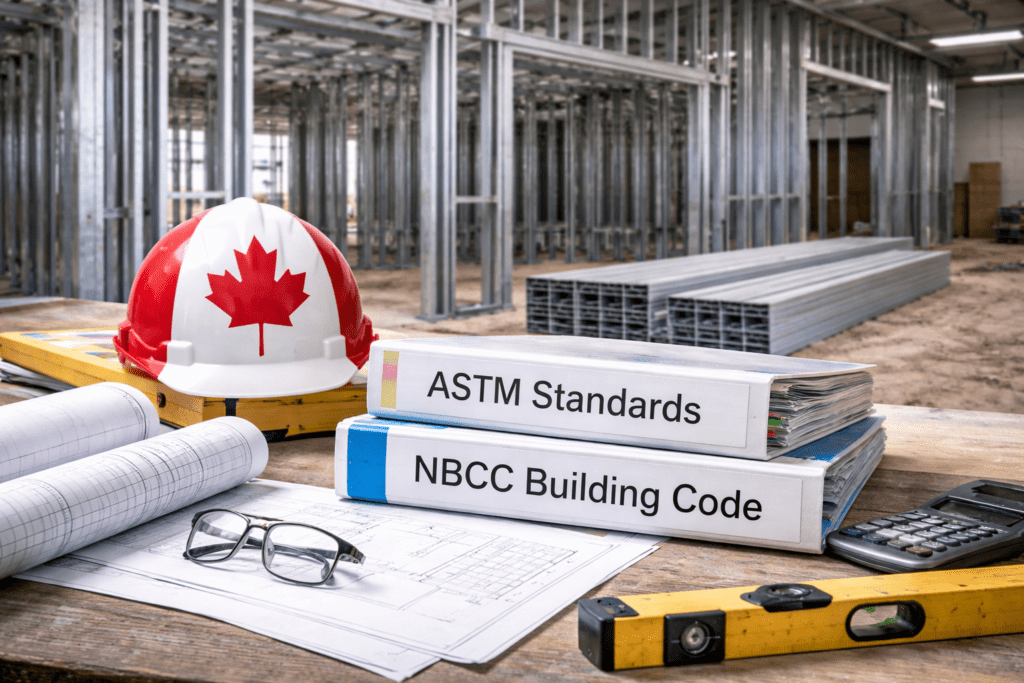
Light steel framing systems in Canada are governed by specific CSA and ASTM standards. These standards ensure that materials and designs meet structural and safety requirements.
One of the most important standards is CSA S136, which covers the design of cold-formed steel structural members. This standard defines how loads are calculated, how members behave under stress, and how connections must perform.
Material quality is also regulated. Steel used in framing typically follows ASTM standards such as A1003 or A653. These standards define strength, coating, and corrosion resistance, which are critical for long-term performance in Canadian climates.
In practice, this means that every component used in a project must be traceable to certified materials and engineered according to these standards.
Structural Design Requirements
Light steel framing cannot be treated like wood framing from a design perspective. The behavior of steel under load is different, and this requires proper engineering.
All structural LSF systems must be designed by qualified professionals using approved software and calculations. Load-bearing walls, floor systems, and roof structures must be analyzed for:
Dead loads
Live loads
Snow loads (especially critical in Ontario)
Wind loads
Ontario’s climate makes snow load calculations particularly important. Roof systems must be designed to handle significant accumulation, especially in northern and suburban regions.
Improper design at this stage will not pass building permit review. More importantly, it creates serious structural risks.
Fire Protection and Rating Compliance
Fire safety is a major part of Canadian building regulations. Light steel framing offers advantages here, but only when assemblies are designed correctly.
The Ontario Building Code requires specific fire-resistance ratings depending on the building type. This is especially important for:
Multi-unit residential buildings
Commercial spaces
Mixed-use developments
Steel itself is non-combustible, but the full wall or floor assembly must meet fire rating requirements. This includes drywall layers, insulation, and connection details.
Builders must use tested and approved assemblies to meet these requirements. Custom or unverified designs can lead to inspection failures.
Thermal Performance and Energy Code Requirements
Energy efficiency is another critical area of compliance in Ontario. Steel is highly conductive, which means thermal bridging must be addressed during design.
The OBC includes energy efficiency requirements that apply to all building types. For LSF construction, this means:
Proper insulation strategies must be implemented
Thermal breaks may be required
Wall assemblies must meet minimum R-values
Failure to address thermal performance can result in non-compliance, even if the structure itself is sound.
This is one area where experienced LSF designers make a significant difference. Proper detailing ensures both structural and energy requirements are met at the same time.
Fabrication and Quality Control
One of the strengths of light steel framing is that components are manufactured off-site. However, this also introduces strict quality control requirements.
Manufacturers must follow precise production standards to ensure consistency and accuracy. Each component must match the approved shop drawings exactly.
In Ontario, projects often require stamped drawings and documentation showing that the system was manufactured according to engineering specifications.
Any deviation between design and production can create serious issues during installation and inspection.
Installation and Site Compliance
Even with perfect design and manufacturing, improper installation can lead to failure.
Installation crews must follow engineered drawings closely. This includes:
Correct fastening methods
Proper spacing of members
Accurate alignment and bracing
Inspectors will review the installed system to ensure it matches approved plans. Any inconsistency can result in delays and required corrections.
Builders who treat LSF like traditional framing often run into problems here. Steel systems require a more disciplined and precise approach.
Common Mistakes That Lead to Code Issues
Many issues with light steel framing projects in Ontario come from avoidable mistakes.
One of the most common problems is starting fabrication before finalizing design. Since prefabricated components cannot be easily adjusted on-site, late changes create delays and additional costs.
Another issue is working with suppliers who are not familiar with Canadian codes. Even small differences in standards can lead to non-compliant systems.
Finally, lack of coordination between engineers, manufacturers, and installers often leads to mismatches between design and execution.
These mistakes are not technical limitations of LSF. They are planning and coordination failures.
Why Code Compliance Is a Competitive Advantage
Builders who fully understand and follow Canadian code requirements gain a significant advantage.
Projects move faster through approvals. Inspections are smoother. Risk is reduced across every stage of construction.
In competitive markets like Ontario, this level of control can make the difference between profitable projects and costly delays.
Light steel framing is not just about material choice. It is about adopting a system that demands precision and rewards it.
Work with Experts in LSF Code Compliance
Successfully building with light steel framing in Ontario requires more than just materials. It requires expertise in design, manufacturing, and regulatory compliance.
LSF Pro Structures delivers engineered light steel framing systems that meet Ontario Building Code requirements and Canadian standards. Every project is developed with precision, ensuring smooth approvals and reliable performance on-site.
If you are planning a project and want to avoid costly delays or compliance issues, contact LSF Pro Structures today and build with confidence.