If you are planning a construction project in the GTA, understanding steel framing regulations in Toronto is not optional. It is a critical part of getting your project approved, built, and occupied without delays or costly issues.
Toronto has strict building requirements, and steel framing projects must meet both municipal and provincial standards. From permits to inspections, every step must be handled correctly to avoid setbacks.
This guide breaks down what you need to know to stay compliant and keep your project moving forward.
Understanding Steel Framing Regulations in Toronto
Steel framing in Toronto is governed by a combination of:
- The Ontario Building Code (OBC)
- City of Toronto bylaws
- CSA standards for steel design
These regulations ensure that structures are safe, durable, and suitable for local conditions.
For cold-formed steel framing, compliance with CSA S136 is essential. This standard defines how steel members are designed, including load capacity, connections, and performance under different conditions.
In addition, materials must meet specifications such as CSA A653 for galvanized steel.
Understanding these requirements early in your project helps prevent delays later.
Building Permits: What You Need to Get Started
Before any construction begins, you must obtain a building permit from the City of Toronto.
For steel framing projects, this typically requires:
- Architectural drawings
- Structural engineering drawings
- Load calculations
- Material specifications
Your structural drawings must clearly show how the steel framing system complies with CSA standards and the Ontario Building Code.
If your project involves multi-unit residential or commercial construction, the review process may be more detailed. Incomplete or unclear submissions can lead to delays.
Working with experienced designers and engineers who understand steel framing regulations in Toronto can significantly speed up this stage.
The Role of Structural Engineers
Steel framing projects must be reviewed and approved by a licensed professional engineer.
The engineer is responsible for:
- Verifying structural design
- Ensuring compliance with CSA S136
- Confirming load paths and connections
- Providing stamped drawings for permit submission
Without proper engineering, your application will not be approved.
In many cases, engineers will also be involved during construction to review site conditions and confirm that the installation matches the approved design.
Inspections During Construction
Once your permit is approved and construction begins, inspections become a key part of compliance.
In Toronto, building inspectors will review your project at different stages, including:
- Framing inspection
- Structural connections
- Fire-rated assemblies (if applicable)
- Final inspection before occupancy
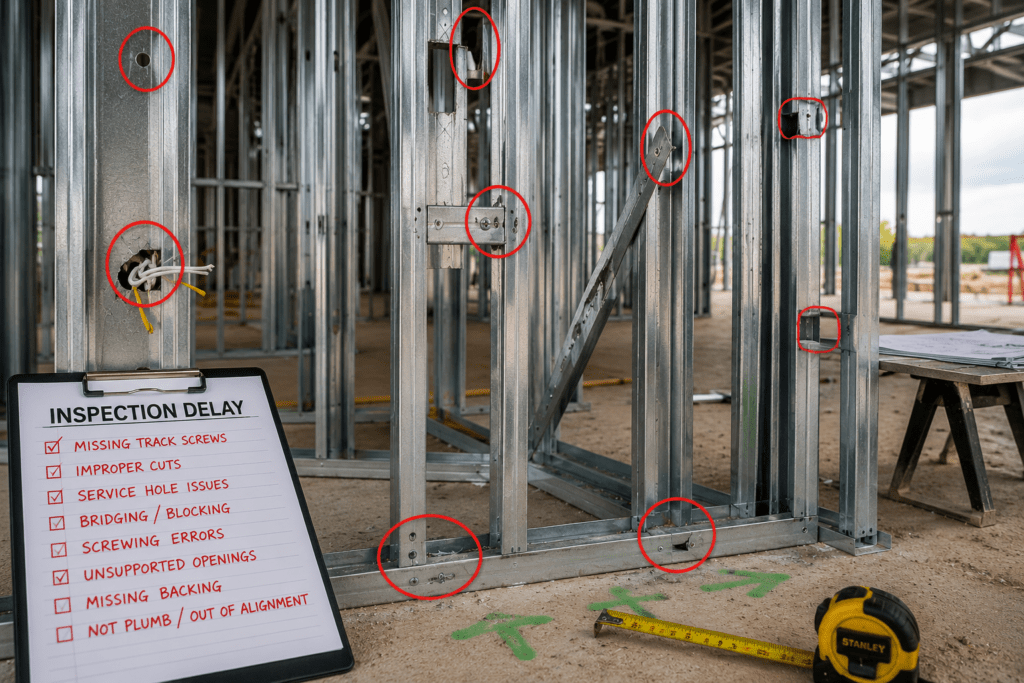
For steel framing, inspectors will check:
- Stud spacing and alignment
- Proper installation of tracks and connections
- Compliance with approved drawings
- Use of specified materials
If any issues are found, corrections must be made before the project can proceed.
Fire and Safety Requirements
Fire safety is a major component of steel framing regulations in Toronto.
Steel itself is non-combustible, which is an advantage. However, it must still meet fire-resistance requirements as part of the overall wall and floor assembly.
This often involves:
- Fire-rated drywall systems
- Proper insulation and sealing
- Compliance with tested assemblies
Depending on the building type, additional fire protection measures may be required.
Understanding these requirements early helps avoid redesign during construction.
Energy Efficiency and Building Envelope Compliance
Toronto projects must also meet energy efficiency requirements under the Ontario Building Code.
Steel framing plays a role here because it affects:
- Thermal bridging
- Insulation performance
- Air tightness
Proper detailing is required to ensure that the building envelope meets energy standards.
This may include:
- Continuous exterior insulation
- Air barrier systems
- Thermal breaks
Failing to address these factors can result in failed inspections and additional costs.
Common Compliance Mistakes
Many delays in Toronto projects come from avoidable mistakes.
One common issue is submitting incomplete or unclear drawings during the permit phase. This leads to back-and-forth with the city and slows down approval.
Another mistake is deviating from approved plans during construction. Even small changes in stud spacing or connections can trigger inspection failures.
Using materials that do not meet CSA specifications is another frequent problem.
Avoiding these issues requires coordination between design, engineering, and construction teams.
Why Compliance Impacts Your Timeline
In Toronto’s construction environment, delays are costly.
Every failed inspection or permit revision adds time and expense to your project. Understanding steel framing regulations in Toronto allows you to plan properly and avoid unnecessary setbacks.
Projects that are well-prepared from the beginning move through approvals and inspections much faster.
Practical Approach for Builders
To stay compliant and efficient:
- Engage a structural engineer early
- Ensure all drawings meet Ontario Building Code requirements
- Use CSA-compliant materials
- Follow approved plans exactly during construction
- Prepare for inspections in advance
This approach reduces risk and keeps your project on schedule.
Why This Matters in Toronto
Toronto is one of the most regulated construction markets in Canada. While this ensures safety and quality, it also means there is little room for error.
Builders who understand steel framing regulations in Toronto gain a major advantage. They complete projects faster, avoid costly corrections, and maintain strong relationships with inspectors and municipalities.
Work with LSF Pro Structures
At LSF Pro Structures, we support builders across Toronto with light steel framing solutions that meet all regulatory and engineering requirements.
From design coordination to manufacturing-ready systems, we help ensure your project stays compliant and efficient.
If you are planning a project and need guidance on steel framing regulations in Toronto, contact LSF Pro Structures today.