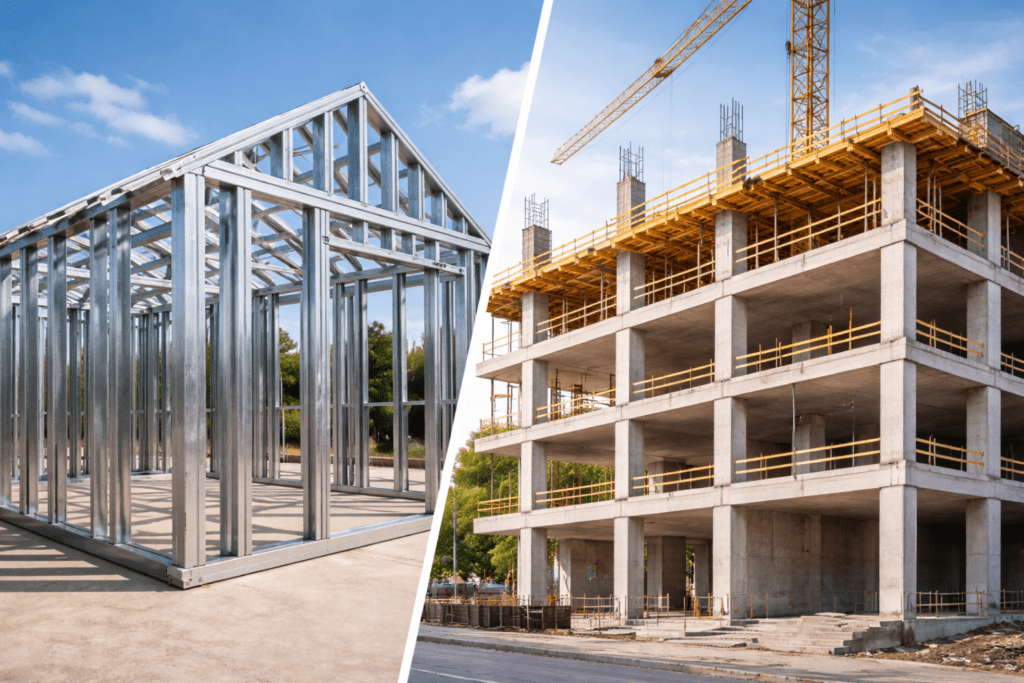
When evaluating building systems in today’s market, one comparison comes up repeatedly: light gauge steel vs concrete construction. For developers and builders across Ontario, this decision directly affects cost, speed, and long-term performance.
Both systems are widely used, but they serve different purposes and deliver very different outcomes. If your goal is cost efficiency without sacrificing quality, you need to understand where each system performs best.
Understanding Light Gauge Steel Construction
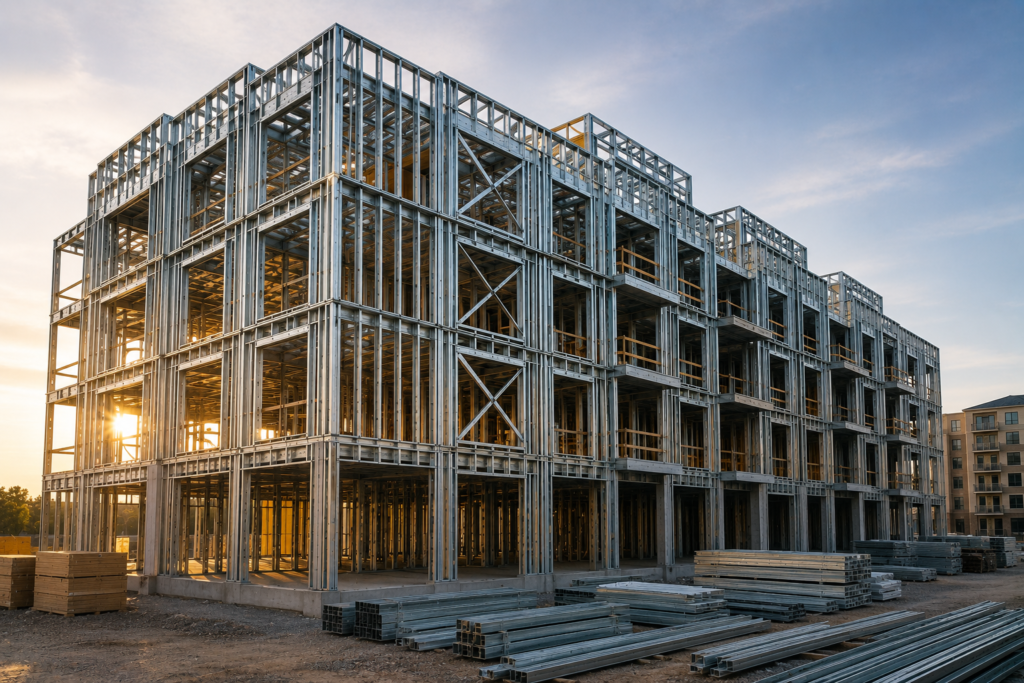
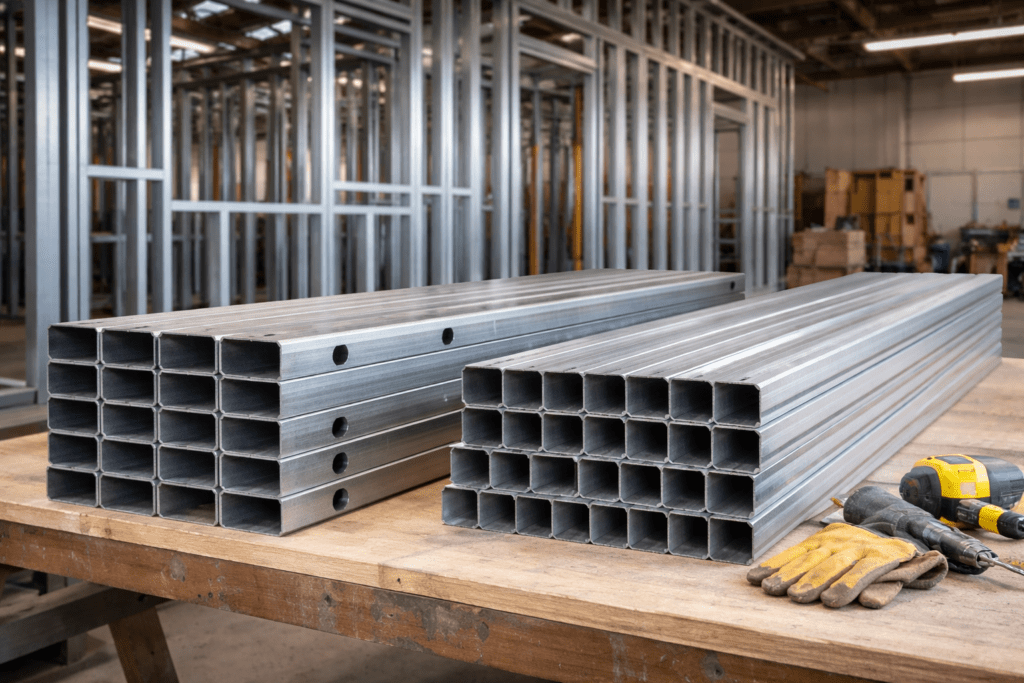
Light gauge steel, also known as cold-formed steel, is a framing system made from thin steel sheets formed into structural members. These components are typically manufactured off-site with high precision and assembled quickly on-site.
In Ontario, light gauge steel is commonly used for:
- Low- to mid-rise residential buildings
- Garden suites and laneway homes
- Multi-unit developments
- Modular and prefabricated construction
Its biggest advantage lies in efficiency. Because components are engineered and consistent, projects move faster and with fewer errors.
Understanding Concrete Construction
Concrete construction is a traditional method used in many large-scale and high-rise buildings. It involves casting concrete on-site or using precast elements to form structural systems.
Concrete is known for:
- High compressive strength
- Fire resistance
- Mass and durability
It is commonly used for:
- High-rise towers
- Underground structures and parking garages
- Large commercial and institutional buildings
While concrete offers strength and stability, it also introduces complexity in terms of time, labour, and cost.
Cost Comparison: Where the Difference Really Shows
When comparing light gauge steel vs concrete construction, cost must be evaluated beyond just material pricing.
Light gauge steel often provides better overall cost efficiency because:
- It reduces construction time significantly
- It requires less on-site labour
- It minimizes material waste
- It lowers foundation costs due to lighter weight
Concrete construction typically involves:
- Higher labour costs
- Longer construction timelines
- More complex formwork and curing processes
- Increased site management requirements
Even if concrete appears competitive in raw material cost, the total project cost often ends up higher due to time and labour.
Speed of Construction and Project Timelines
Speed is one of the biggest advantages of light gauge steel.
Because components are prefabricated, installation is fast and predictable. Projects can move forward without waiting for curing times or dealing with weather-related delays that affect concrete.
Concrete construction, on the other hand, is highly dependent on:
- Weather conditions
- Pouring schedules
- Curing times
These factors can slow down progress and create scheduling challenges, especially in Ontario’s climate.
Faster construction not only reduces costs but also allows developers to bring projects to market sooner, improving overall return on investment.
Labour and Site Efficiency
Labour availability is a growing challenge in Ontario.
Light gauge steel reduces reliance on large on-site crews by shifting much of the work to manufacturing facilities. This leads to:
- More controlled production
- Fewer on-site errors
- Better overall efficiency
Concrete construction requires skilled labour for formwork, pouring, finishing, and curing. This increases both labour costs and coordination complexity.
In a tight labour market, systems that reduce on-site dependency provide a significant advantage.
Structural Performance and Use Cases
Both systems are strong, but they are designed for different types of projects.
Light gauge steel is ideal for:
- Low- to mid-rise buildings
- Projects requiring speed and efficiency
- Residential and modular construction
Concrete is better suited for:
- High-rise structures
- Projects requiring heavy load capacity
- Underground or foundation-heavy applications
Using concrete in a low-rise residential project often results in unnecessary cost, while using light gauge steel in a high-rise may not meet structural requirements.
The key is choosing the right system for the right application.
Foundation and Weight Considerations
One often overlooked factor in the light gauge steel vs concrete construction comparison is weight.
Light gauge steel is significantly lighter than concrete. This reduces:
- Foundation requirements
- Excavation costs
- Structural load on the building
Concrete, being much heavier, requires stronger and more expensive foundations. This adds to both cost and construction time.
In many Ontario projects, especially infill developments and garden suites, lighter systems provide a clear advantage.
Long-Term Performance and Maintenance
Both materials offer durability, but their long-term performance differs.
Light gauge steel:
- Does not crack or shrink
- Is resistant to moisture, mold, and pests
- Maintains consistent structural integrity over time
Concrete:
- Can develop cracks over time
- May require maintenance or repair
- Is susceptible to issues related to freeze-thaw cycles in Canada
While both systems can perform well, steel often requires less long-term maintenance in residential applications.
Common Mistake Developers Make
A common mistake is assuming that concrete is always the stronger and therefore better option.
Strength alone does not determine cost-effectiveness.
Many projects in Ontario use concrete where light gauge steel would deliver the same performance at a lower cost and faster timeline.
The smarter approach is to evaluate the full picture, including:
- Project scale
- Timeline
- Budget
- Labour availability
This ensures the chosen system aligns with your actual needs.
Why This Matters in Ontario
Ontario’s construction market is becoming more competitive, with increasing pressure on timelines and budgets.
Developers who understand the advantages of light gauge steel vs concrete construction can make better decisions and stay ahead.
For many residential and mid-rise projects, light gauge steel offers a more efficient, cost-effective solution without compromising quality.
Work with LSF Pro Structures
At LSF Pro Structures, we specialize in light gauge steel framing solutions designed for efficiency and performance across Ontario.
If you are evaluating light gauge steel vs concrete construction for your next project, our team can help you choose the most cost-effective approach and deliver results faster.
Contact LSF Pro Structures to get started.