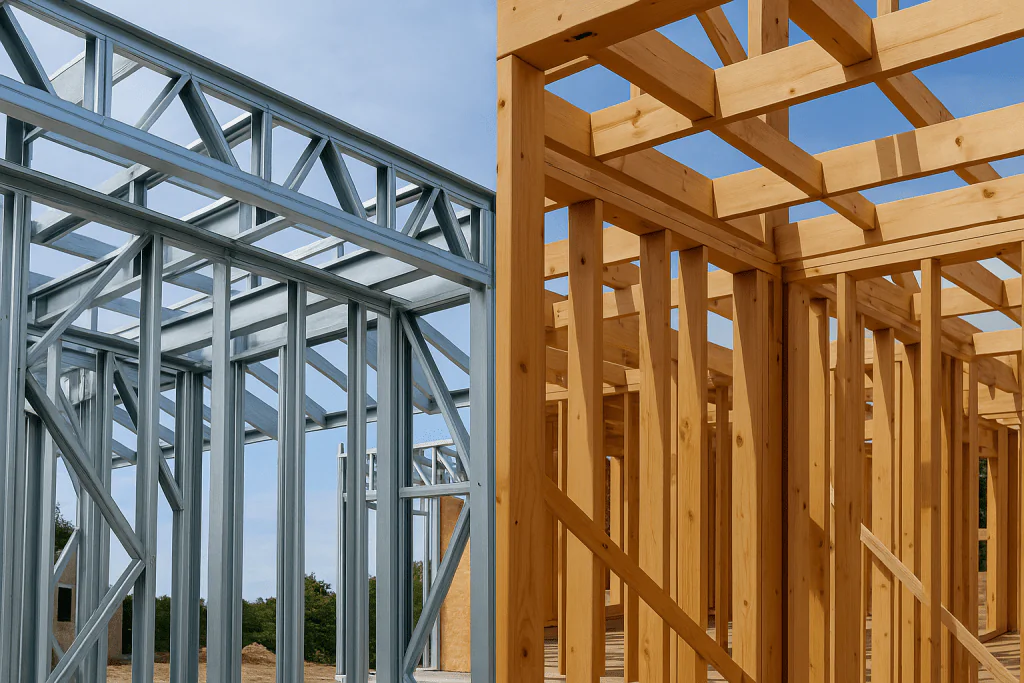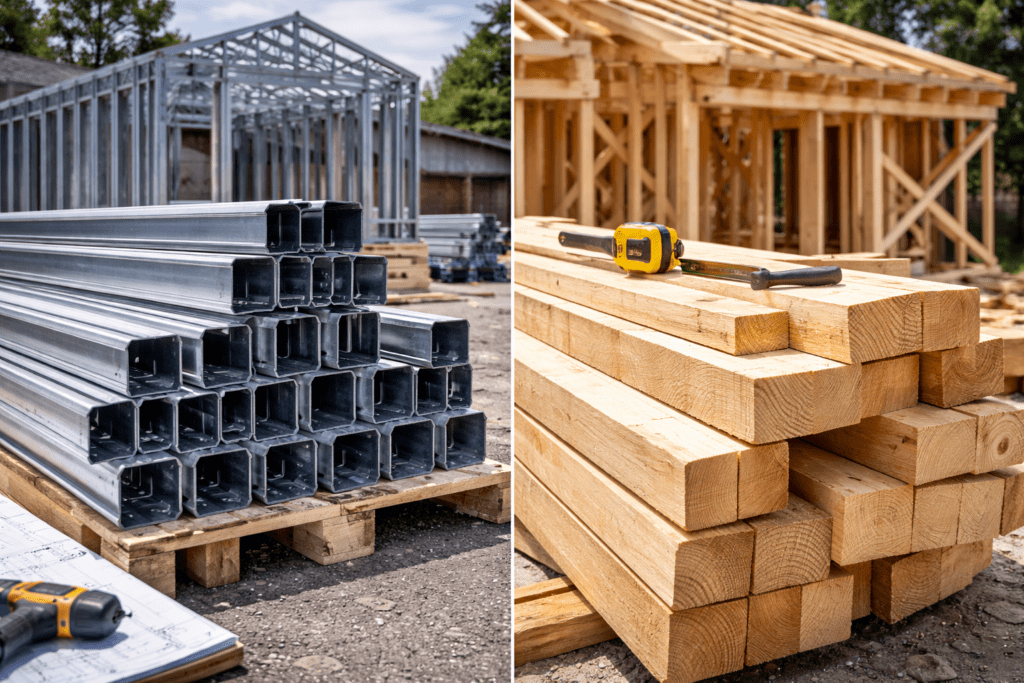
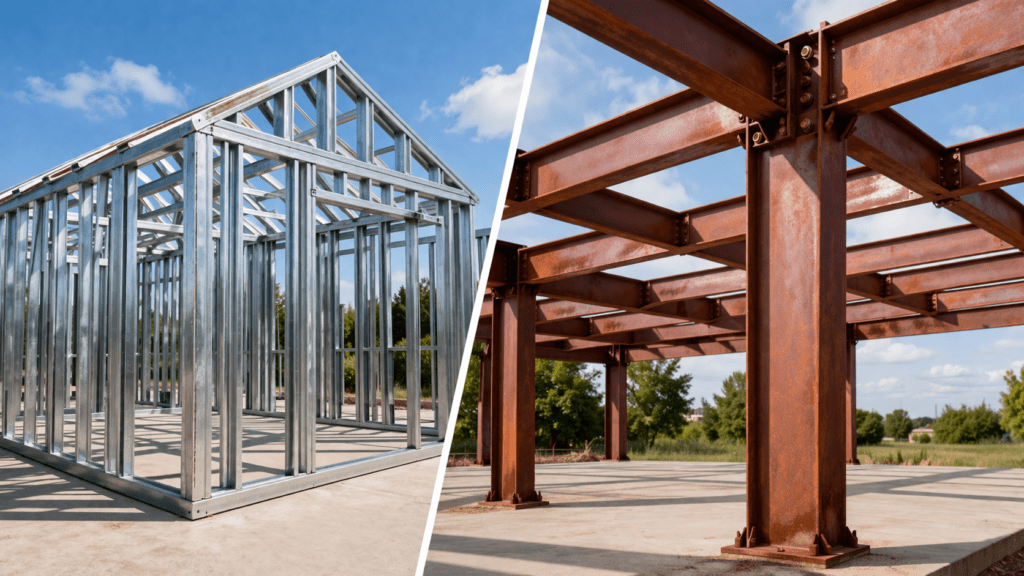
When planning a construction project, one of the most important decisions is choosing the right structural system. The comparison between cold-formed steel vs structural steel is a common one, especially for developers and builders across Ontario.
Both materials offer strength and durability, but they serve very different purposes. Understanding where each system performs best can help you reduce costs, improve efficiency, and avoid costly design mistakes.
What Is Cold-Formed Steel?
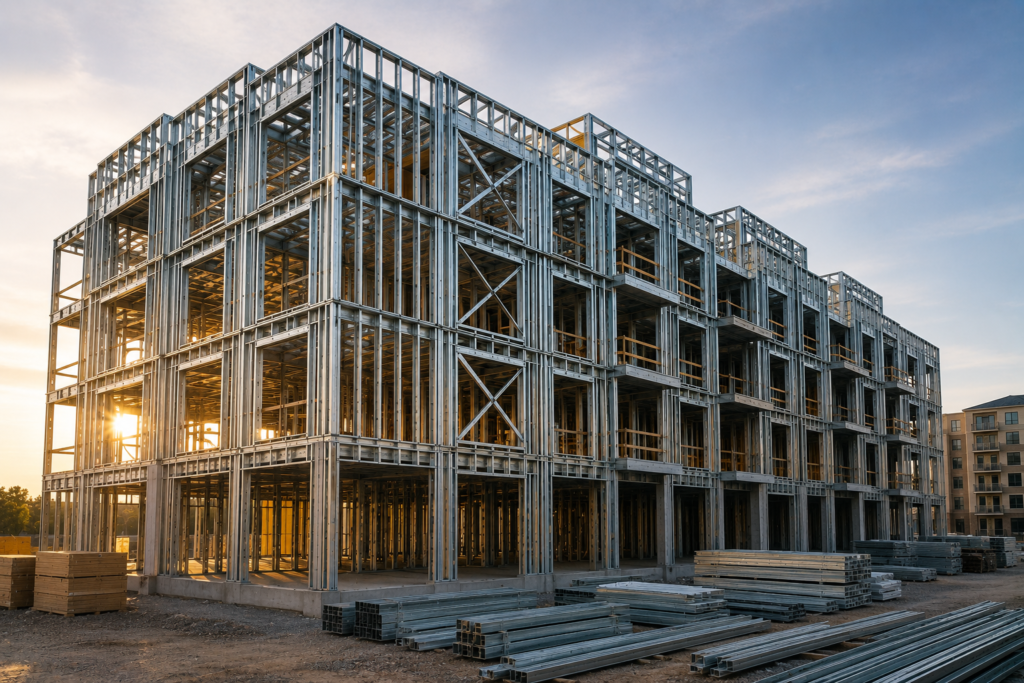
Cold-formed steel refers to thin sheets of steel that are shaped into structural members at room temperature. These members are typically used in light gauge steel framing systems for residential and mid-rise construction.
Because the steel is formed without heat, it maintains precise dimensions and consistent quality. This makes it ideal for applications where accuracy and speed are critical.
Cold-formed steel is commonly used for:
- Load-bearing and non-load-bearing walls
- Floor systems in low- to mid-rise buildings
- Roof trusses and panels
- Garden suites and multi-unit residential projects
In Ontario, it is widely adopted in projects that require fast timelines and efficient construction methods.
What Is Structural Steel?
Structural steel, also known as hot-rolled steel, is produced at high temperatures and used for heavy structural applications.
It is significantly thicker and stronger than cold-formed steel, making it suitable for large-scale buildings and long-span structures.
Structural steel is typically used for:
- High-rise buildings
- Industrial facilities
- Commercial buildings with large open spaces
- Structural beams and columns
While it offers high load capacity, it also comes with increased cost, weight, and installation complexity.
Cost Comparison: Where Each System Makes Sense
When comparing cold-formed steel vs structural steel, cost is often the deciding factor.
Cold-formed steel is generally more cost-effective for smaller and mid-scale projects. Its advantages include:
- Lower material costs
- Reduced transportation expenses due to lighter weight
- Faster installation, which lowers labour costs
Structural steel, on the other hand, involves:
- Higher material costs
- Heavier components requiring specialized equipment
- Longer installation timelines
For most residential and low- to mid-rise projects in Ontario, cold-formed steel provides better overall value.
However, for large commercial or high-rise developments, structural steel becomes necessary due to its superior load-bearing capacity.
Installation Speed and Construction Efficiency
Speed is a major advantage when choosing cold-formed steel.
Because components are prefabricated with precision, installation on-site is significantly faster. This reduces:
- Labour requirements
- Construction time
- Risk of delays
Cold-formed steel systems are especially beneficial in urban areas where access is limited and efficiency is critical.
Structural steel requires more complex installation processes, including:
- Heavy lifting equipment
- Welding or bolting large components
- More coordination between trades
This makes it slower and more resource-intensive compared to light steel framing systems.
Performance and Structural Capabilities
In terms of performance, both systems are strong, but they are designed for different scales.
Cold-formed steel is engineered for:
- Light to moderate loads
- Residential and mid-rise applications
- Precise and repetitive structural layouts
Structural steel is designed for:
- Heavy loads
- Long spans without support
- Large and complex structures
Choosing the wrong system can lead to inefficiencies. Using structural steel in a small residential project increases cost unnecessarily, while using cold-formed steel in a high-rise may not meet structural requirements.
Design Flexibility and Use Cases
Cold-formed steel offers flexibility in residential and modular construction. Its lightweight nature allows for:
- Easier handling
- Faster modifications
- Integration with prefabricated systems
It is ideal for:
- Garden suites
- Multi-unit residential buildings
- Townhouses and low-rise developments
Structural steel is better suited for projects that require open spaces and minimal columns, such as:
- Warehouses
- Commercial buildings
- Large retail spaces
Each system has its place. The key is matching the material to the project requirements.
Long-Term Performance and Maintenance
Both cold-formed and structural steel offer durability, but cold-formed steel has specific advantages in residential applications.
It is resistant to:
- Warping
- Shrinking
- Pests and moisture damage
This results in lower maintenance over time, especially in Ontario’s climate where temperature and humidity fluctuations can affect traditional materials.
Structural steel is also durable but often requires additional fireproofing and corrosion protection in certain applications, which can add to long-term costs.
Common Mistake Builders Make
A common mistake when comparing cold-formed steel vs structural steel is choosing based on familiarity rather than project needs.
Some builders default to structural steel for strength, even when it is not required. Others underestimate the capabilities of cold-formed steel in mid-rise construction.
The right approach is to evaluate:
- Building height and load requirements
- Budget constraints
- Construction timeline
- Design complexity
This ensures you are using the most efficient system for your project.
Why This Matters for Ontario Projects
In Ontario’s fast-moving construction market, efficiency and cost control are critical.
Cold-formed steel is becoming the preferred choice for many residential and mid-rise developments because it offers the right balance of strength, speed, and cost.
Understanding the difference between cold-formed steel vs structural steel allows developers to make smarter decisions and stay competitive.
Work with LSF Pro Structures
At LSF Pro Structures, we specialize in light steel framing solutions tailored for residential and mid-rise construction across Ontario.
If you are evaluating cold-formed steel vs structural steel for your next project, our team can help you choose the most efficient system and deliver high-quality results.
Contact LSF Pro Structures to get started.