Choosing the right framing system is one of the most important decisions in any construction project. In modern building across Ontario and Canada, steel framing has become a preferred solution due to its strength, precision, and durability.
However, not all steel framing is the same. One of the most critical distinctions builders must understand is the difference between light gauge and heavy gauge steel framing.
Each system serves a different purpose. Selecting the wrong one can lead to structural issues, unnecessary costs, or project delays. Understanding how they compare will help you make the right decision from the start.
What Is Light Gauge Steel Framing?
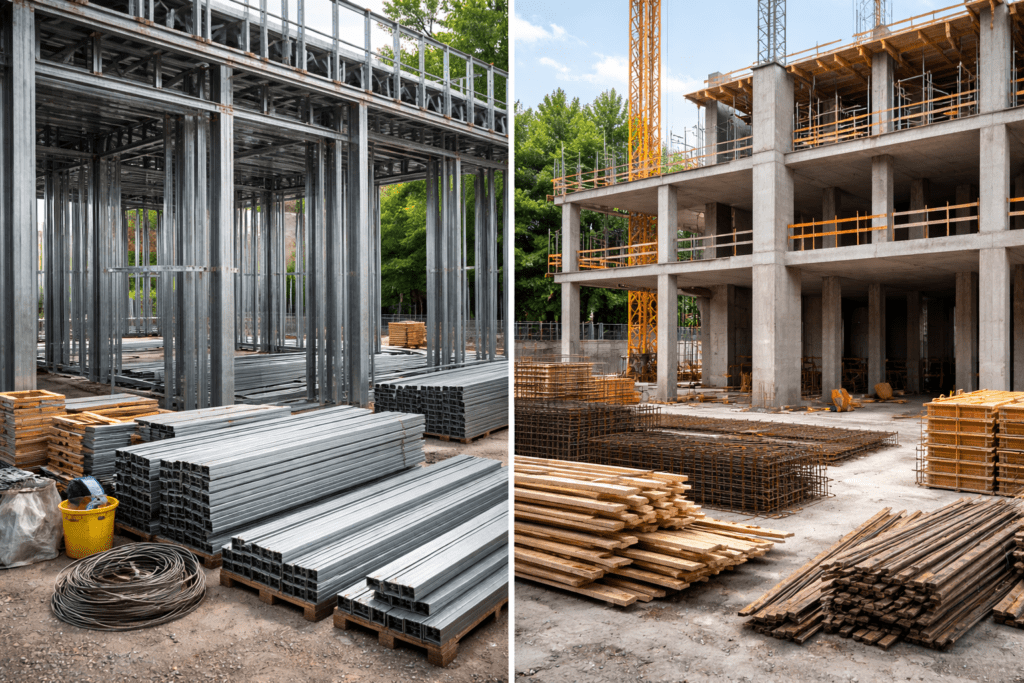
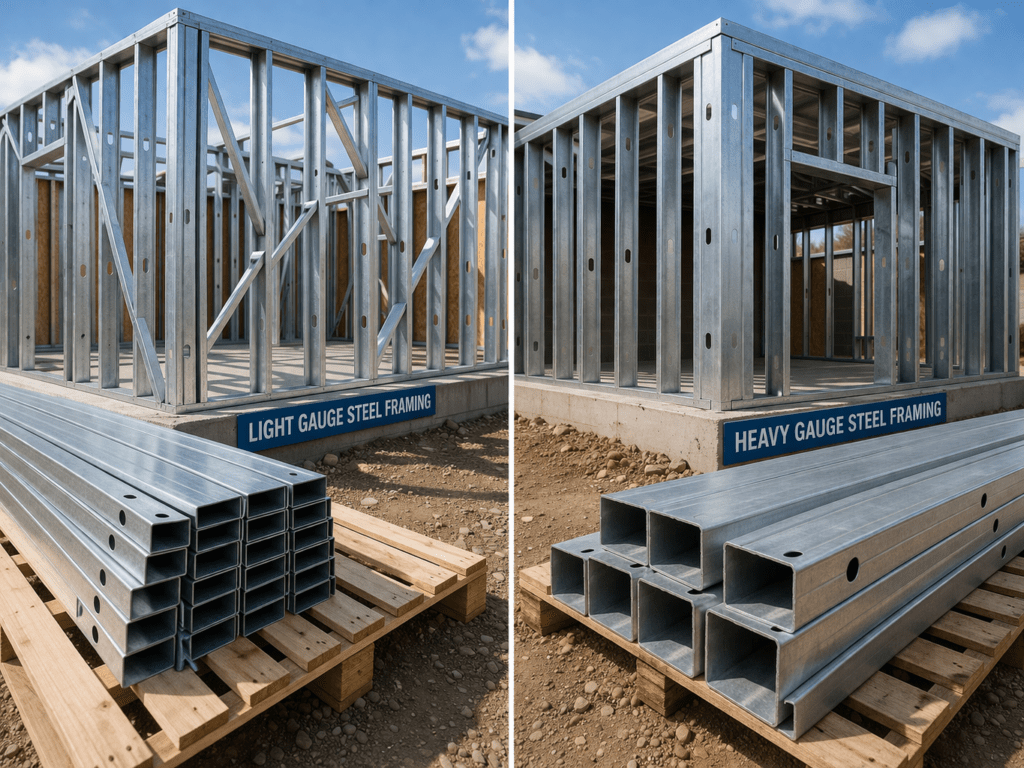
Light gauge steel framing refers to cold-formed steel members that are manufactured from thin steel sheets. These components are shaped into studs, tracks, and joists using roll-forming machines.
Light gauge systems are commonly used in:
- Residential construction
- Low- to mid-rise buildings
- Interior and exterior wall systems
- Prefabricated and modular structures
Because of their lighter weight, these components are easier to transport, handle, and install. They are typically engineered for precision and are often used in prefabricated systems.
In Ontario, this system is widely used in modern housing projects where speed and efficiency are priorities.
What Is Heavy Gauge Steel Framing?
Heavy gauge steel framing, also known as structural steel framing, uses thicker and heavier steel sections. These are typically hot-rolled steel members such as beams and columns.
Heavy gauge systems are used in:
- High-rise buildings
- Large commercial structures
- Industrial facilities
- Projects requiring long spans and high load capacity
These components are designed to carry significant structural loads. They are often fabricated as large structural elements and require cranes and specialized equipment for installation.
Heavy gauge framing is essential for projects where maximum strength and load-bearing capacity are required.
Key Differences Between Light Gauge and Heavy Gauge Steel
The most important difference between light gauge and heavy gauge steel framing is their role in the structure.
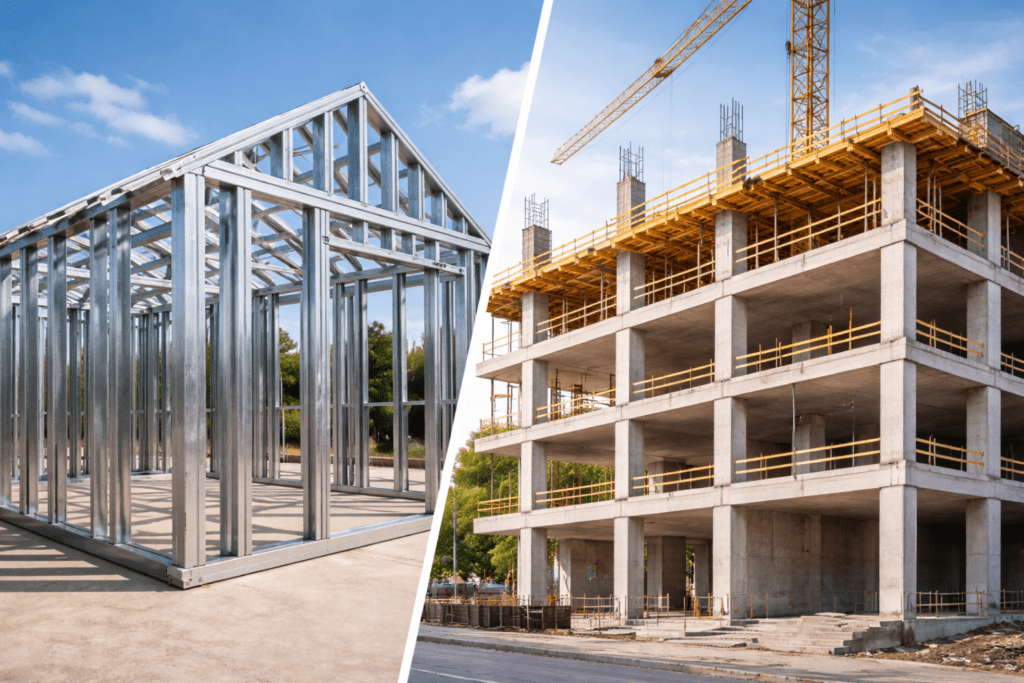
Light gauge systems are designed for efficiency and precision. They are ideal for wall systems, mid-rise buildings, and projects where speed is critical. Heavy gauge systems are designed for strength and are used in primary structural frameworks that support large loads.
Material thickness also separates the two. Light gauge steel is thinner and formed through cold-forming processes. Heavy gauge steel is thicker and typically hot-rolled, giving it higher load capacity.
Installation methods differ significantly as well. Light gauge framing can often be installed manually or with minimal equipment. Heavy gauge systems require cranes, welding, and more complex assembly processes.
Another key difference is flexibility. Light gauge systems allow for faster design changes and are well-suited for prefabrication. Heavy gauge systems are less flexible once fabricated and require more upfront planning.
When to Use Light Gauge Steel Framing
Light gauge steel framing is the preferred choice for many projects across Ontario, especially where speed and efficiency are priorities.
It works best in residential construction, including custom homes, townhouses, and mid-rise developments. Builders benefit from faster installation and consistent quality, which helps keep projects on schedule.
It is also ideal for prefabricated construction. Components can be manufactured off-site and assembled quickly, reducing labor requirements and minimizing delays caused by weather.
For developers focused on cost control and rapid project delivery, light gauge systems provide a strong advantage.
When to Use Heavy Gauge Steel Framing
Heavy gauge steel framing becomes necessary when structural demands increase.
Projects such as high-rise buildings, large commercial spaces, and industrial facilities require the strength and load capacity that heavy gauge systems provide.
These systems are designed to handle large spans, heavy loads, and complex structural requirements. In these cases, light gauge framing alone is not sufficient.
Heavy gauge framing is often used as the primary structural system, with light gauge framing integrated for secondary elements such as walls and partitions.
Cost and Efficiency Comparison
From a cost perspective, light gauge steel framing is generally more efficient for smaller and mid-sized projects.
Its lighter weight reduces transportation costs, and faster installation lowers labor expenses. Prefabrication further improves efficiency by reducing on-site work.
Heavy gauge steel, while more expensive, is necessary for projects that require its structural capabilities. The cost is justified by the performance it delivers in large-scale applications.
For many projects in Ontario, a hybrid approach is used. Heavy gauge steel provides the main structural framework, while light gauge framing is used for walls and secondary systems. This combination balances cost and performance effectively.
Performance in Canadian Construction
Both light gauge and heavy gauge steel perform well in Canadian conditions when used correctly.
Steel does not warp, rot, or suffer from pest damage, making it a durable option in Ontario’s climate. It also provides consistent quality, which is critical for meeting building code requirements.
However, proper design and engineering are essential. Each system must be used in the right context to ensure safety and compliance.
Choosing the Right System for Your Project
The decision between light gauge and heavy gauge steel framing should be based on the specific requirements of your project.
If the focus is on speed, efficiency, and residential or mid-rise construction, light gauge steel framing is the better choice. If the project involves large spans, heavy loads, or high-rise structures, heavy gauge steel is necessary.
The most effective approach often involves combining both systems. This allows builders to take advantage of the strengths of each while minimizing their limitations.
Working with experienced professionals ensures that the right system is selected and implemented correctly.
Build Smarter with LSF Pro Structures
Understanding the difference between light gauge and heavy gauge steel framing is essential for making informed construction decisions.
LSF Pro Structures specializes in precision-engineered light gauge steel framing solutions tailored for Ontario and Canadian construction standards. Every system is designed for efficiency, durability, and compliance.
If you are planning a project and want to ensure the right framing system is used, contact LSF Pro Structures today and build with confidence.