Construction in Ontario is shifting toward faster, more reliable, and more durable building systems. As projects become more demanding and timelines tighter, traditional wood framing is no longer the default choice for many builders.
Metal studs are now widely used across residential, commercial, and industrial construction in Canada. They offer consistency, strength, and long-term performance that align with modern building requirements.
For builders and developers in Ontario, understanding how metal studs work and when to use them is essential for staying competitive.
What Are Metal Studs?
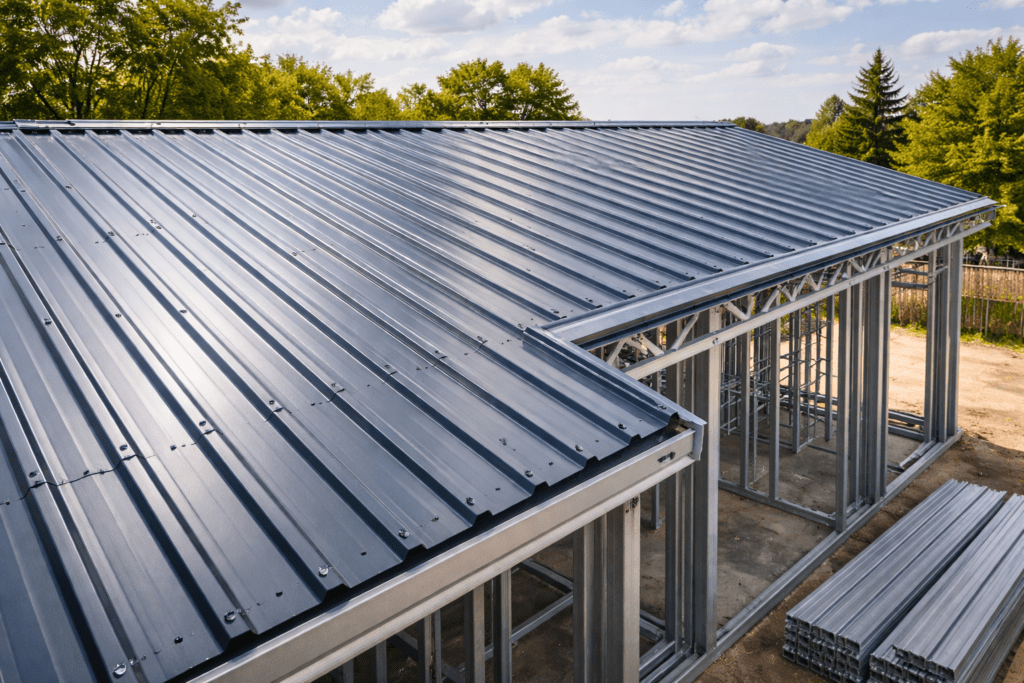
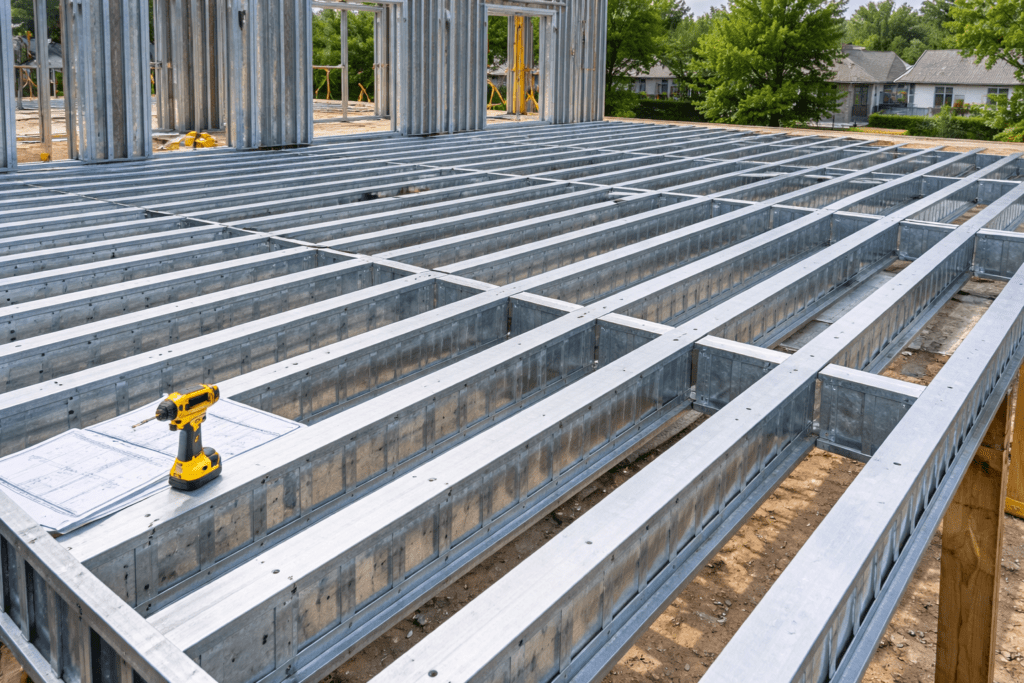
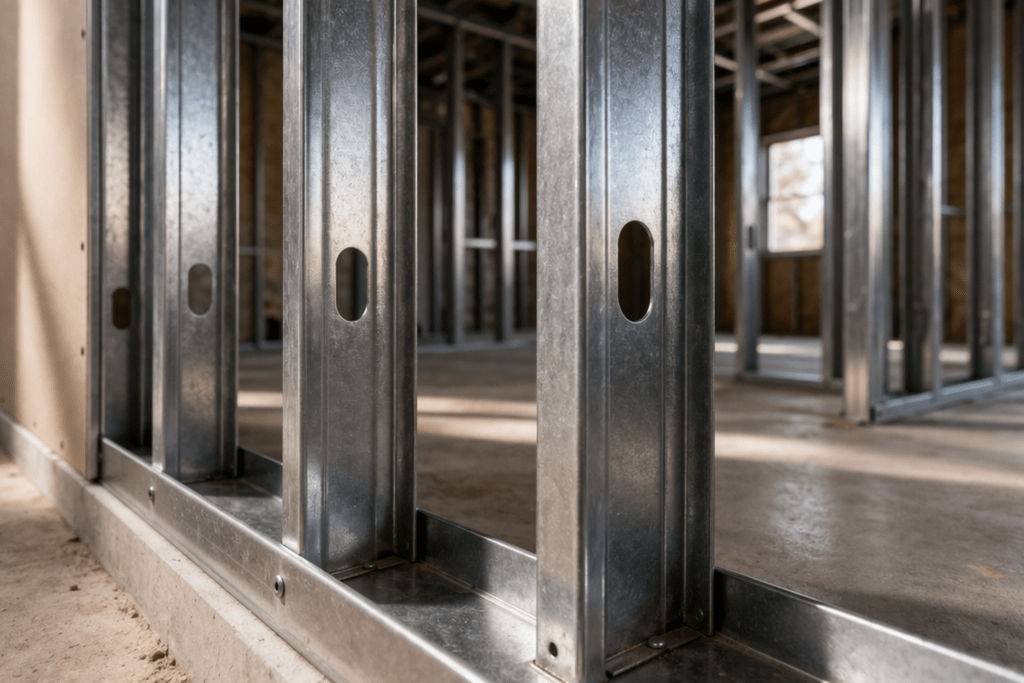
Metal studs are cold-formed steel members used to frame walls, ceilings, and structural systems. They are manufactured from thin sheets of galvanized steel and shaped into C-sections and tracks.
Unlike wood, metal frames are produced with precise dimensions. This eliminates variations and inconsistencies that often occur with natural materials.
They are commonly used in both load-bearing and non-load-bearing applications, depending on their thickness and design. This flexibility makes them suitable for a wide range of construction projects.
Why Metal Studs Are Gaining Popularity in Ontario
Builders across Ontario are increasingly choosing metal studs because they solve many of the challenges associated with traditional framing.
One of the main advantages is consistency. Every metal stud is manufactured to exact specifications, which ensures straight walls and accurate alignment. This improves the quality of finishing work and reduces the need for adjustments on-site.
Speed is another major factor. Metal studs are easier to install in many cases, especially when used in prefabricated systems. Faster framing leads to shorter project timelines, which directly impacts profitability.
Durability also plays a key role. Metal frames do not warp, shrink, or crack over time. This makes them a reliable choice for long-term structural performance, particularly in Ontario’s changing climate.
Metal Studs vs Wood Framing
The comparison between metal studs and wood framing is one of the most important considerations for builders.
Wood is familiar and widely available, but it comes with natural limitations. It can absorb moisture, leading to warping and mold. It is also vulnerable to pests and fire.
Metal studs eliminate these issues. Steel does not absorb moisture, which prevents rot and mold growth. It is also non-combustible, providing better fire resistance in many applications.
In terms of precision, metal studs offer a clear advantage. Their uniform shape ensures cleaner construction and fewer issues during finishing stages.
However, wood may still be preferred in smaller projects where cost and familiarity are the main priorities. For larger or more complex builds, metal studs are often the better choice.
Types of Metal Studs
Metal studs are not all the same. They are available in different types depending on their intended use.
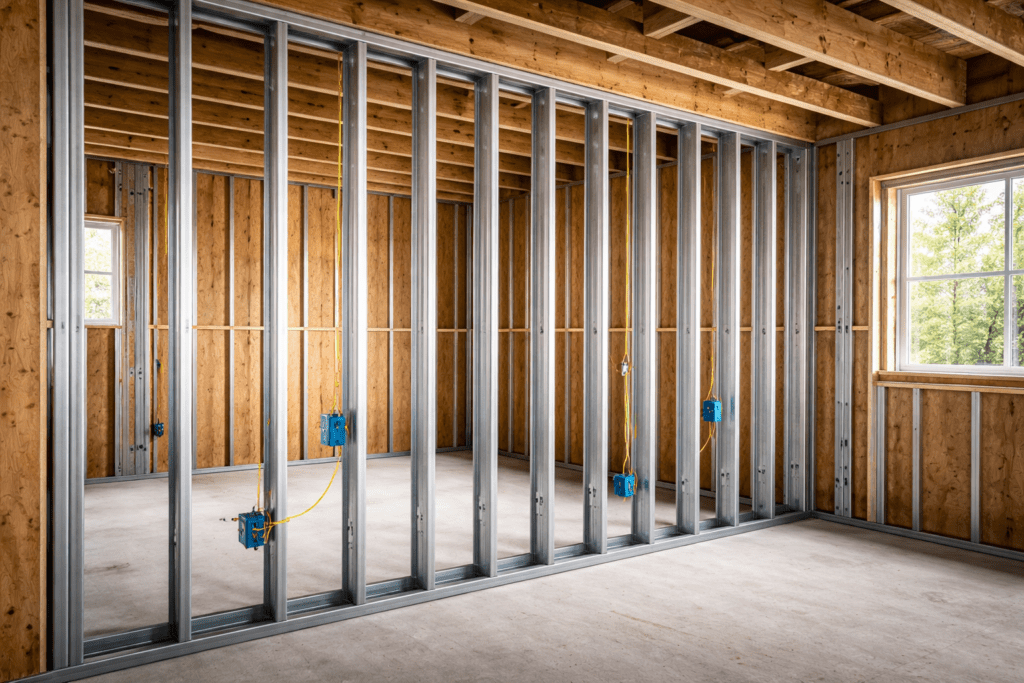
Non-structural frames are typically used for interior partitions and drywall systems. They are lighter and designed to support finishes rather than loads.
Structural studs are thicker and engineered to carry loads. These are used in exterior walls, load-bearing systems, and multi-story construction.
Tracks are used alongside studs to form the framework. They provide the top and bottom connection points for wall systems.
Understanding these differences is critical. Using the wrong type of stud can lead to performance issues and code compliance problems.
Applications in Ontario Construction
Metal studs are used across a wide range of projects in Ontario.
In residential construction, they are commonly used for basements, interior walls, and increasingly for full structural framing in modern homes. Builders benefit from faster installation and improved accuracy.
In commercial construction, metal frames are the standard for office spaces, retail units, and multi-unit developments. Their consistency allows for efficient large-scale construction.
Industrial projects also rely on metal studs for interior systems and secondary structures. Their durability makes them suitable for demanding environments.
As prefabrication continues to grow in Canada, metal studs play a key role in off-site manufacturing and modular construction systems.
Cost Considerations
Cost is always a factor when choosing a framing system. Metal studs may have a higher upfront material cost compared to wood, but this does not tell the full story.
Labor savings often offset the initial investment. Faster installation reduces time on-site, which lowers overall project costs.
Material waste is also reduced. Since metal studs are manufactured to exact lengths, there is less cutting and disposal compared to wood.
Over the long term, the durability of steel reduces maintenance and repair costs. This makes metal studs a strong financial choice for many projects in Ontario.
Code Compliance and Standards in Canada
Metal studs used in Ontario must comply with Canadian building codes and standards.
The Ontario Building Code (OBC) sets the requirements for structural performance, fire safety, and energy efficiency. Metal stud systems must meet these standards to pass inspections.
In addition, materials must comply with standards such as ASTM and CSA. These ensure that the steel used in studs meets strength and durability requirements.
Working with compliant materials and proper engineering is essential. It ensures that the project moves smoothly through approvals and inspections.
Common Mistakes to Avoid
One of the most common mistakes is treating all metal studs as the same. Differences in thickness and design significantly impact performance.
Another issue is poor planning. Metal stud systems require accurate design before installation. Last-minute changes can create delays and additional costs.
Improper installation is also a risk. Even though metal studs are easier to work with, they must be installed according to specifications to ensure structural integrity.
Avoiding these mistakes requires proper coordination between designers, manufacturers, and installers.
The Future of Metal Studs in Canada
Metal studs are becoming a standard choice in modern construction across Canada. As the industry moves toward prefabrication and engineered systems, their importance continues to grow.
Builders are looking for solutions that offer speed, precision, and long-term reliability. Metal studs deliver on all three.
In Ontario, where construction demand remains high, adopting efficient systems is no longer optional. It is necessary for staying competitive.
Build Smarter with LSF Pro Structures
Metal studs are more than just an alternative to wood. They are a key part of modern, efficient construction.
LSF Pro Structures provides precision-engineered metal stud framing solutions designed for Ontario and Canadian building standards. Every component is built for accuracy, durability, and performance.
Contact LSF Pro Structures today to discuss your project and take the next step toward faster, smarter construction.