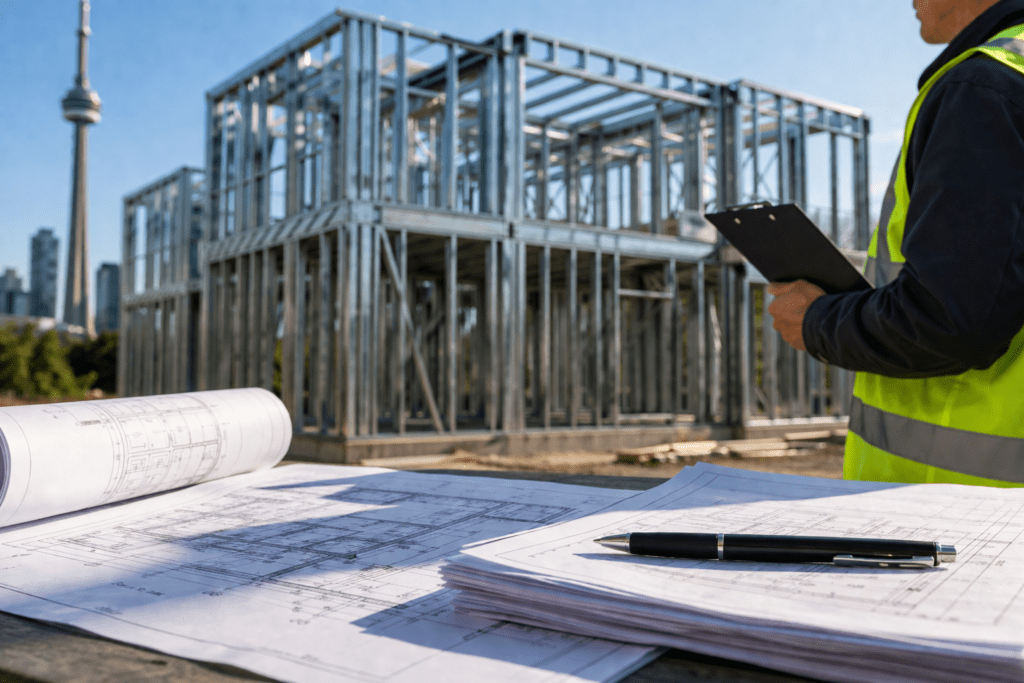
Light steel framing is becoming a standard solution across Canada due to its precision, durability, and efficiency. However, its performance depends heavily on compliance with national building codes and material standards.
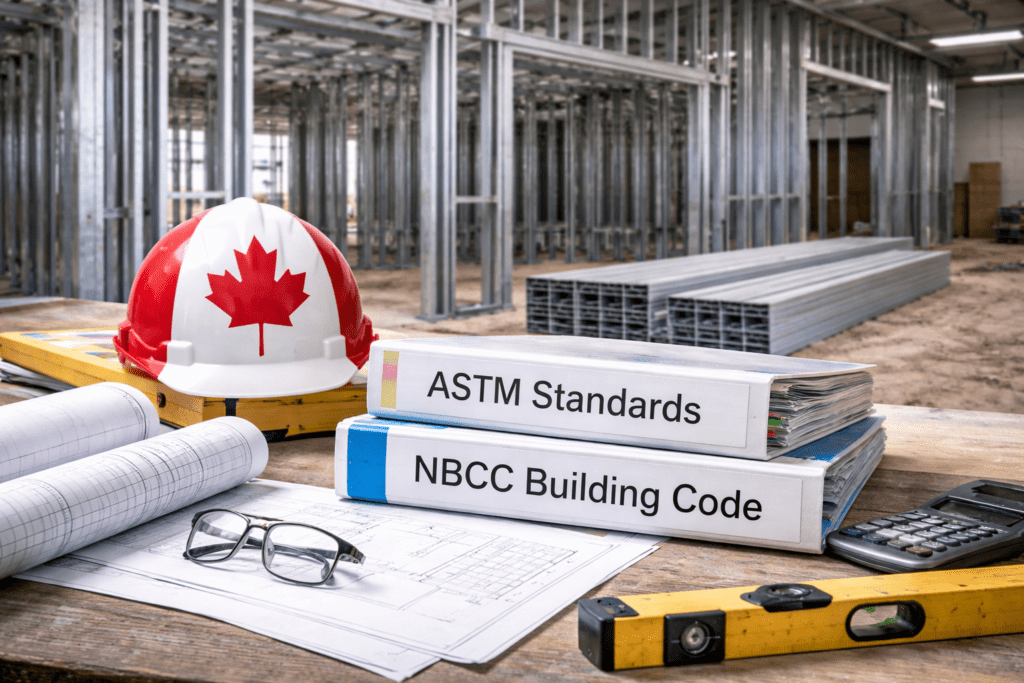
In Canada, two key frameworks govern light steel framing systems: ASTM standards for material properties and the National Building Code of Canada (NBCC) for overall design and safety requirements.
Builders who understand how these two systems work together gain a major advantage. They avoid delays, pass inspections faster, and ensure long-term structural performance.
Understanding the NBCC and Its Role
The National Building Code of Canada (NBCC) sets the foundation for all construction across the country. It defines minimum requirements for safety, structural integrity, fire protection, and energy efficiency.
Although provinces like Ontario enforce their own codes, such as the Ontario Building Code (OBC), these are largely based on the NBCC framework.
For light steel framing, the NBCC outlines how structures must perform under various conditions. This includes load resistance, fire ratings, and environmental factors such as snow and wind.
The code does not provide every technical detail. Instead, it references other standards, including CSA and ASTM, to define how materials and systems must be designed and built.
The Role of ASTM Standards in Steel Framing
ASTM standards focus on the quality and performance of materials used in construction. In light steel framing, these standards define the physical properties of steel components.
Two commonly used ASTM standards in LSF systems are:
ASTM A1003, which covers steel sheet used in cold-formed structural members. This standard defines strength, ductility, and coating requirements.
ASTM A653, which applies to galvanized steel sheets. It ensures corrosion resistance, which is critical in Canadian climates where moisture and temperature changes are common.
These standards ensure that steel studs, tracks, and other framing components meet consistent quality levels. Without ASTM compliance, materials may fail to meet structural or durability expectations.
How NBCC and ASTM Work Together
NBCC and ASTM do not operate independently. They are part of a connected system that ensures both design and material quality meet national expectations.
The NBCC defines how a building must perform. ASTM ensures that the materials used in that building can support that performance.
For example, when designing a load-bearing wall using light steel framing, the engineer follows NBCC requirements for load resistance. At the same time, the steel used must comply with ASTM standards to ensure it has the required strength and durability.
This relationship is essential. Meeting one without the other is not enough for compliance.
Structural Design Requirements Under NBCC
Light steel framing systems must be engineered to meet NBCC structural requirements. These include resistance to various types of loads that buildings face in Canada.
Dead loads account for the weight of the structure itself. Live loads include occupants and movable elements. Snow loads are particularly important in Canada, especially in Ontario where heavy accumulation can place significant stress on roofs.
Wind loads also play a major role, especially in open or elevated areas. The NBCC requires that structures be designed to resist these forces without failure.
All of these factors must be calculated and incorporated into the design of light steel framing systems. This is why engineering is not optional when working with structural steel studs.
Fire and Safety Compliance
Fire safety is a core component of NBCC requirements. Light steel framing provides advantages in this area, but only when assemblies are designed correctly.
Steel is non-combustible, which supports safer construction. However, the entire wall or floor system must meet fire-resistance ratings specified by the code.
This includes the combination of steel framing, drywall layers, insulation, and connections. Builders must use tested assemblies that meet NBCC requirements.
Improper or unverified assemblies can lead to inspection failures and serious safety risks.
Corrosion Protection and Durability
Canada’s climate requires materials that can withstand moisture, temperature changes, and long-term exposure to environmental conditions.
ASTM standards address this by specifying protective coatings for steel components. Galvanization is commonly used to prevent corrosion and extend the lifespan of framing systems.
NBCC indirectly supports these requirements by demanding long-term structural performance. If materials degrade over time, the structure may no longer meet code requirements.
This is why using certified materials is not just a recommendation. It is a necessity.
Energy Efficiency and Thermal Considerations
Energy performance is another key area of compliance in Canadian construction. The NBCC includes requirements for insulation and thermal efficiency.
Steel framing presents a unique challenge because it conducts heat more than wood. This creates thermal bridging, which can reduce energy efficiency if not addressed properly.
Designers must include insulation strategies and thermal breaks to meet code requirements. Proper detailing ensures that buildings remain energy efficient while maintaining structural integrity.
Common Compliance Challenges
Many issues in light steel framing projects come from misunderstanding how NBCC and ASTM requirements interact.
One common mistake is focusing only on material quality without proper structural design. Even high-quality steel cannot compensate for poor engineering.
Another issue is working with suppliers who do not follow ASTM standards consistently. This can lead to materials that fail inspections or underperform in real conditions.
Lack of coordination between design, manufacturing, and installation teams also creates problems. Every stage must align with code requirements to ensure success.
Why Compliance Matters for Builders in Ontario
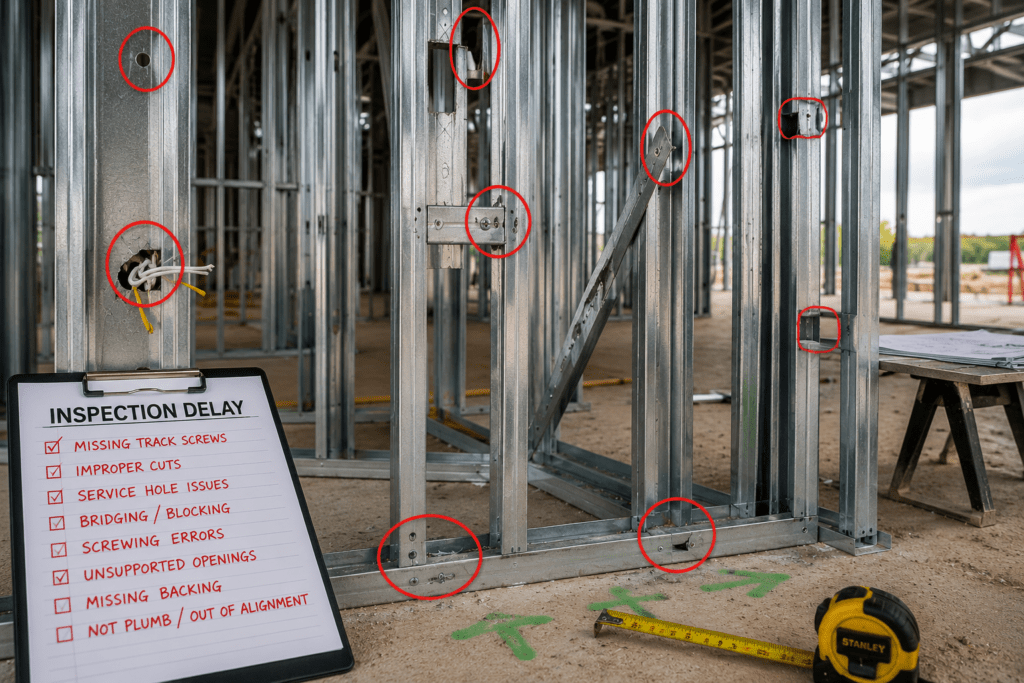
In Ontario, inspections are strict, and code compliance is closely monitored. Builders who understand NBCC and ASTM requirements avoid delays and costly corrections.
Projects move more smoothly through approvals, and construction stays on schedule. This level of control improves profitability and reduces risk.
Light steel framing is a powerful system, but only when it is implemented correctly. Code compliance is what turns it into a reliable and scalable solution.
Build with Confidence Using LSF Pro Structures
Meeting ASTM and NBCC requirements is essential for any successful light steel framing project in Canada. It requires the right combination of engineering, material quality, and execution.
LSF Pro Structures delivers fully compliant, precision-engineered steel framing systems designed for Canadian construction standards. Every component is manufactured to meet ASTM requirements and engineered to align with NBCC guidelines.
Contact LSF Pro Structures today to ensure your next project meets all code requirements while delivering speed, strength, and reliability.