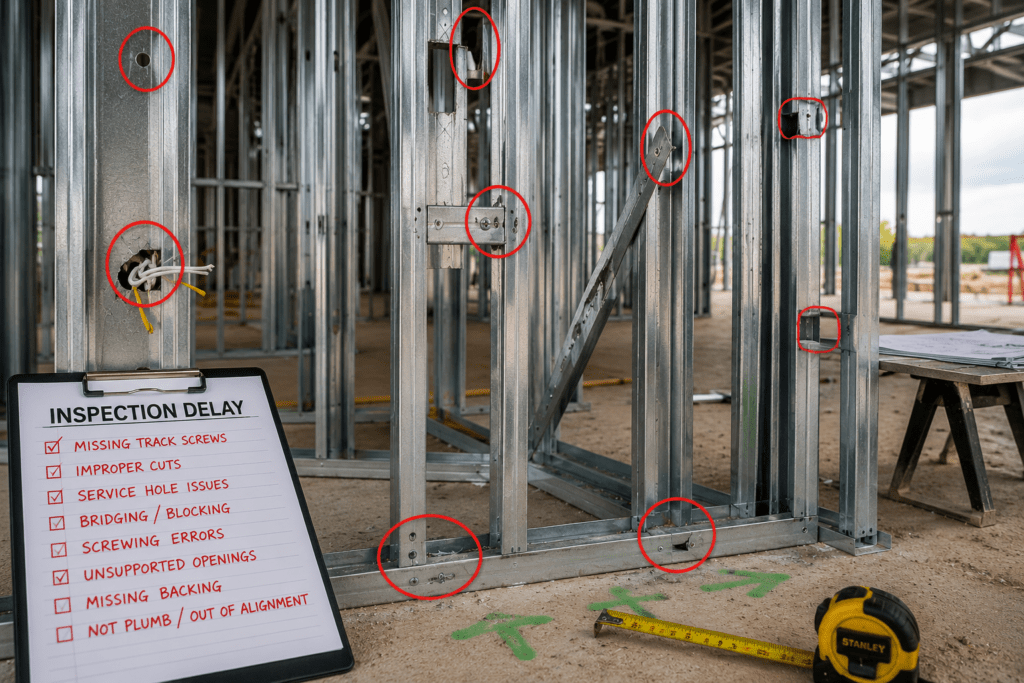
Failing a steel framing inspection in Ontario is not just a minor delay. It can stop your project, increase costs, and damage your credibility with inspectors and clients.
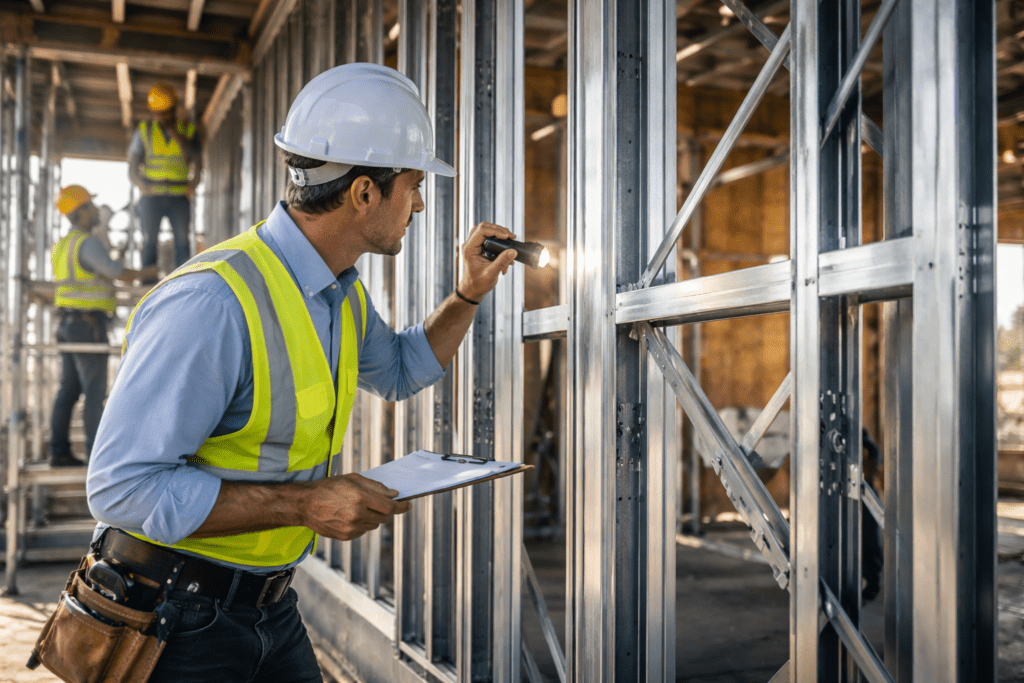
Steel framing inspection is one of the most critical checkpoints in any construction project using light steel framing. Inspectors are not just looking for basic compliance. They are verifying structural integrity, code alignment, and proper execution.
If you want your project to move smoothly, you need to approach inspections with precision and preparation. This guide breaks down exactly how to pass steel framing inspection in Ontario, step by step.
What Inspectors Look for in Steel Framing
Before going into steps, you need to understand the mindset of inspectors.
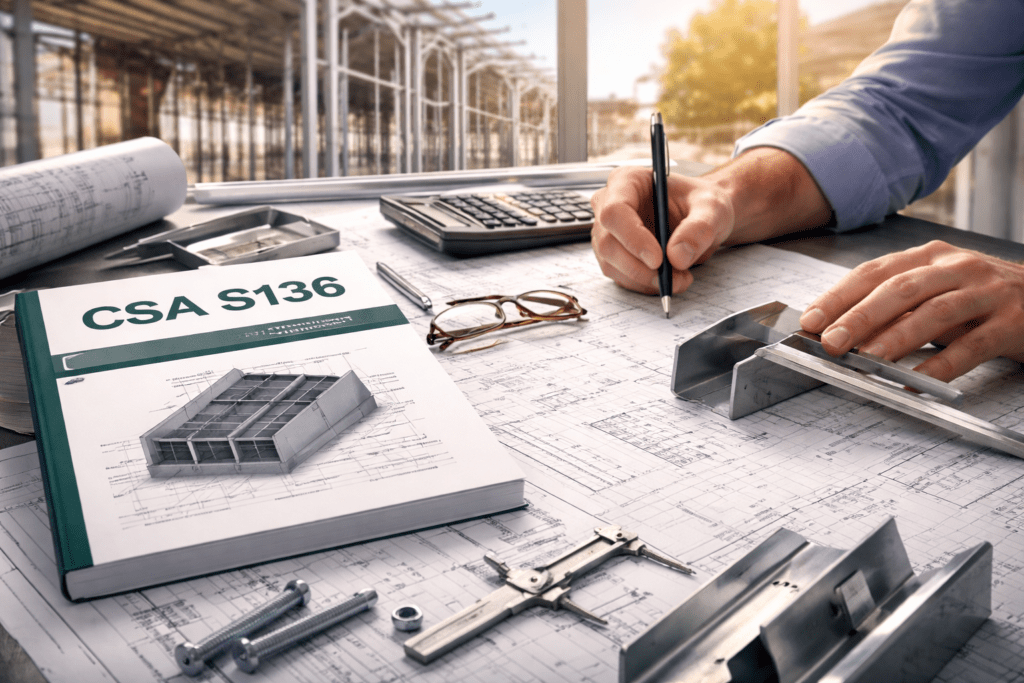
In Ontario, inspections are based on the Ontario Building Code (OBC) and referenced standards like CSA S136. Inspectors focus on whether the installed system matches the approved drawings and meets structural requirements.
They are checking:
- Alignment and spacing of studs
- Proper fastening and connections
- Structural load paths
- Fire-rated assemblies where required
- Overall workmanship and consistency
This is not a visual check only. It is a compliance verification.
Step 1: Ensure Drawings Are Final and Approved
The most common reason projects fail steel framing inspection is simple: mismatch between drawings and installation.
Before framing begins, make sure:
- All drawings are stamped and approved
- Structural details are finalized
- No pending revisions exist
Steel framing is not flexible like wood. Once installed, changes are difficult and costly.
If your site does not match approved drawings, the inspection will fail immediately.
Step 2: Use the Correct Steel Studs and Materials
Not all steel studs are the same. Inspectors will check if the installed materials match the specifications.
This includes:
- Correct gauge (thickness)
- Proper stud type (structural vs non-structural)
- Approved coatings and material standards
Using lighter studs where structural ones are required is a major violation.
Every component must match the engineered design. Even small substitutions can cause failure.
Step 3: Follow Proper Spacing and Layout
Stud spacing is one of the easiest things to get wrong and one of the first things inspectors check.
Typical spacing must match design requirements, often:
- 16 inches or 24 inches on center
But do not assume. Always follow the drawings.
Misaligned spacing affects load distribution and can lead to structural issues. Even if everything else is correct, incorrect spacing alone can fail the inspection.
Step 4: Ensure Proper Fastening and Connections
Connections are critical in steel framing systems.
Inspectors will look closely at:
- Screw types and sizes
- Number of fasteners per connection
- Proper placement of screws
- Secure attachment to tracks and structural elements
Loose or missing fasteners are one of the most common reasons for inspection failure.
Every connection must be tight, consistent, and installed according to specifications.
Step 5: Check Alignment and Straightness
Steel framing is known for its precision. Inspectors expect straight, aligned walls.
They will check:
- Vertical alignment of studs
- Level tracks
- Overall wall straightness
If the framing looks uneven or misaligned, it signals poor installation.
This affects not only structure but also finishing stages like drywall and cladding.
Step 6: Verify Bracing and Structural Support
Bracing is often overlooked but is essential for stability.
Inspectors will check if:
- Required bracing is installed
- Lateral support is in place
- Load paths are properly maintained
Missing bracing can compromise the entire system.
Even if studs are installed correctly, lack of support can result in failure.
Step 7: Confirm Fire and Safety Requirements
In many Ontario projects, fire-rated assemblies are required.
Inspectors will verify:
- Correct wall assemblies
- Required layers of drywall
- Proper insulation where applicable
Steel itself is non-combustible, but the full system must meet fire rating requirements.
Failure to meet these standards can stop the project completely.
Step 8: Prepare the Site Before Inspection
Preparation is often the difference between passing and failing.
Before inspection:
- Clean the site
- Ensure all framing is visible and accessible
- Remove debris that blocks inspection areas
A clean and organized site shows professionalism and makes the inspector’s job easier.
It also reduces the chance of missing critical issues.
Common Mistakes That Lead to Failed Inspections
Most failures come from avoidable mistakes.
The biggest ones include:
- Installing before final drawings are approved
- Using incorrect stud types or gauges
- Missing fasteners or poor connections
- Ignoring spacing requirements
- Lack of coordination between teams
These are not complex technical issues. They are execution problems.
Why Passing Inspection Matters More Than You Think
Passing steel framing inspection is not just about moving to the next stage.
It impacts:
- Project timeline
- Cost control
- Reputation with inspectors and municipalities
Repeated failures can slow down approvals and create long-term problems for your business.
Builders who consistently pass inspections gain trust and move faster through projects.
Build with Confidence Using LSF Pro Structures
Steel framing inspection success starts long before the inspector arrives. It begins with proper design, accurate manufacturing, and disciplined installation.
LSF Pro Structures provides precision-engineered steel framing systems that align with Ontario Building Code requirements. Every component is designed to reduce errors and ensure smooth inspections.
If you want to avoid delays and pass inspections with confidence, work with a team that understands the system from start to finish.
Contact LSF Pro Structures today and build with certainty.