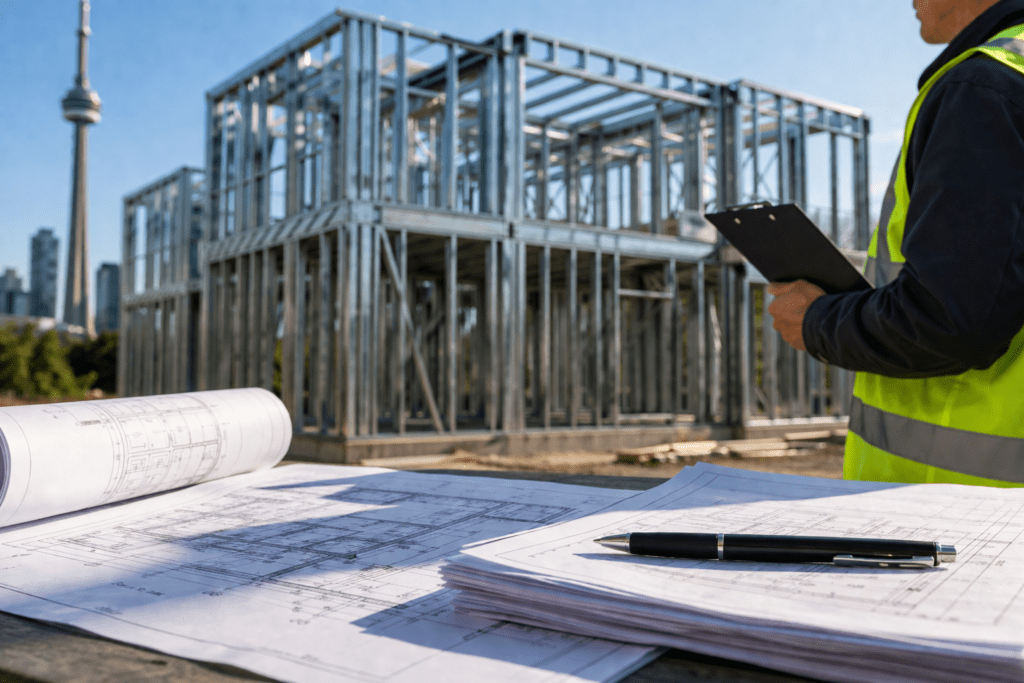
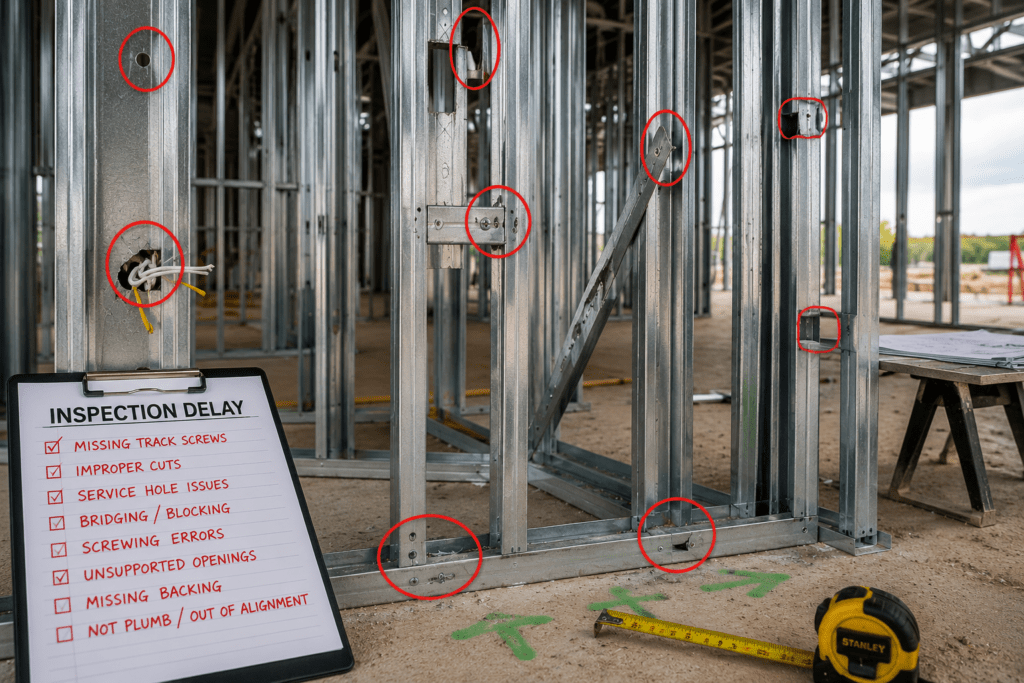
In Ontario construction, inspection delays can quickly turn into expensive schedule problems. For projects using light steel framing, many of these delays come from the same issue: avoidable framing mistakes made during installation.
Understanding the most common causes of failed or delayed inspections is critical for builders, developers, and site supervisors. In many cases, the structural design itself is correct, but the execution on site does not match the approved drawings.
That is why steel framing inspections in Ontario often become a major checkpoint for project timelines.
This guide explains the framing issues inspectors repeatedly encounter and how to avoid them.
Why Steel Framing Inspections Matter
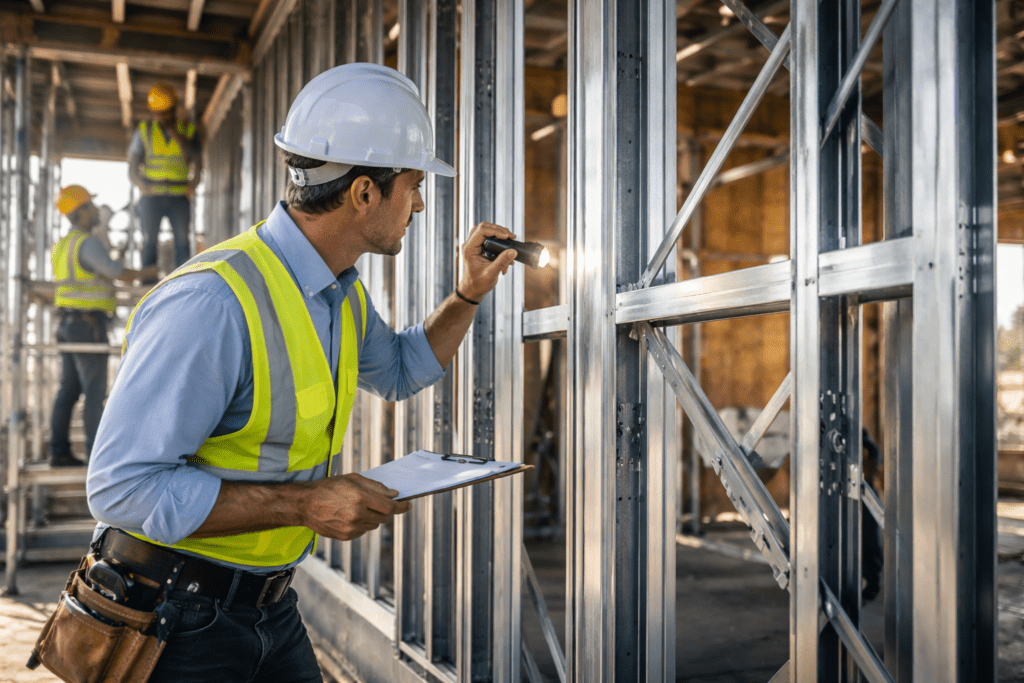
Steel framing inspections are not just routine approvals. They verify that the installed structure matches the engineered design and complies with the Ontario Building Code.
Inspectors are looking for:
- Structural integrity
- Proper load transfer
- Correct installation methods
- Compliance with approved drawings
If deficiencies are found, work may need to stop until corrections are completed.
Even relatively small framing mistakes can delay multiple downstream trades and affect the entire project schedule.
Misalignment Between Framing Members
One of the most common issues during steel framing inspections in Ontario is misalignment.
Load-bearing studs must align properly with floor systems, roof loads, and supporting elements below. When members are offset or improperly positioned, the intended load path is disrupted.
This often happens because:
- Layout lines are inaccurate
- Panels shift during installation
- Site crews make field adjustments without coordination
To inspectors, misalignment is not just a cosmetic issue. It can indicate structural load transfer problems.
In multi-unit housing projects, repeated alignment errors can trigger broader concerns about overall installation quality.
Improper Fastener Installation
Fasteners are one of the most heavily scrutinized parts of steel framing inspections.
Incorrect screw types, missing fasteners, inconsistent spacing, or poorly installed connections are frequent causes of deficiencies.
Cold-formed steel framing depends on many small connections working together as a system. If screws are missing or improperly installed, the connection may not perform as designed.
Common issues include:
- Overdriven screws damaging the steel
- Underdriven screws leaving loose connections
- Wrong screw lengths or types
- Inconsistent spacing compared to engineered drawings
Inspectors look closely at these details because connection quality directly affects structural performance.
Unauthorized Field Modifications
Field modifications are another major source of inspection delays.
On many projects, framing members are modified to accommodate plumbing, HVAC, or electrical systems. Service holes are enlarged, studs are cut, or connections are shifted without engineering approval.
This creates a serious issue because the original design assumptions no longer apply.
Inspectors often flag:
- Enlarged web openings
- Additional field-cut holes
- Altered load-bearing members
- Modified connection details
In Ontario, unauthorized modifications can require engineering review before work can continue.
That process alone can delay a project significantly.
Incorrect Stud Spacing
Stud spacing may seem simple, but it is a frequent inspection issue.
Engineered drawings specify spacing based on structural loads and wall performance requirements. If spacing changes in the field, the wall may not meet design capacity.
This commonly occurs when:
- Layout errors happen during installation
- Crews attempt to simplify framing layouts
- Framing is adjusted to accommodate openings or services
Even small deviations can affect load distribution and drywall performance.
Inspectors compare installed spacing directly against approved plans.
Missing Bridging and Bracing
Bridging and bracing are essential for the stability of cold-formed steel framing systems.
These components control lateral movement and help prevent buckling.
In some projects, bridging is:
- Installed incorrectly
- Missing entirely
- Delayed until later stages
This creates immediate concerns during inspection because the framing may not yet be structurally stable.
Inspectors expect bracing systems to match engineered requirements before approving the framing stage.
Incomplete Coordination Between Trades
Many framing problems start with poor coordination.
Mechanical and electrical trades often require routing space that conflicts with framing layouts. Without early planning, crews may improvise solutions on site.
This leads to:
- Cut members
- Relocated studs
- Compromised connections
Inspectors can quickly identify these inconsistencies because they typically differ from the approved drawings.
Projects that coordinate trades early experience far fewer inspection delays.
Poor Installation Around Openings
Openings for doors, windows, and mechanical penetrations are another common weak point.
These areas require:
- Proper reinforcement
- Correct header installation
- Accurate load transfer details
When framing around openings is incomplete or improperly installed, inspectors may question the integrity of the surrounding wall system.
This is especially important in load-bearing walls and multi-storey structures.
Why Precision Matters More in Steel Framing
Cold-formed steel framing is engineered with precision. Unlike some traditional systems, it relies heavily on exact geometry and load distribution.
That means small installation errors can have larger structural consequences.
Inspectors understand this. That is why steel framing inspections in Ontario are often detail-oriented and strict.
Projects that maintain accuracy throughout installation move through inspections much more efficiently.
How Prefabrication Reduces Inspection Issues
Prefabricated and panelized systems help reduce many common inspection problems.
Because components are manufactured in controlled environments:
- Stud spacing is consistent
- Openings are coordinated early
- Connections are standardized
- Alignment is more accurate
This reduces variability on site and improves overall inspection outcomes.
For Ontario projects facing labour shortages and tight schedules, this creates a significant advantage.
The Real Cost of Inspection Delays
Inspection delays affect more than just framing.
When framing approval is delayed:
- Mechanical trades cannot proceed
- Drywall schedules shift
- Project sequencing becomes disrupted
- Carrying costs increase
Even a few days of delay can create substantial financial impact on larger projects.
Avoiding common framing errors is one of the most effective ways to protect the project schedule.
Practical Takeaway
Most inspection delays are preventable.
Projects that follow engineered drawings closely, coordinate trades early, and maintain installation quality typically move through steel framing inspections in Ontario much faster.
Attention to detail matters.
In light steel framing, precision is not optional. It is part of the structural system itself.
Work with LSF Pro Structures
At LSF Pro Structures, we provide engineered light steel framing systems designed for accurate installation and smoother inspections.
Our prefabricated solutions help reduce common framing errors, improve consistency, and keep Ontario projects moving efficiently.
If you want to minimize delays during steel framing inspections in Ontario, contact LSF Pro Structures today.