When evaluating structural systems, most builders start with one question: which material costs less?
The debate around steel vs wood framing cost Canada often focuses only on material price per square foot. But that narrow view misses critical factors that impact real project profitability.
If you are bidding on residential, multiplex, or infill projects, you need to compare total cost, not just lumber versus steel pricing.
Let’s break it down properly.
Material Price: The Surface-Level Comparison
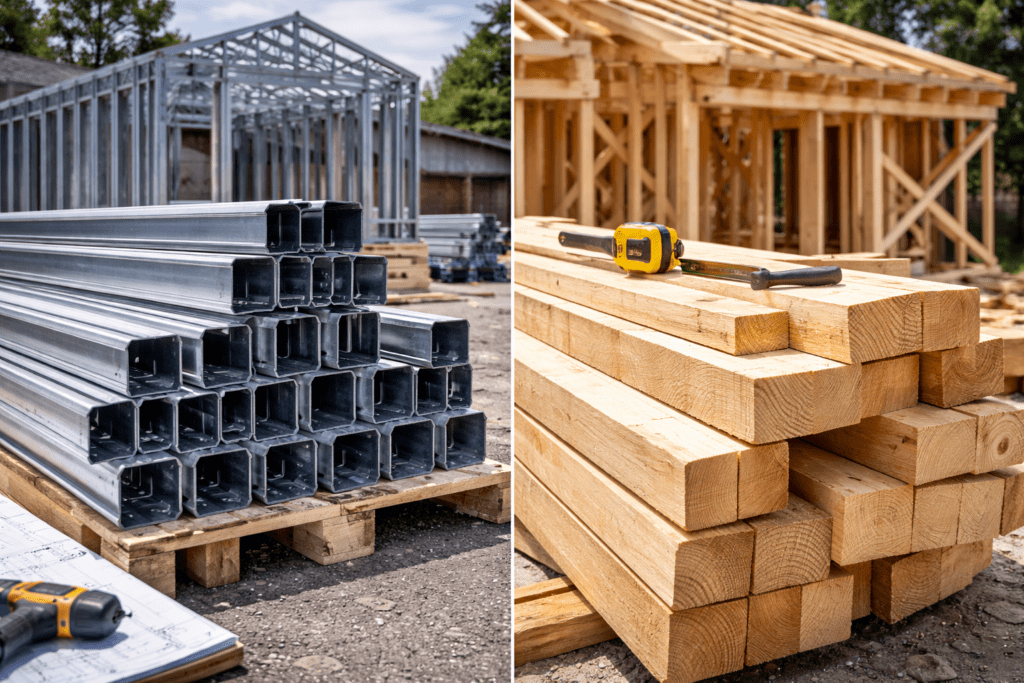
At first glance, wood framing often appears cheaper. Lumber pricing per linear foot can look lower than cold-formed steel studs.
However, this comparison fluctuates heavily.
Wood prices in Canada have shown extreme volatility over the past decade. Market swings, supply chain disruptions, wildfires, and demand spikes have caused unpredictable cost jumps.
Steel pricing tends to remain more stable. While steel also moves with global markets, it does not experience the same seasonal swings as lumber.
If you are pricing jobs months in advance, predictability matters more than short-term pricing advantages.
Stable material pricing helps protect your margins.
Labor and Installation Speed
Material cost is only one part of the framing budget. Labor plays a major role in final project cost.
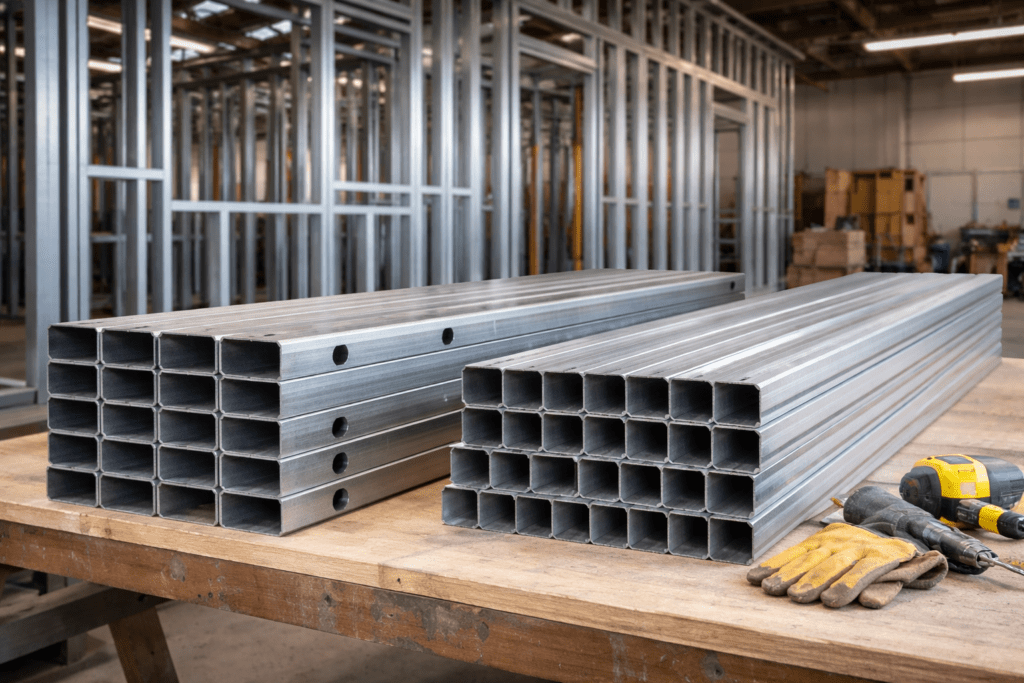
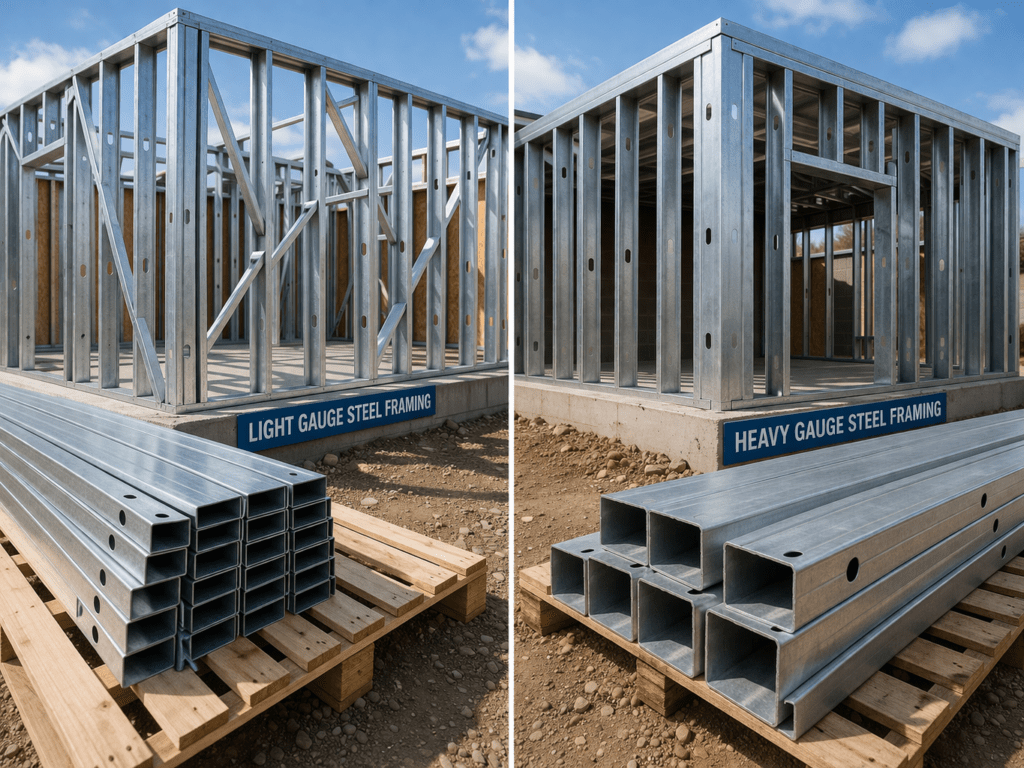
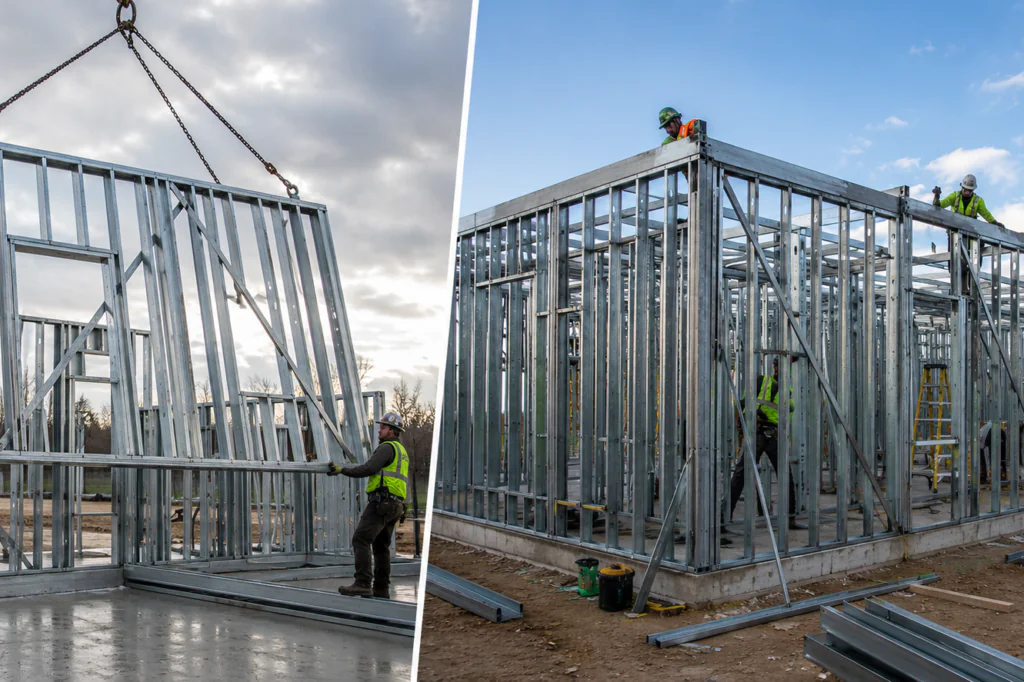
Steel framing systems are precision manufactured. Components arrive cut to spec. This reduces on-site measuring, cutting, and material waste.
Crews can install panels and structural components quickly and accurately.
Wood framing requires more field adjustments. Warped lumber, moisture swelling, and on-site corrections slow down installation. Over time, this adds hidden labor costs.
When comparing steel vs wood framing cost Canada, you must calculate installation efficiency.
Faster dry-in equals faster project turnover.
Waste and Site Clean-Up Costs
Wood framing produces significant site waste. Off-cuts, damaged boards, and packaging add to disposal costs.
Steel framing systems reduce waste dramatically. Pre-engineered components arrive ready to assemble. Excess material stays minimal.
Less waste means:
Lower disposal fees
Cleaner job sites
Reduced environmental impact
Fewer delays from cluttered work areas
On larger projects, waste reduction alone can shift cost comparisons.
Long-Term Durability and Repair Costs
This is where the conversation changes.
Wood is organic. It absorbs moisture. It can warp, crack, or rot. In Canada’s climate, freeze-thaw cycles and humidity swings increase that risk.
Steel does not absorb moisture. It does not shrink or twist. It maintains structural integrity over time.
Consider the long-term factors:
Fewer drywall cracks from movement
Lower risk of mold-related remediation
No termite or pest damage
Reduced call-backs for structural shifts
When evaluating steel vs wood framing cost Canada, lifecycle performance must be included in your equation.
A slightly higher upfront material investment can reduce repair and maintenance expenses for decades.
Fire Resistance and Insurance Considerations
Steel framing is non-combustible. Wood is not.
Fire safety impacts:
Code compliance
Insurance premiums
Risk exposure
Developer liability
In dense urban zones and multiplex builds, fire-rated assemblies matter more than ever.
Steel framing helps meet stringent fire performance requirements without relying entirely on layered protection systems.
Over time, improved fire resilience can protect both your client and your brand reputation.
Structural Strength and Design Flexibility
Steel offers higher strength-to-weight ratios than wood. This allows longer spans, straighter walls, and more consistent structural performance.
For mid-rise, rooftop additions, and infill housing, structural efficiency becomes critical.
Builders working in tight urban conditions benefit from lighter structural loads and predictable engineering calculations.
Fewer surprises during inspections mean smoother approvals and fewer costly revisions.
Price Stability and Risk Management
One of the most overlooked factors in the steel vs wood framing cost Canada debate is risk.
Lumber markets react quickly to:
Trade restrictions
Tariffs
Weather disruptions
Demand spikes
Steel markets move differently and often provide better forward pricing visibility.
For developers managing multiple projects, price stability reduces financial uncertainty.
Risk management is part of cost management.
The Real Question: What Is Your Total Project Cost?
When you compare materials properly, you should include:
Material pricing
Labor efficiency
Waste management
Durability
Maintenance
Insurance implications
Structural reliability
Market price volatility
Wood may appear cheaper at checkout.
Steel often proves more economical across the entire project lifecycle.
How LSF Pro Supports Cost-Efficient Steel Framing
At LSF Pro, we help Canadian builders maximize value, not just reduce upfront material costs.
We provide:
Engineered cold-formed steel framing systems
Precision-manufactured components
Custom structural layouts
Support for residential, multiplex, and infill projects
Our systems improve installation speed, reduce waste, and deliver long-term structural performance.
If you are evaluating steel vs wood framing cost Canada, we can help you run real numbers based on your specific project.
Ready to Compare with Confidence?
Material choice should strengthen your margins, not weaken them.
Before defaulting to lumber, evaluate the full picture. Steel framing may offer stronger long-term value, greater predictability, and lower lifecycle costs.
Contact LSF Pro today to discuss how cold-formed steel framing can improve cost efficiency on your next Canadian project.