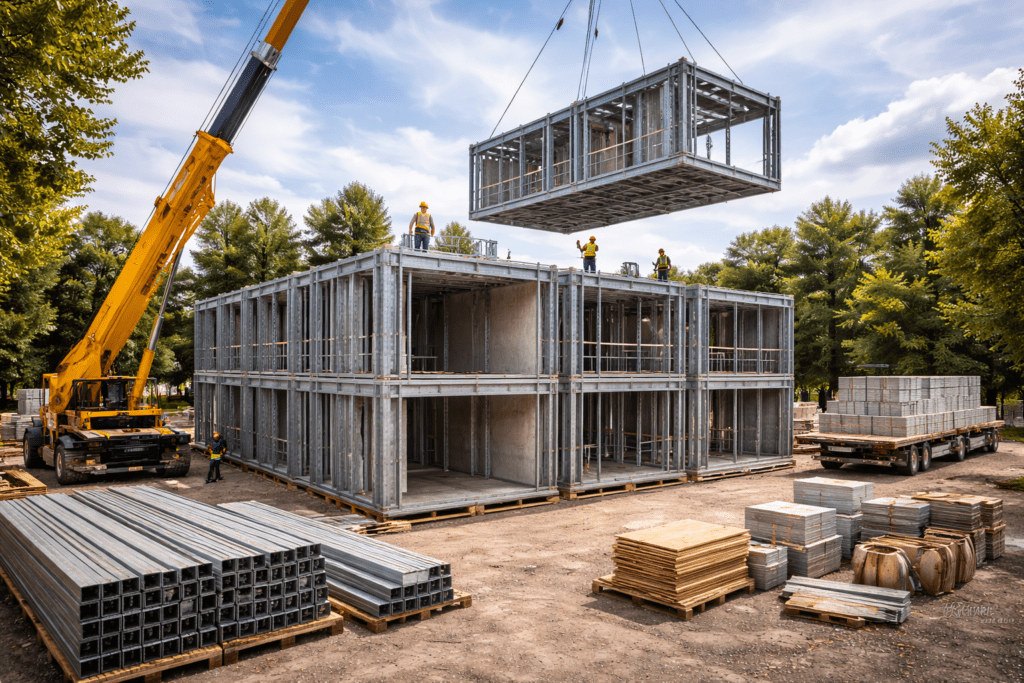
Modular construction is no longer a niche method in Canada. Developers, municipalities, and builders increasingly rely on off-site fabrication to accelerate housing delivery and control costs.
As this shift continues, one structural system stands out: steel.
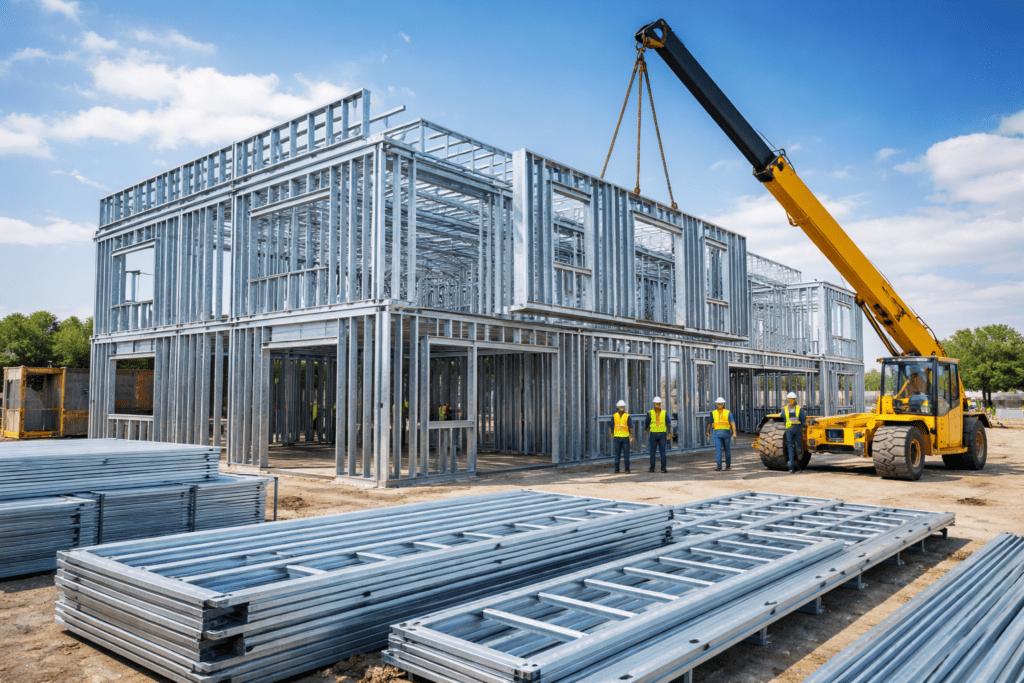
When evaluating cold-formed steel modular construction Canada, builders quickly recognize why steel aligns naturally with factory-built methods.
Why Modular Construction Is Growing in Canada
Canada faces ongoing housing shortages, labor constraints, and weather-related delays. Modular construction addresses these pressures by moving much of the building process indoors.
Factory-controlled production offers:
-
Faster project timelines
-
Improved quality control
-
Reduced weather delays
-
Lower site congestion
-
Better labor efficiency
Developers working on multi-unit housing, student residences, mid-rise projects, and remote builds increasingly rely on strategies to meet demand.
However, modular construction requires structural precision. Not every framing material performs equally in this environment.
Why Cold-Formed Steel Fits Modular Construction
Modular construction depends on repeatability and dimensional accuracy. Cold-formed steel framing delivers both.
Steel components are manufactured to exact specifications using digital design files. This precision ensures each module aligns perfectly during stacking and installation.
In factory settings, consistency matters. Steel does not warp, shrink, or twist like wood. That stability improves fit and finish during final assembly.
When comparing framing systems for modular builds, cold-formed steel construction Canada offers unmatched predictability.
Dimensional Stability During Transportation
Modular units must travel from factory to site. Transportation places stress on the structure during lifting, trucking, and craning.
Cold-formed steel framing provides:
-
High strength-to-weight ratio
-
Structural rigidity
-
Reduced deformation risk
-
Secure connection points
Because steel maintains its shape under stress, modules arrive aligned and structurally sound. This reduces on-site corrections and speeds installation.
Builders benefit from smoother crane operations and tighter stacking tolerances.
Faster Installation on Site
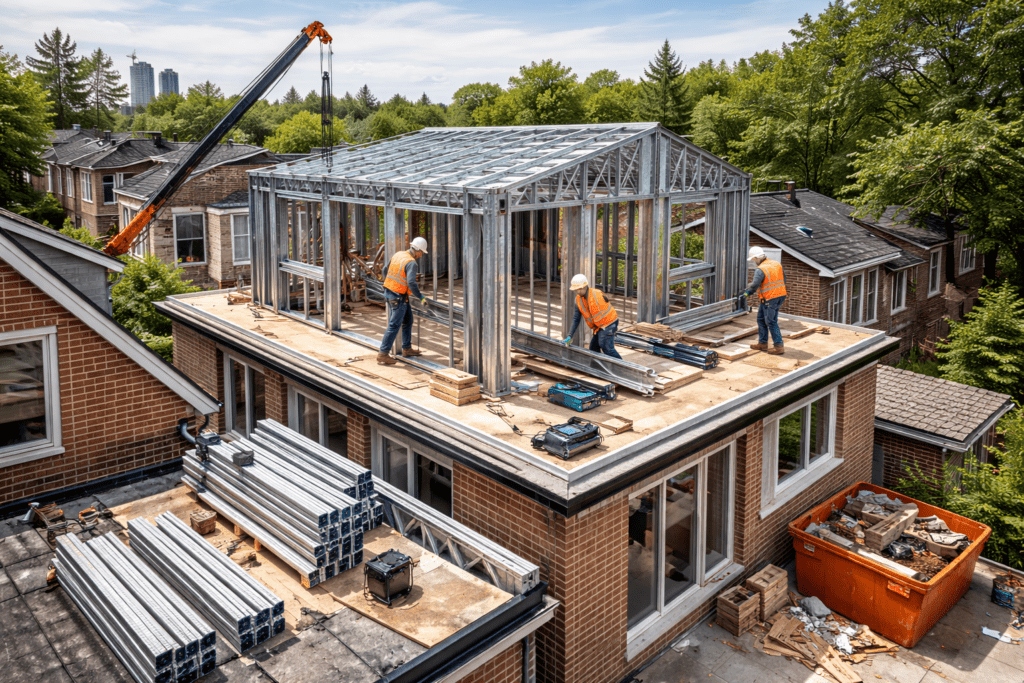
One of modular construction’s biggest advantages is reduced site time. Steel framing enhances that advantage.
Modules built with cold-formed steel often require less structural adjustment upon arrival. Crews can position, secure, and connect units efficiently.
This results in:
-
Shorter project schedules
-
Reduced site labor costs
-
Less neighborhood disruption
-
Faster occupancy timelines
In urban infill or high-density developments, speed is competitive advantage.
Improved Fire and Code Performance
Steel is non-combustible. This supports fire-rated wall assemblies required in multi-unit and mid-rise projects.
In modular construction, where modules are closely integrated, fire safety becomes even more critical.
Cold-formed steel framing helps builders:
-
Meet Ontario and National Building Code fire requirements
-
Improve overall structural safety
-
Reduce long-term fire risk
For developers, improved fire performance strengthens risk management and insurance positioning.
Sustainability and Waste Reduction
Modular construction already reduces material waste by centralizing production. Steel framing enhances that efficiency.
Cold-formed steel components are:
-
Cut precisely to specification
-
Manufactured with minimal offcuts
-
Fully recyclable at end of life
Factory-controlled environments also improve material usage efficiency and reduce landfill contributions.
For developers targeting green building certifications, steel framing supports sustainability goals.
Consistency Across Multi-Unit Projects
Modular construction often involves repeating floor plans and structural layouts.
Cold-formed steel framing integrates seamlessly into repeatable systems. Once engineering is finalized, modules can be produced consistently without structural variation.
This supports:
-
Scalable housing projects
-
Faster replication of units
-
Improved quality control
-
Stronger long-term performance
In large housing developments, consistency reduces risk.
Ideal Applications for Steel Modular Systems
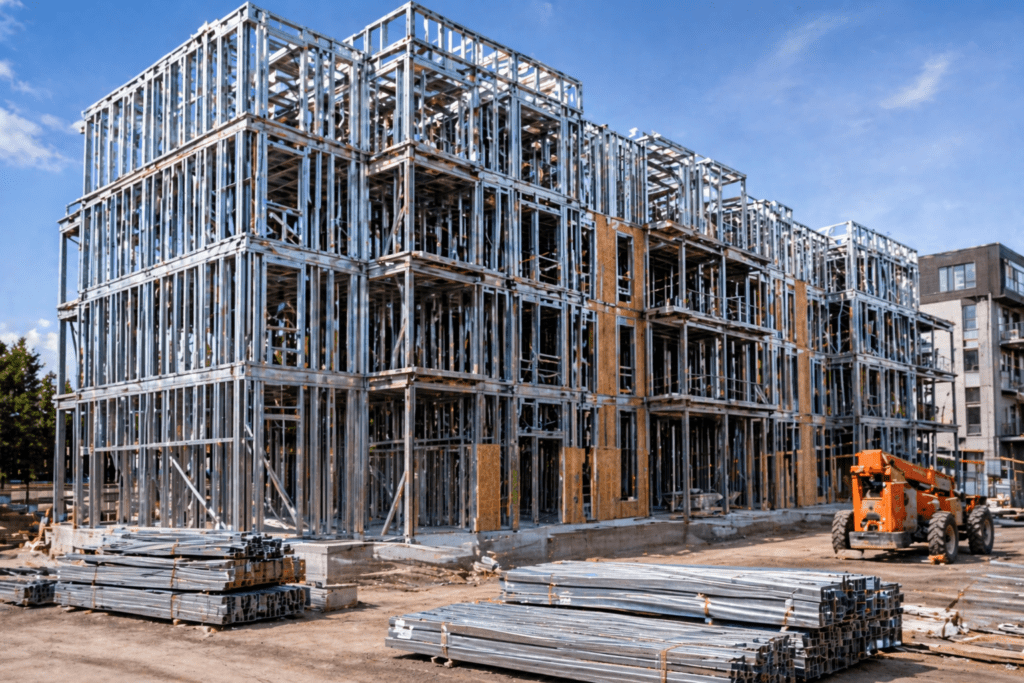
Cold-formed steel modular construction performs particularly well in:
-
Mid-rise residential buildings
-
Student housing
-
Affordable housing projects
-
Remote and northern communities
-
Multi-unit rental developments
In each case, speed, durability, and structural accuracy directly affect profitability.
Steel framing supports all three.
How LSF Pro Supports Modular Builders
At LSF Pro, we provide engineered cold-formed steel framing systems designed for precision manufacturing and modular integration.
We offer:
-
Custom structural layouts for projects
-
Precision-manufactured steel components
-
Support aligned with Canadian building codes
-
Reliable coordination for factory and site schedules
Our systems help builders maintain accuracy, reduce installation time, and deliver consistent structural performance.
If you are planning a modular project, structural planning should begin early.
Build Smarter with Steel and Modular Methods
Modular construction represents the future of Canadian housing delivery. Cold-formed steel framing strengthens that future by providing precision, stability, and predictable performance.
When evaluating cold-formed steel modular construction Canada, consider more than material cost. Consider long-term structural reliability and schedule control.
Contact LSF Pro today to learn how our engineered steel framing systems can support your next development.