Construction in Ontario is evolving under pressure. Builders are expected to deliver faster timelines, tighter budgets, and higher quality, all while dealing with labor shortages and unpredictable weather. Traditional framing methods, especially wood-based systems, often struggle to keep up with these demands.
Prefabricated steel framing offers a direct and practical solution. By shifting key construction processes into a controlled manufacturing environment, builders gain precision, speed, and reliability that are difficult to achieve on-site.
For developers, contractors, and builders across Canada, this approach is quickly becoming a competitive advantage rather than an alternative option.
What Is Prefabricated Steel Framing?
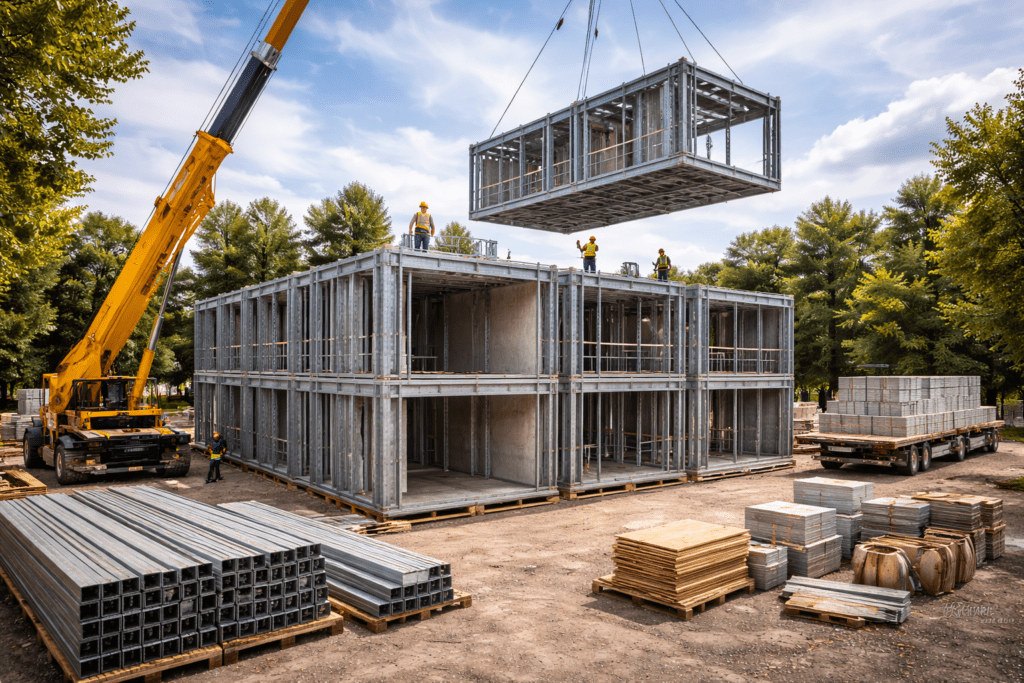
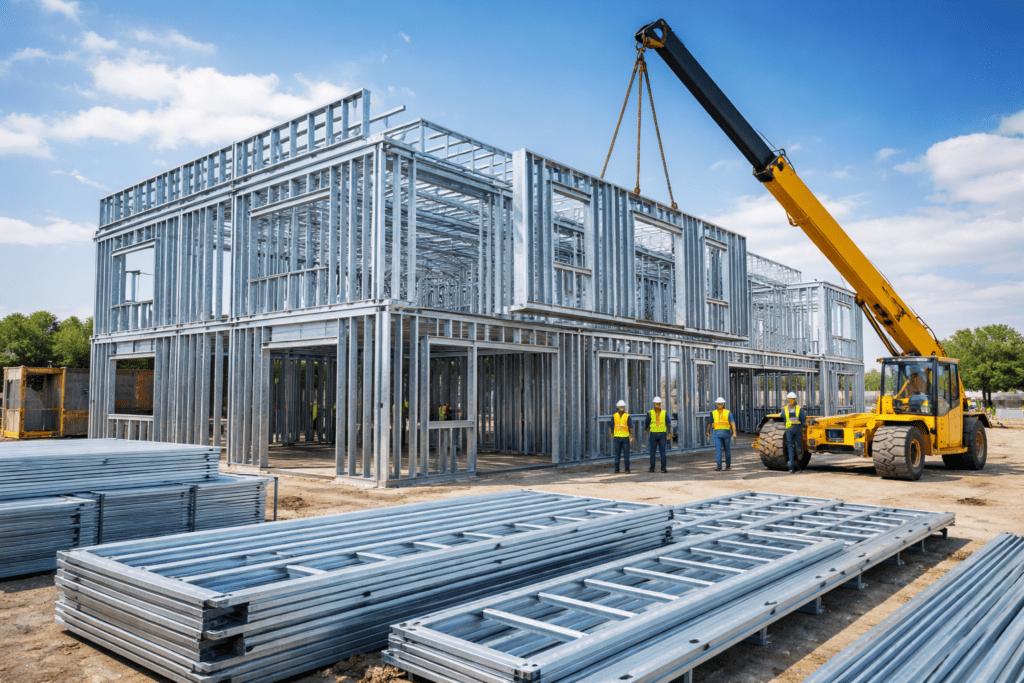
Prefabricated steel framing is a construction method where structural components are engineered, manufactured, and pre-cut before they arrive on-site. Instead of building everything from scratch at the job site, the framing system is produced in a facility using light gauge steel and detailed design drawings.
Each component is formed with exact dimensions using roll-forming technology. This means that when materials arrive at the project site, they are ready to be assembled without the need for extensive cutting, adjustments, or corrections.
The result is a system that behaves more like assembly than traditional construction. Everything fits as intended, which removes a significant amount of uncertainty from the process.
Why Builders in Ontario Are Moving Toward Prefabrication
The shift toward prefabricated steel framing in Ontario is not accidental. It is driven by real construction challenges that require more efficient solutions.
One of the most immediate benefits is the reduction in project timelines. Since components are manufactured in advance, site work and fabrication can happen at the same time. Once the materials arrive, installation moves quickly because the framing system has already been engineered to fit precisely. This overlap of processes shortens the overall construction schedule in a measurable way.
Another major factor is consistency. In traditional framing, even small human errors can create alignment issues that affect later stages such as drywall, finishes, and inspections. With prefabricated steel framing, each piece is produced under controlled conditions using digital designs. This ensures uniformity across the entire structure, which is especially valuable in large developments throughout cities like Toronto, Markham, and Mississauga.
Waste reduction also plays a critical role. On-site cutting of materials often leads to excess waste that increases both cost and cleanup time. Prefabrication minimizes this by producing components at exact lengths. This not only reduces material waste but also contributes to cleaner and more organized job sites.
Built for Canadian Climate and Conditions
Ontario’s climate places significant demands on building materials. Structures must withstand freezing winters, moisture fluctuations, and long-term exposure to environmental stress.
Steel framing performs exceptionally well under these conditions. Unlike wood, it does not absorb moisture, which means it will not warp, shrink, or rot over time. This stability ensures that the structure maintains its integrity regardless of seasonal changes.
Fire performance is another important advantage. Steel is non-combustible, which supports fire-rated assemblies and enhances overall building safety. This is particularly relevant for multi-unit residential and commercial projects where fire protection standards are strict.
Additionally, steel eliminates the risk of pest damage. Termites and other insects that commonly affect wood structures have no impact on steel framing, reducing long-term maintenance concerns.
Applications Across Ontario and Canada
Prefabricated steel framing is not limited to one type of project. Its flexibility allows it to be used across a wide range of construction applications.
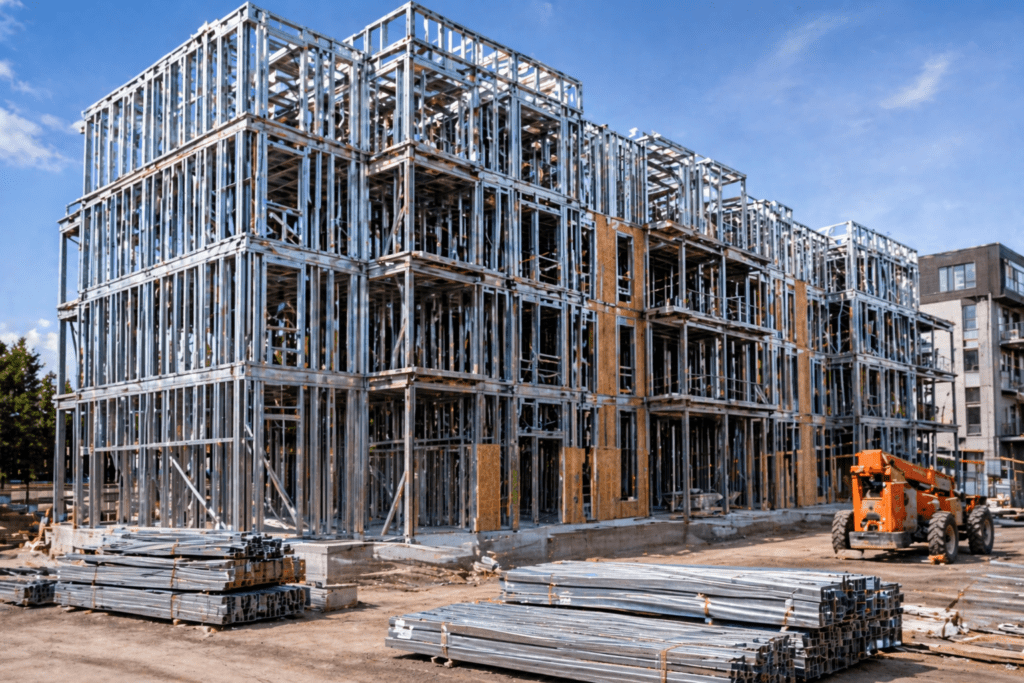
In residential construction, it is increasingly used for custom homes, townhouses, and garden suites. Builders benefit from faster framing stages and improved accuracy, which is especially important in urban environments where space is limited and tolerances are tight.
In commercial and industrial settings, steel framing supports larger spans and heavier loads. This makes it suitable for warehouses, office buildings, and retail developments where structural performance is critical.
The system is also gaining traction in mid-rise and modular construction. As Ontario continues to push for higher density housing, prefabricated steel framing allows developers to scale projects efficiently. Repetitive designs can be manufactured with precision, enabling faster delivery of multi-unit buildings.
Understanding the True Cost
Many builders initially assume that prefabricated steel framing is more expensive than traditional methods. While material costs can sometimes be higher upfront, this does not reflect the full financial picture.
When evaluating total project costs, prefabrication often leads to savings. Labor requirements are reduced because installation is faster and more straightforward. Project timelines are shorter, which lowers overhead costs such as site management and equipment rentals. The reduction in waste and rework also contributes to cost efficiency.
Over the lifespan of the building, steel framing continues to provide value through its durability and low maintenance requirements. This makes it a financially sound choice for long-term projects in Ontario.
What to Consider Before Choosing Prefabricated Steel Framing
To fully benefit from prefabrication, planning must happen earlier in the project timeline. Since components are manufactured based on finalized drawings, late design changes can lead to delays or additional costs.
Working with an experienced manufacturer is also critical. The supplier must understand Ontario Building Code requirements and be able to produce components that meet local engineering standards. This ensures a smooth approval process and avoids complications during construction.
Installation should be handled by crews familiar with steel framing systems. While the process is faster, proper assembly techniques are essential to maintain structural performance and alignment.
The Future of Construction in Ontario
Prefabricated steel framing is not just an alternative method. It represents a shift toward more efficient and predictable construction practices.
As demand for faster builds and higher quality increases across Canada, more developers are turning to systems that reduce risk and improve outcomes. Prefabrication addresses many of the key challenges in modern construction, from labor shortages to project delays.
Builders who adopt this approach position themselves ahead of the curve. They gain the ability to deliver projects faster, with greater accuracy and long-term durability.
Build Smarter with LSF Pro Structures
If you are planning a construction project in Ontario, the framing system you choose will directly impact your timeline, cost, and overall quality.
LSF Pro Structures delivers precision-engineered prefabricated steel framing solutions designed specifically for Canadian construction standards. From design coordination to manufacturing, every component is built to perform reliably in real-world conditions.
Reach out today to discuss your project and discover how prefabricated steel framing can help you build faster, stronger, and with greater confidence.