In today’s construction environment, one issue continues to slow projects across the GTA: permit timelines. That is exactly why prefabricated steel framing Toronto is gaining serious attention from developers, builders, and municipalities.
As the City of Toronto pushes to accelerate housing approvals and reduce bottlenecks, construction methods are becoming part of the conversation. Projects that demonstrate speed, predictability, and reduced risk are being viewed more favorably.
Prefabricated steel framing aligns directly with these priorities.
Why Toronto Is Pushing for Faster Permits
Toronto is under pressure to increase housing supply quickly. Long approval timelines have been identified as a major barrier to meeting housing targets.
To address this, the city is:
- Streamlining permit processes
- Encouraging standardized building methods
- Prioritizing projects that reduce delays
- Supporting innovative construction approaches
This shift means that how you build is now just as important as what you build.
What Is Prefabricated Steel Framing?
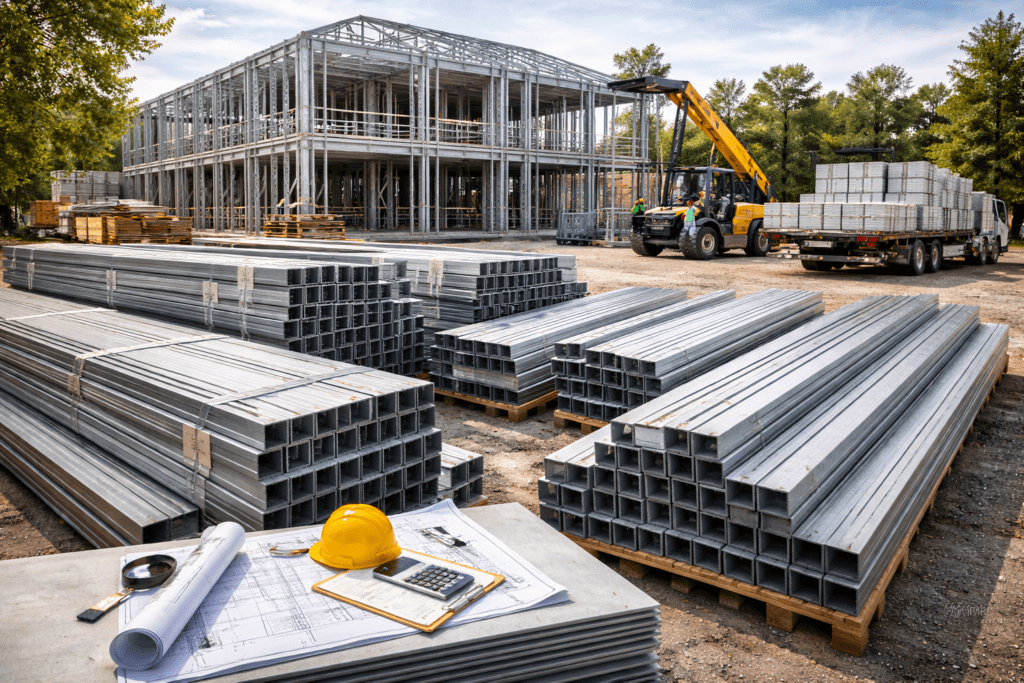
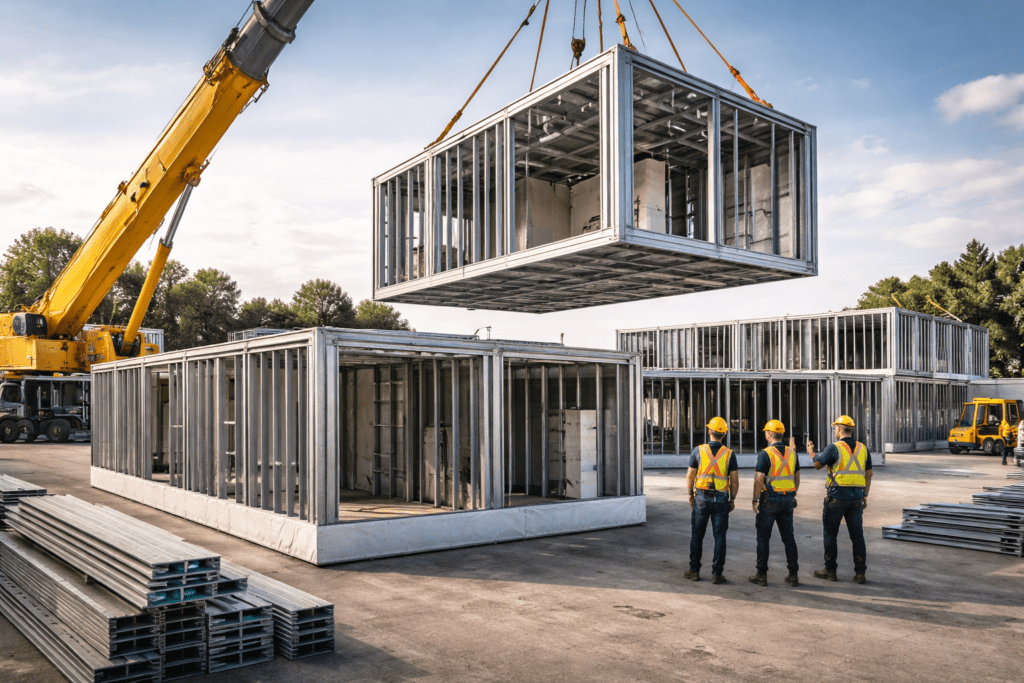
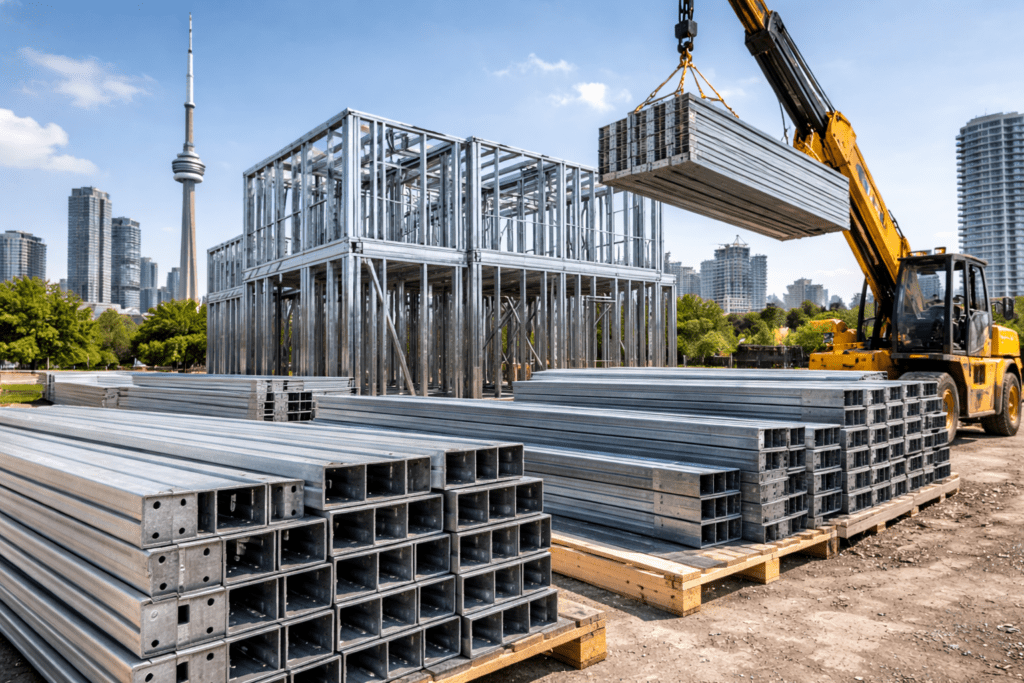
Prefabricated steel framing involves manufacturing structural components off-site using precise, engineered processes. These components are then delivered to the job site ready for assembly.
Unlike traditional methods, where materials are cut and adjusted on-site, prefabrication ensures:
- Consistent quality
- Exact dimensions
- Faster installation
In Toronto, this approach is becoming increasingly relevant as projects aim to meet tighter timelines and stricter requirements.
How Prefabrication Supports Faster Approvals
One of the key advantages of prefabricated steel framing Toronto is predictability.
Municipalities and reviewers prefer projects that are:
- Clearly defined in design
- Less prone to on-site changes
- Easier to evaluate for compliance
Prefabricated systems reduce variability. Because components are engineered and standardized, they simplify the review process.
When your project demonstrates:
- Clear structural systems
- Consistent materials
- Reduced construction risk
…it becomes easier for permit reviewers to assess and approve.
Reducing Construction Risk
Risk is a major factor in permit approvals.
Traditional construction methods introduce uncertainty through:
- On-site modifications
- Material inconsistencies
- Labour variability
Prefabricated steel framing minimizes these risks by shifting production to controlled environments.
This results in:
- Fewer errors
- Less rework
- Greater alignment between design and execution
Lower risk leads to greater confidence from both municipalities and project stakeholders.
Speed of Construction and Its Impact on Permits
While permits are approved before construction begins, the expected construction timeline still matters.
Projects that can be completed faster are more attractive because they:
- Reduce disruption to surrounding areas
- Deliver housing sooner
- Align with municipal growth targets
Prefabricated steel framing significantly shortens construction timelines by allowing rapid on-site assembly.
This creates a strong case for faster approvals, especially in projects where time is a critical factor.
Supporting Urban Infill and Density Goals
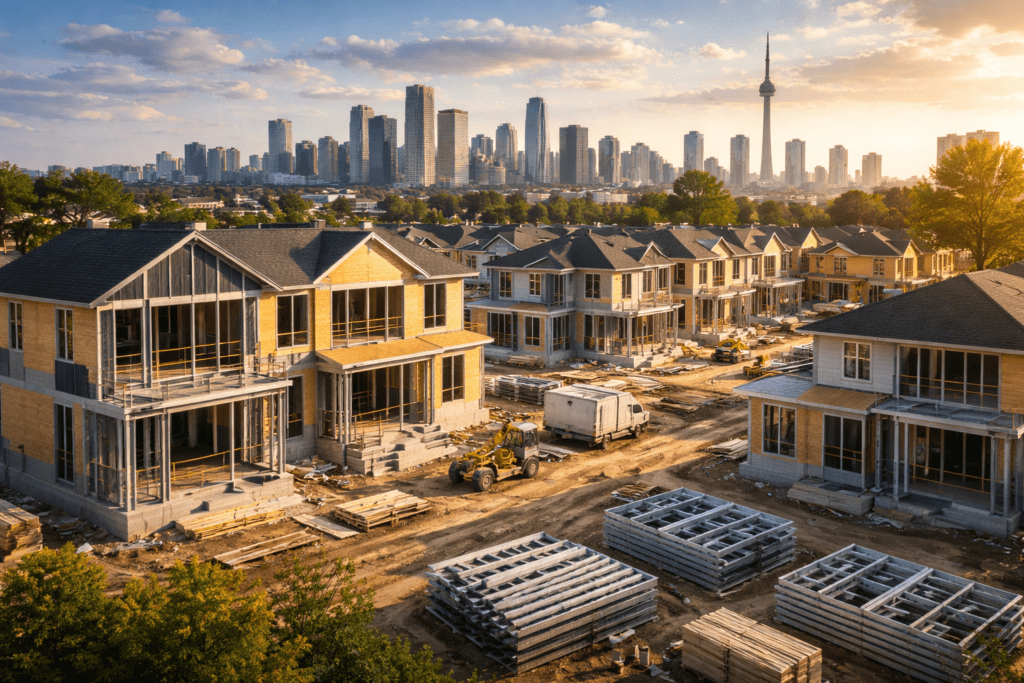
Toronto is focusing heavily on increasing density within existing neighborhoods.
Prefabricated steel framing is ideal for:
- Mid-rise residential buildings
- Laneway and garden suites
- Infill developments with limited access
Because components are lightweight and easy to transport, they work well in tight urban sites where traditional construction methods struggle.
This alignment with city goals further strengthens the case for using prefabricated systems.
Labour Efficiency and Market Conditions
Labour shortages continue to impact construction across Ontario.
Prefabrication reduces reliance on large on-site crews by moving much of the work off-site. This leads to:
- More consistent productivity
- Reduced scheduling issues
- Lower labour risk
For municipalities, this translates into more reliable project timelines, which supports faster permit decisions.
Common Mistake Developers Make
Many developers still treat construction method as a secondary decision.
They focus on design and approvals first, then decide how to build later. This approach limits the benefits of systems like prefabricated steel framing.
To fully leverage the advantages, prefabrication must be considered early in the design phase.
Projects that are designed with prefabrication in mind are more efficient, easier to approve, and faster to build.
How to Position Your Project for Faster Permits
To take advantage of Toronto’s push for faster approvals:
- Integrate prefabricated steel framing into your design early
- Ensure your structural system is clearly defined and engineered
- Highlight reduced construction risk in your application
- Demonstrate realistic and efficient timelines
This approach aligns your project with what the city is actively encouraging.
Why This Matters in Toronto’s Market
Toronto’s construction landscape is evolving quickly. Projects that adapt to new expectations will move faster and perform better.
Prefabricated steel framing is not just a construction trend. It is becoming a strategic tool for navigating approvals and delivering projects efficiently.
Developers who understand this shift are positioning themselves ahead of the competition.
Work with LSF Pro Structures
At LSF Pro Structures, we specialize in prefabricated light steel framing systems designed for Toronto’s construction environment.
From design coordination to manufacturing and delivery, we help ensure your project is optimized for speed, compliance, and efficiency.
If you are planning a project and want to leverage prefabricated steel framing Toronto for faster permits, contact LSF Pro Structures today.