In modern construction, safety is no longer just a requirement. It is a major decision driver. One area where this is especially clear is fire safety regulations in Canada. As codes become stricter and expectations increase, builders are re-evaluating the materials they use.
One material continues to stand out: light steel framing.
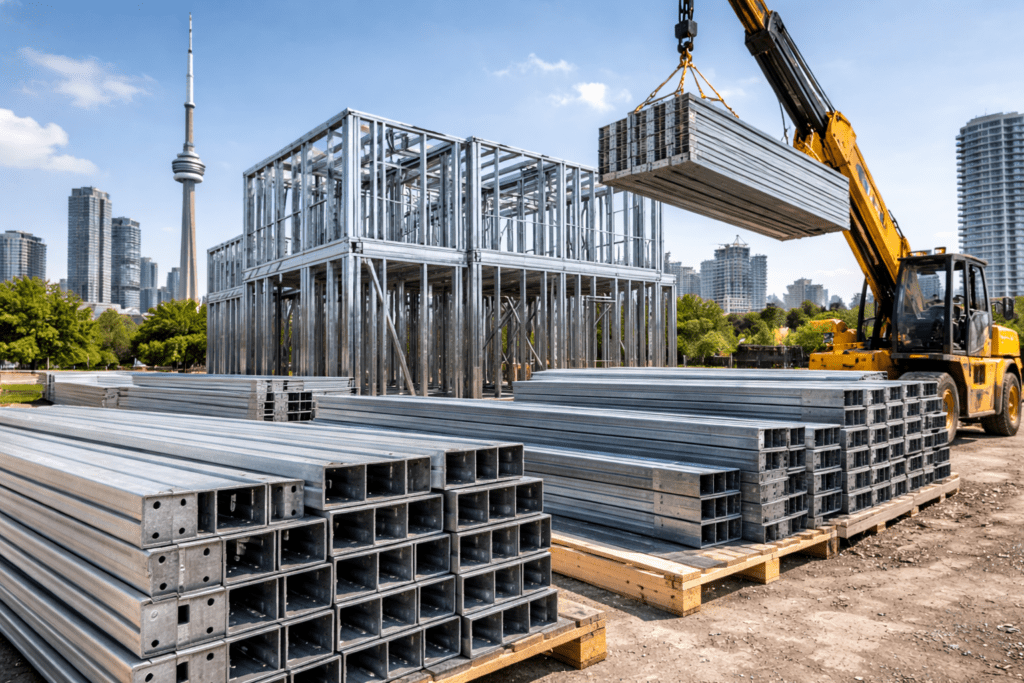
Across Ontario and the rest of Canada, steel framing is gaining attention not just for efficiency, but for how well it aligns with fire safety requirements.
Understanding Fire Safety Regulations in Canada
Fire safety regulations in Canada are primarily governed by the National Building Code of Canada (NBCC), along with provincial adaptations such as the Ontario Building Code.
These regulations are designed to:
- Protect occupants during a fire
- Prevent rapid fire spread
- Maintain structural integrity long enough for evacuation
- Support firefighting efforts
Buildings must meet specific fire-resistance ratings depending on their use, height, and occupancy type.
These requirements influence material selection from the very beginning of a project.
Why Material Choice Matters for Fire Safety
Not all construction materials respond to fire in the same way.
Some materials contribute to fire growth, while others help contain it. This difference directly impacts how a building performs during a fire event.
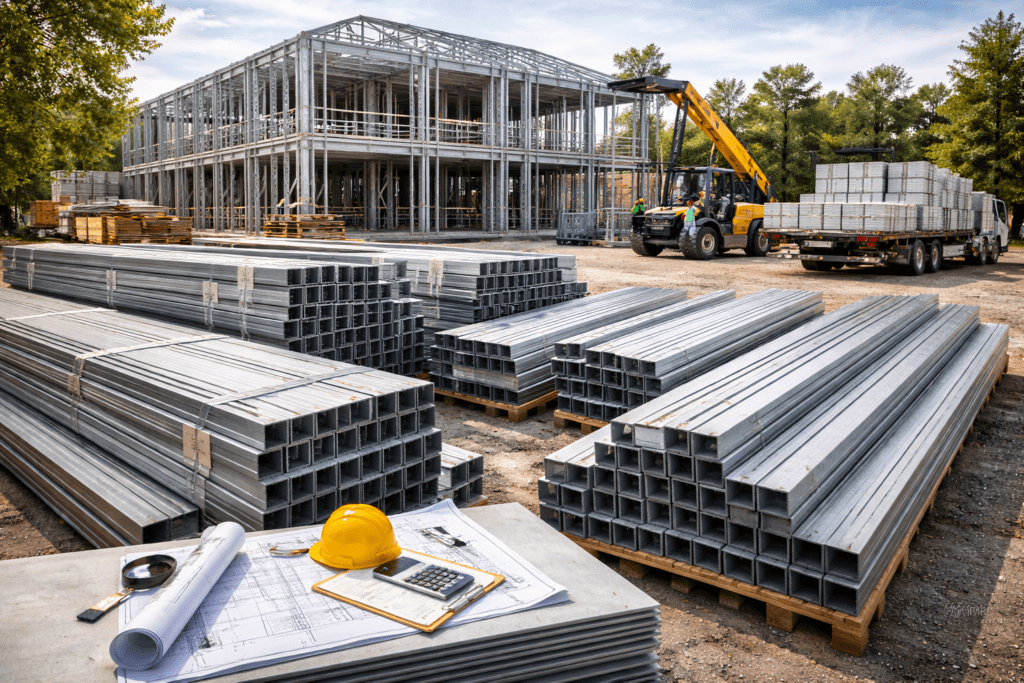
Light steel framing is non-combustible. It does not burn, ignite, or contribute fuel to a fire. This makes it a strong candidate for meeting fire safety regulations in Canada.
In contrast, traditional materials such as wood are combustible and require additional treatments or protective systems to meet the same standards.
Steel Framing and Fire Resistance Performance
Steel framing offers a key advantage: it maintains structural integrity longer when properly protected.
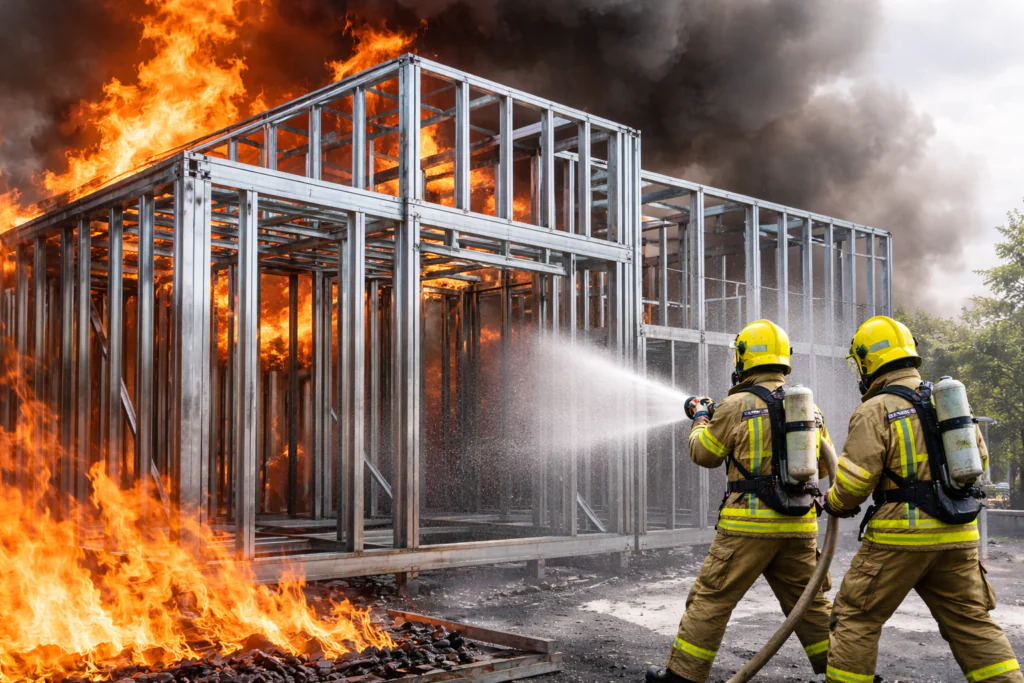
Although steel can lose strength at very high temperatures, it does not ignite. When combined with fire-rated assemblies such as gypsum board systems, steel framing can achieve high fire-resistance ratings.
This allows builders to design wall and floor systems that:
- Slow the spread of fire
- Maintain compartmentalization
- Provide safe evacuation time
In multi-unit residential buildings, this level of performance is critical.
Meeting Code Requirements More Efficiently
One of the biggest challenges in construction is meeting fire safety regulations without increasing complexity and cost.
Steel framing simplifies this process.
Because it is non-combustible, it often reduces the need for additional fire protection measures compared to combustible materials. This leads to:
- Simpler design approvals
- Fewer material treatments
- More predictable compliance with code requirements
In Ontario, where building inspections are strict, this predictability helps avoid delays.
Fire Separation and Multi-Unit Construction
Fire separation is a major requirement in Canadian building codes, especially for multi-unit residential buildings.
Each unit must be separated in a way that prevents fire from spreading quickly between spaces.
Steel framing works exceptionally well in these applications because:
- It supports fire-rated wall assemblies
- It maintains dimensional stability under heat
- It integrates well with tested fire-resistance systems
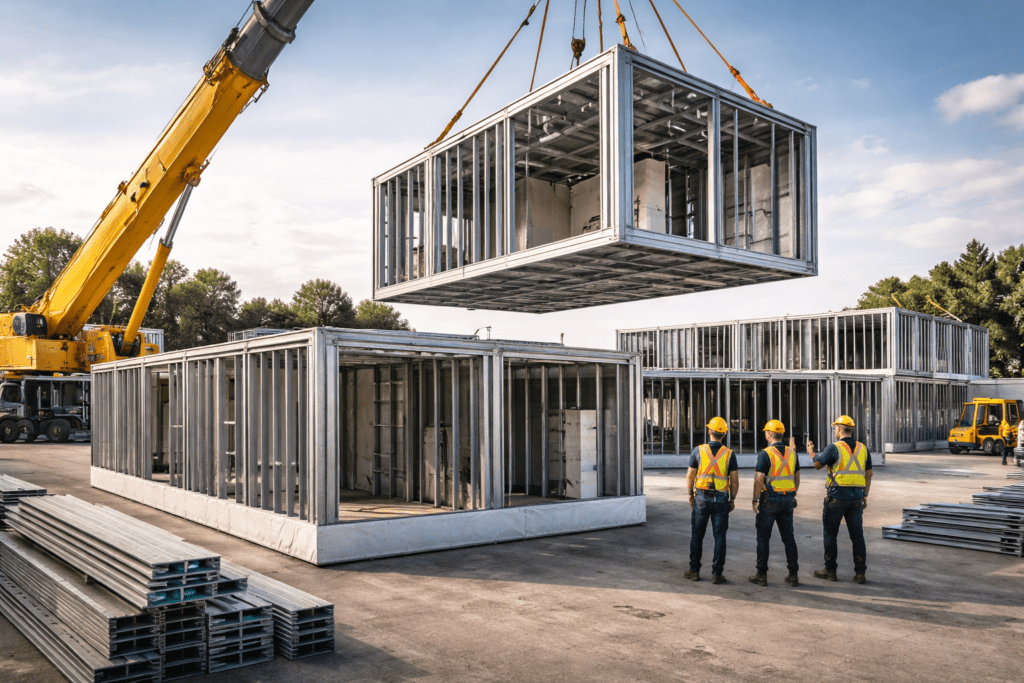
This makes it a preferred choice for apartments, condos, and other multi-unit developments across the GTA.
Reducing Risk for Builders and Developers
From a risk management perspective, fire safety is a critical concern.
Using materials that align with fire safety regulations in Canada reduces:
- Liability exposure
- Insurance risks
- Potential for structural failure during fire events
Steel framing provides a level of reliability that helps developers and builders manage these risks more effectively.
In many cases, this also leads to better long-term value for the property.
Performance in Real Canadian Conditions
Canada’s climate introduces additional challenges.
Temperature fluctuations, humidity, and building usage all affect how materials perform over time. Steel framing maintains its properties consistently, without degradation that could impact fire performance.
This consistency is important for ensuring that fire-rated assemblies perform as designed throughout the life of the building.
Common Misconception About Steel in Fire
One common misconception is that steel “fails” in fire conditions.
While it is true that steel loses strength at extreme temperatures, this is addressed through proper design. Fire-rated assemblies protect the steel and delay temperature rise, allowing the structure to perform safely during a fire.
The key point is that steel does not contribute to the fire itself. This alone provides a significant safety advantage.
Why This Matters in Ontario Construction
Ontario’s construction market is evolving, with increasing emphasis on safety, compliance, and long-term performance.
Builders are under pressure to meet strict codes while also delivering projects efficiently. Choosing materials that naturally align with fire safety regulations in Canada simplifies this process.
Light steel framing is becoming the preferred choice because it offers:
- Non-combustibility
- Reliable fire performance
- Easier compliance with building codes
This combination makes it a practical and strategic decision.
Work with LSF Pro Structures
At LSF Pro Structures, we provide light steel framing solutions designed to meet Canadian fire safety standards while maintaining efficiency and performance.
If you are planning a project and want to align with fire safety regulations in Canada using steel framing, our team can support you from design to execution.
Contact LSF Pro Structures to get started.