Earthquake risk is not limited to British Columbia. Western Canada faces the highest exposure, but parts of Ontario and Quebec also require seismic design consideration under the National Building Code of Canada.
For builders and developers working in these regions, structural performance under lateral loads is critical. That is why cold-formed steel framing seismic performance Canada has become a key topic in modern construction planning.
Choosing the right structural system is not only about strength. It is about energy dissipation, ductility, and predictable behavior during seismic events.
Why Seismic Design Matters in Canada
Canada’s building codes require structures to resist seismic forces based on regional risk levels. Engineers must account for:
Lateral loads
Shear forces
Structural drift
Connection integrity
Foundation interaction
In earthquake-prone zones, poor structural design can lead to catastrophic failure. Even moderate seismic events can cause significant structural damage if systems lack flexibility and strength.
Developers cannot ignore seismic performance. It affects safety, insurance, inspection approval, and long-term liability.
Understanding Seismic Forces in Buildings
Earthquakes generate horizontal and vertical ground movement. Buildings must absorb and redistribute this energy without collapsing.
Three structural qualities define good seismic performance:
Strength
Ductility
Light weight
Heavy buildings experience greater inertial forces during ground acceleration. Flexible and lightweight systems reduce those forces.
This is where cold-formed steel framing offers measurable advantages.
Lightweight Structure Reduces Seismic Demand
One of the biggest advantages of cold-formed steel framing is its weight.
Steel studs and panels weigh significantly less than concrete or heavy masonry systems. Lower mass means lower seismic force during ground motion.
Reduced structural weight leads to:
Smaller foundation loads
Lower lateral force demand
Improved stability under shaking
When comparing structural systems in high-risk regions, cold-formed steel framing seismic performance Canada consistently benefits from this lightweight advantage.
High Strength-to-Weight Ratio
Cold-formed steel provides exceptional strength relative to its mass.
This allows engineers to design wall assemblies and shear systems that resist lateral loads efficiently. Steel framing maintains structural integrity under dynamic loading conditions.
Because steel components are precision-manufactured, they perform predictably. There is no variability caused by knots, moisture content, or natural defects, which are common in wood.
Predictability improves engineering confidence.
Ductility and Energy Dissipation
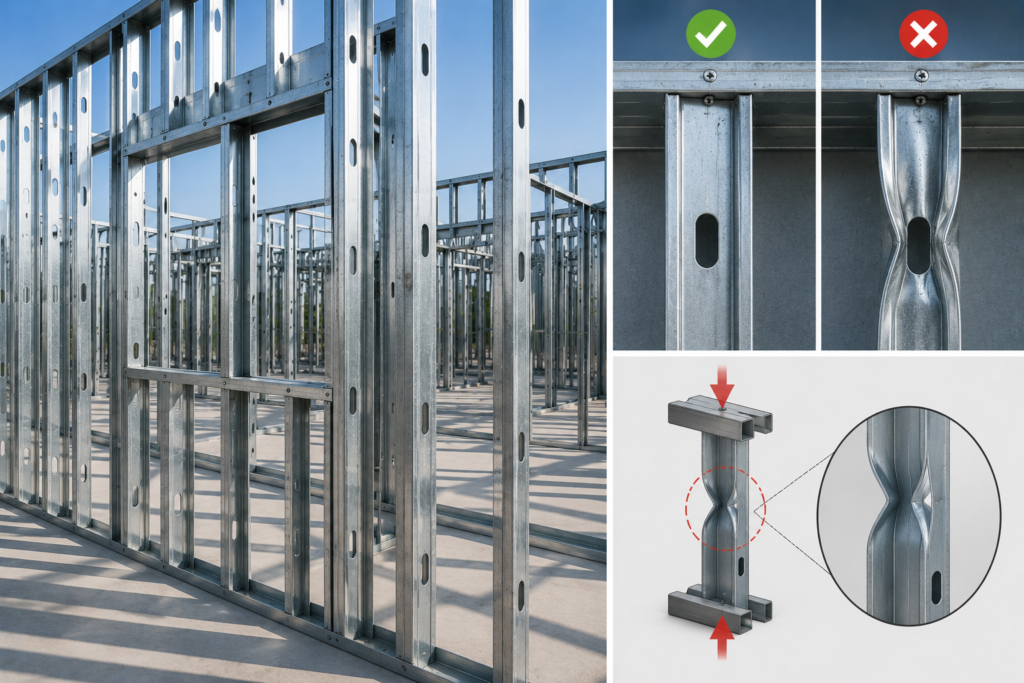
Seismic performance depends heavily on ductility. A ductile system bends without sudden failure. It absorbs energy instead of breaking abruptly.
Cold-formed steel framing systems can be engineered with:
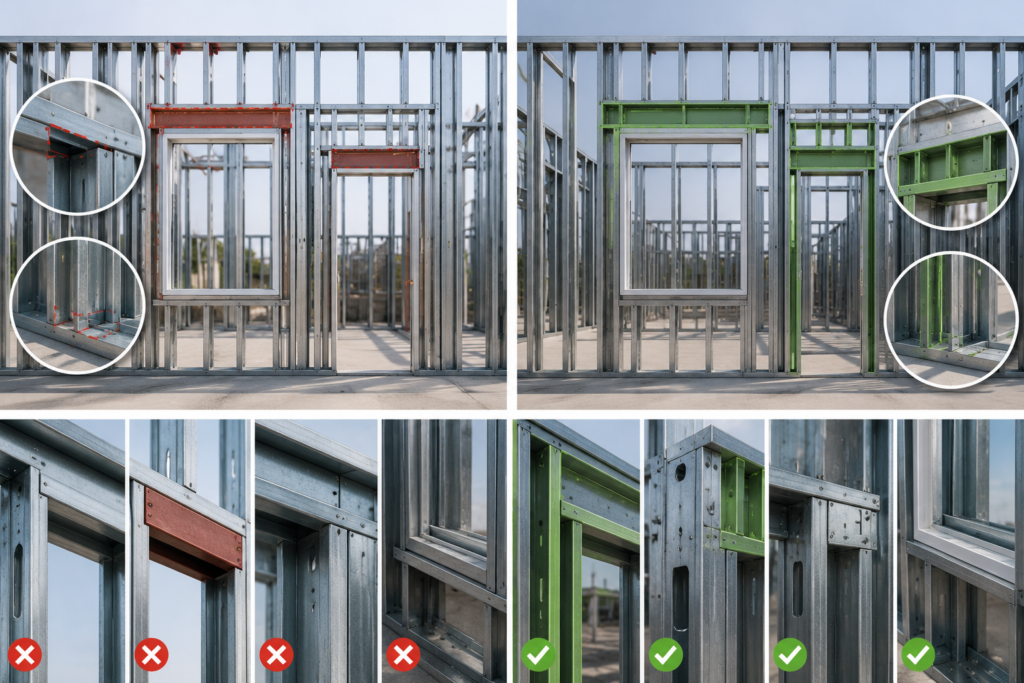
Reinforced connections
Shear walls
Braced frames
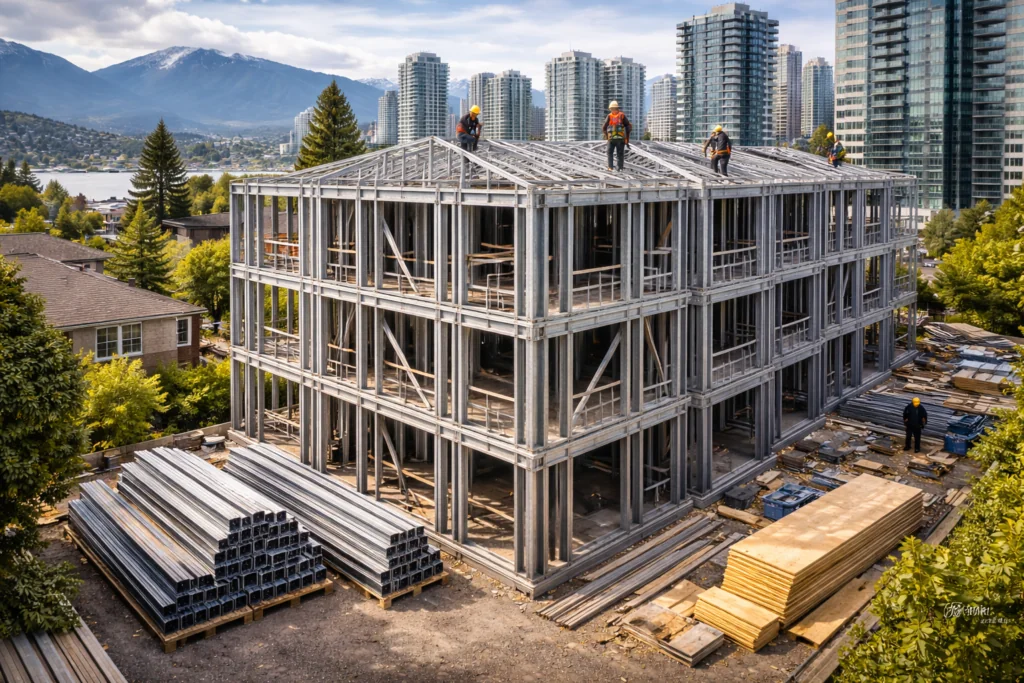
Diagonal strap bracing
These features allow controlled deformation during seismic events. Instead of brittle failure, the structure redistributes stress.
This behavior protects both occupants and structural integrity.
Connection Performance and Structural Stability
Connections are critical during earthquakes. Weak connections cause structural failure even when framing members remain intact.
Cold-formed steel systems use engineered fasteners and connection details designed to meet Canadian code requirements. Properly designed steel assemblies maintain load paths throughout the building.
This ensures:
Consistent load transfer
Reduced collapse risk
Better post-event repair potential
Builders benefit from clear engineering documentation and standardized connection details.
Compliance with Canadian Building Codes
The National Building Code of Canada outlines seismic requirements based on geographic location. Engineers must calculate lateral load resistance and drift limits.
Cold-formed steel framing systems integrate easily with code-compliant shear wall designs and lateral bracing systems.
For builders, this means:
Clear structural calculations
Fewer inspection delays
Confidence during permit review
Easier coordination with structural engineers
When designing in seismic regions, using a predictable and well-documented system simplifies approvals.
Ideal Applications in Seismic Regions
Cold-formed steel framing performs especially well in:
Mid-rise residential buildings
Multi-unit housing
Laneway homes
Rooftop additions
Light commercial construction
In these applications, weight control and lateral performance directly affect safety and cost.
Steel framing reduces structural demand while maintaining design flexibility.
How LSF Pro Supports Seismic-Ready Projects
At LSF Pro, we provide engineered cold-formed steel framing systems tailored to Canadian construction standards.
Our services include:
Custom structural layouts
Precision-manufactured framing components
Support for seismic design integration
Coordination with engineers and consultants
We help builders implement framing systems that meet regional seismic requirements without unnecessary complexity.
If your next project is located in a moderate or high seismic zone, now is the time to consider structural performance carefully.
Build with Confidence in Seismic Zones
Earthquakes cannot be predicted. Structural resilience can.
Cold-formed steel framing offers lightweight strength, ductility, and predictable performance under lateral loads. In seismic regions of Canada, that combination matters.
Contact LSF Pro today to discuss how improved cold-formed steel framing seismic performance Canada can strengthen your next residential or commercial project.