Sound control is no longer optional in Canadian construction. In duplexes, triplexes, multiplexes, and mid-rise residential buildings, acoustic complaints quickly turn into costly call-backs.
Builders working on multi-unit projects must now think beyond structure and fire rating. They must design for privacy, comfort, and long-term tenant satisfaction.
That is where cold-formed steel framing acoustic performance becomes a major advantage.
Why Acoustic Performance Matters More Than Ever
As cities like Toronto, Vancouver, and Montreal densify, more families share walls, floors, and ceilings. Poor sound isolation creates friction between neighbors and lowers property value.
Common complaints include:
Footstep noise from upper floors
Plumbing sound transmission
TV and music noise through shared walls
Vibration transfer between units
Meeting minimum code is not enough. Developers who want strong resale value and rental stability must exceed expectations.
Cold-formed steel framing supports that goal.
Understanding Sound Transmission in Multi-Unit Construction
To understand why steel performs well, you need to understand how sound travels.
Sound moves through structures in two ways:
Airborne sound, such as voices and music
Structure-borne sound, such as impact and vibration
Wood framing often transfers vibration more easily because of direct connections between structural members. Shrinkage and movement over time can also create gaps, which reduce sound control.
Steel framing systems allow more controlled, engineered assemblies. This makes it easier to design high-performance wall and floor systems.
How Cold-Formed Steel Framing Improves Acoustic Control
1. Reduced Structural Movement
Steel does not shrink, twist, or warp like wood. Dimensional stability prevents cracks and gaps from forming in drywall over time.
Fewer gaps mean better long-term acoustic integrity.
When walls stay straight, acoustic insulation performs consistently.
2. Easier Integration of Resilient Systems
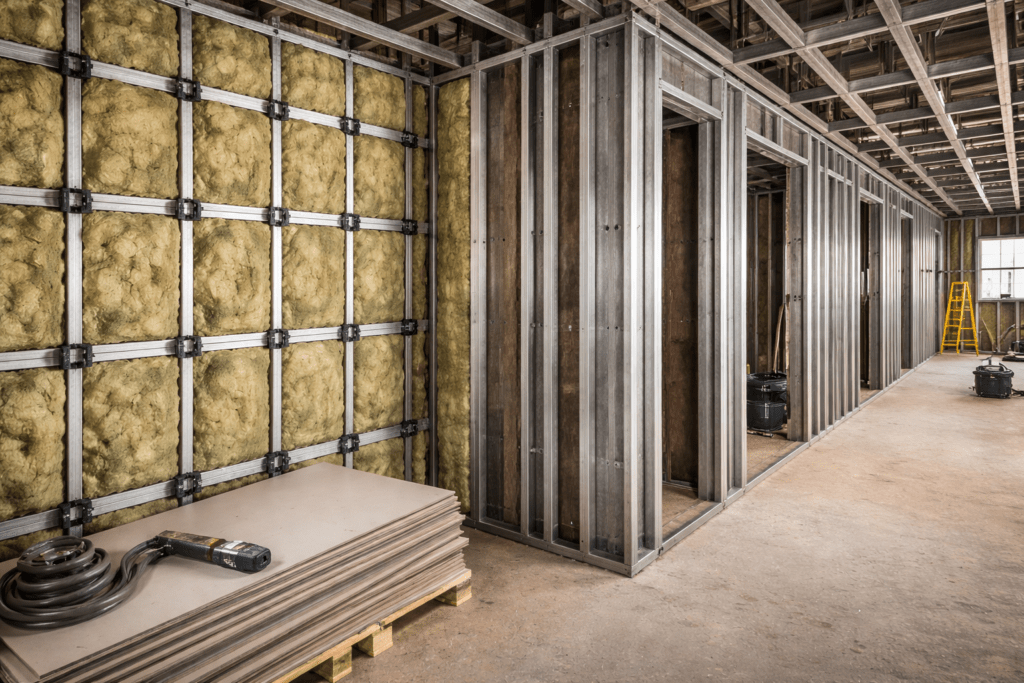
Cold-formed steel framing works well with:
Resilient channels
Double stud walls
Isolation clips
Sound-dampening insulation
Because steel components are manufactured to precise tolerances, installers can align layers accurately. This improves STC ratings and overall performance.
Builders gain predictable acoustic outcomes instead of relying on job-site adjustments.
3. Superior Multi-Layer Assemblies
Multi-unit buildings often require complex wall assemblies to meet sound separation requirements.
Steel framing allows:
Double-layer drywall systems
Staggered stud configurations
Decoupled wall designs
Engineered floor assemblies
These configurations significantly reduce airborne and impact sound transfer.
When comparing framing materials, cold-formed steel framing acoustic performance often supports higher design flexibility.
4. Reduced Vibration Transfer
Steel framing systems can be engineered to limit direct structural bridging between units.
With proper detailing, steel helps minimize vibration transmission across shared walls and floors.
In high-density housing, that translates into:
Fewer tenant complaints
Stronger rental retention
Better overall building reputation
Developers benefit long term.
Acoustic Benefits for Builders and Developers
Strong acoustic performance is not just a comfort feature. It affects profitability.
Fewer Call-Backs
Poor sound separation leads to warranty issues and costly modifications. Designing properly from the start reduces those risks.
Stronger Market Positioning
Buyers and tenants value quiet living environments. Marketing a project as acoustically engineered adds competitive advantage.
Code Compliance Confidence
Steel framing systems allow easier planning for Ontario Building Code acoustic requirements. Builders gain clarity during inspections.
Long-Term Structural Stability
Because steel does not degrade with humidity swings, acoustic assemblies maintain their effectiveness over time.
Where Steel Framing Makes the Biggest Impact
Cold-formed steel framing is especially beneficial in:
Duplex and triplex conversions
Fourplex and multiplex developments
Laneway homes
Mid-rise residential buildings
Mixed-use urban projects
In these structures, shared walls define the living experience. Steel helps protect that experience.
How LSF Pro Supports High-Performance Multi-Unit Projects
At LSF Pro, we design cold-formed steel framing systems that support structural strength and acoustic performance.
We provide:
Engineered framing layouts
Precision-manufactured components
Custom solutions for multi-unit builds
Support aligned with Ontario Building Code standards
Our systems give builders greater control over wall assemblies and floor structures, helping achieve stronger acoustic outcomes.
If your next project includes shared walls or stacked units, now is the time to evaluate steel framing seriously.
Build Quieter, Build Smarter
Acoustic performance is no longer a luxury. It is a core part of successful multi-unit construction.
Cold-formed steel framing offers structural precision, long-term stability, and easier integration of high-performance sound assemblies.
Contact LSF Pro today to learn how improved cold-formed steel framing acoustic performance can elevate your next residential development.