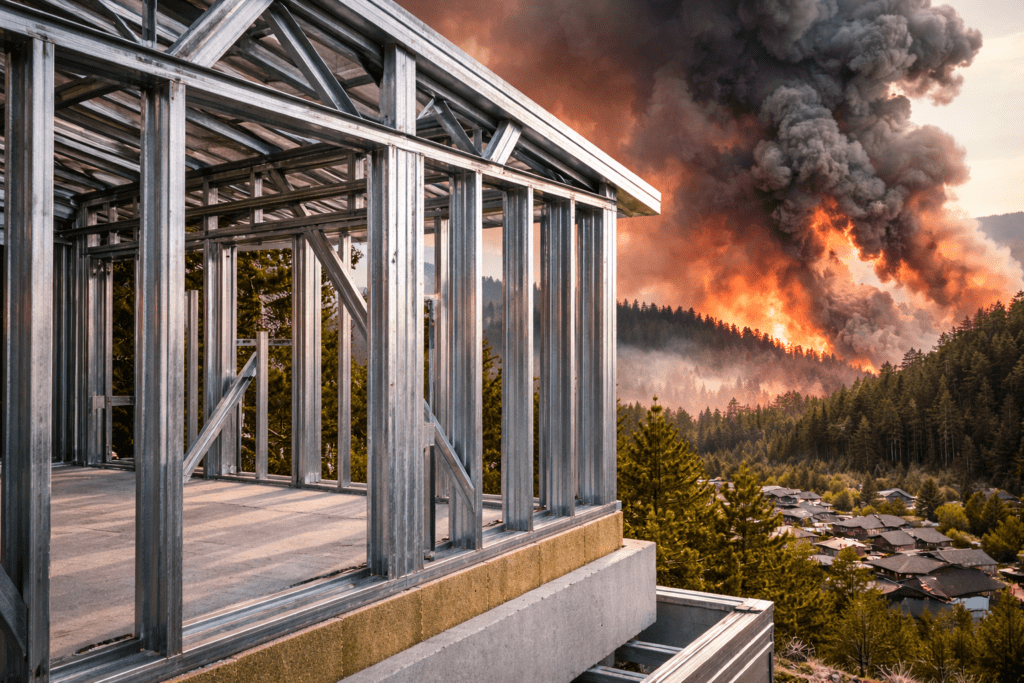
Rising Wildfire Threats in Canada
Climate scientists warn Canada’s forests are burning hotter and more often. For example, the 2023 wildfire season was the most destructive on record, consuming 16.5 million hectares – over twice the previous annual record. British Columbia alone saw more area burn than any prior year, causing at least $720 million in insurance losses. Nationally, severe weather events (especially wildfires) inflicted over $3.1 billion in insured damage in 2023. As wildfires threaten communities and insurers tighten coverage in high-risk areas, builders must prioritize fire-resistant construction to protect homes and investments. This reality has architects and engineers urgently seeking materials that can withstand flame and heat. Cold-formed steel framing stands out as a fire-resistant alternative to wood.
Fire-Resistant Steel Framing vs. Wood
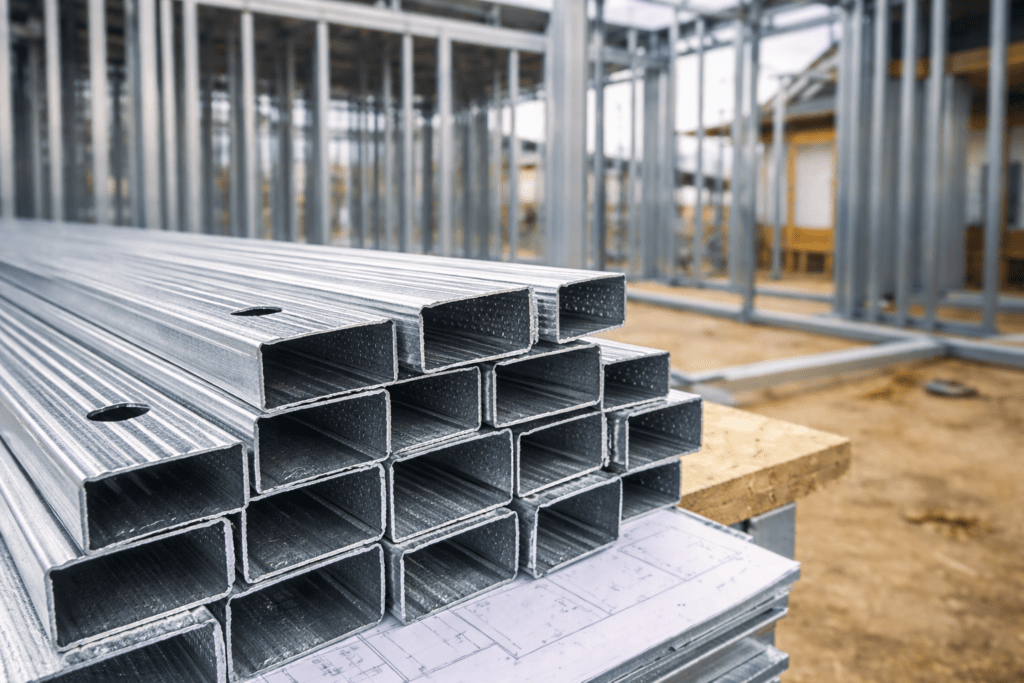
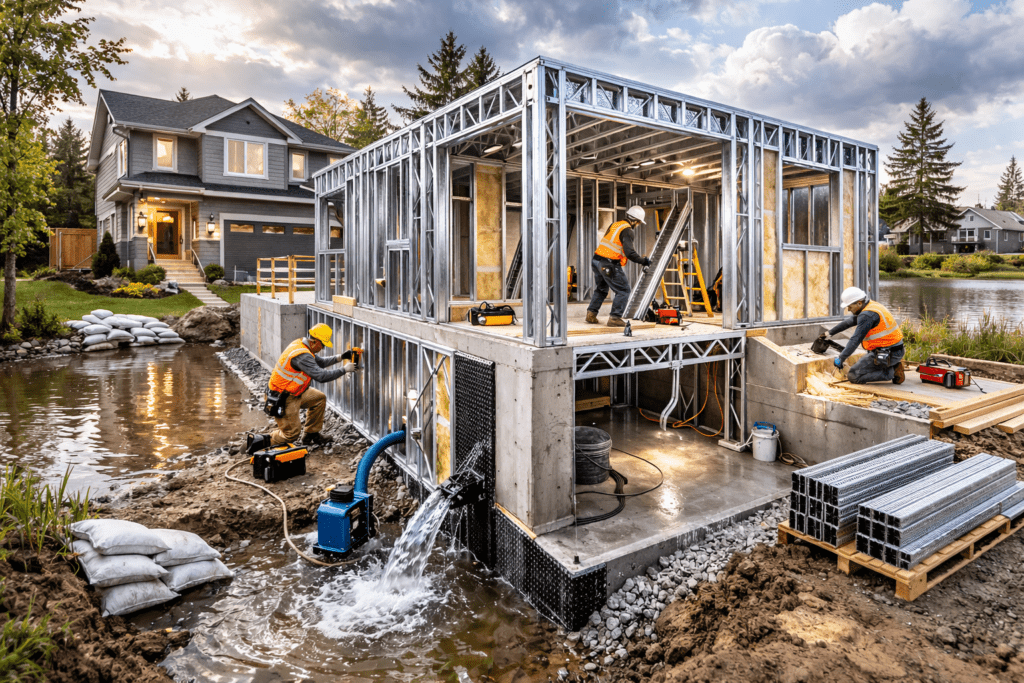
Cold-formed steel wall and roof framing under construction. Cold-formed steel framing (CFS) offers clear fire-safety advantages over traditional wood. Steel contains no fuel, so it cannot ignite or feed a blaze. In fact, flame tests on steel-framed walls show the metal remains structurally sound even under extreme heat. By contrast, wood studs ignite around 500°F (260°C) and burn aggressively, rapidly spreading fire through a structure. Because steel stays non-combustible throughout its life, it effectively acts as a passive fire barrier in wall assemblies. In practice, flames spread more slowly and structures remain standing longer, giving occupants extra time to escape and firefighters more time to respond. For example, experts note that steel studs do not ignite at temperatures that destroy wood studs, so steel walls often stay standing even when wood walls burn down. This means a steel-framed home will better resist a wildfire than a wood-frame house.
Safety and Code-Compliance of Cold-Formed Steel
Canada’s building codes explicitly recognize steel as a non-combustible material. Testing shows that standard coated steel framing easily meets the National Building Code’s criteria for non-combustibility. In practical terms, steel-framed walls and floors routinely achieve the high fire-resistance ratings required by law. For example, standardized fire tests have proven CFS assemblies can withstand fire exposure for up to four hours. That far exceeds typical requirements for homes and commercial buildings. In Canada, this means steel-framed designs can more easily qualify for stricter fire-safety classifications than comparable wood-frame projects. In short, specifying steel framing simplifies meeting modern building codes.
Insurance, Durability, and Lifecycle Benefits
Beyond fire performance, steel framing delivers economic and durability benefits. Insurers recognize that non-combustible steel structures pose far less fire risk. Builders’ risk and property insurance premiums for steel-framed projects are often much lower than for wood. In fact, studies report insurers may offer 25–75% lower rates on steel construction. Over a large development, those savings can easily offset any material cost differences. Additionally, CFS often contains a high percentage of recycled steel and is fully recyclable at end-of-life, giving it a sustainability edge. These advantages multiply over time thanks to steel’s long lifespan and low maintenance. Steel avoids the usual problems of wood – no rot, no pests, no twisting – and it maintains strength for decades. In addition, steel is highly recyclable at end-of-life, often retaining scrap value. Taken together, these factors make cold-formed steel a cost-effective choice over a building’s life.
Lower Insurance Costs: Steel frames greatly reduce fire exposure, so insurers reward projects with lower premiums. (One report showed a 78% premium reduction when an 8-story building used steel instead of wood.)
Fewer Damage Claims: Steel won’t suffer termite, rot, or moisture damage, which means far fewer repair claims and headaches over time.
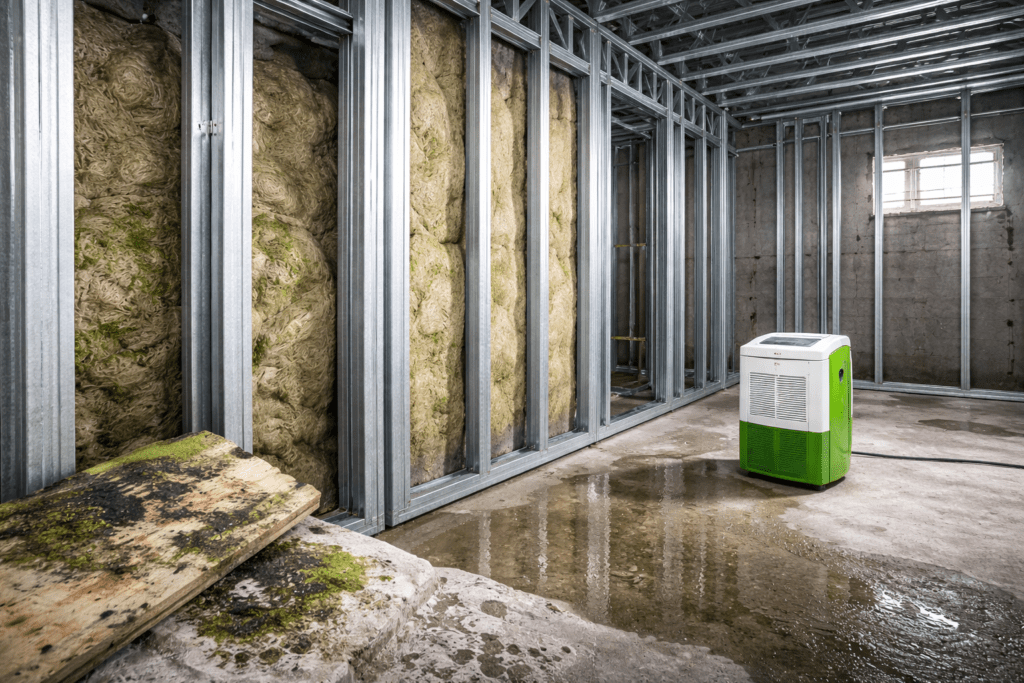
Longer Lifespan: Steel framing resists warping, shrinkage, and mold, so the structure stays sound for decades. This durability cuts maintenance and replacement costs in the long run.
Together, these advantages mean choosing cold-formed steel framing improves safety and the bottom line for builders and owners. For today’s builders and developers, adopting fire-resistant framing isn’t just smart – it’s essential for protecting homes, communities and investments.
Building with LSF Pro: Fire-Safe Framing Solutions
For Canadian builders and developers, making homes wildfire-resilient starts with choosing the right framing system. LSF Pro Structures specializes in precision-engineered cold-formed steel framing that meets Canada’s strict codes and durability demands. Their galvanized steel studs, tracks, rafters, and joists offer the non-combustible strength your projects need. The LSF Pro team provides expert design support, fabrication, and reliable delivery of custom components for any residential or commercial project. Their framing packages come precisely cut and labeled for easy installation, reducing errors on site. The result is a safer, code-compliant building delivered on schedule and on budget.
In the face of growing fire risks, don’t gamble with wood framing. Contact LSF Pro to explore fire-resistant steel framing solutions for your next project. Their experts will help you design and deliver a safe, code-compliant framing system that protects lives and investments — and even saves money on insurance over the long term. Reach out to LSF Pro for a free quote or consultation and build with confidence.