Why Sound Insulation is Critical in Steel-Framed Construction
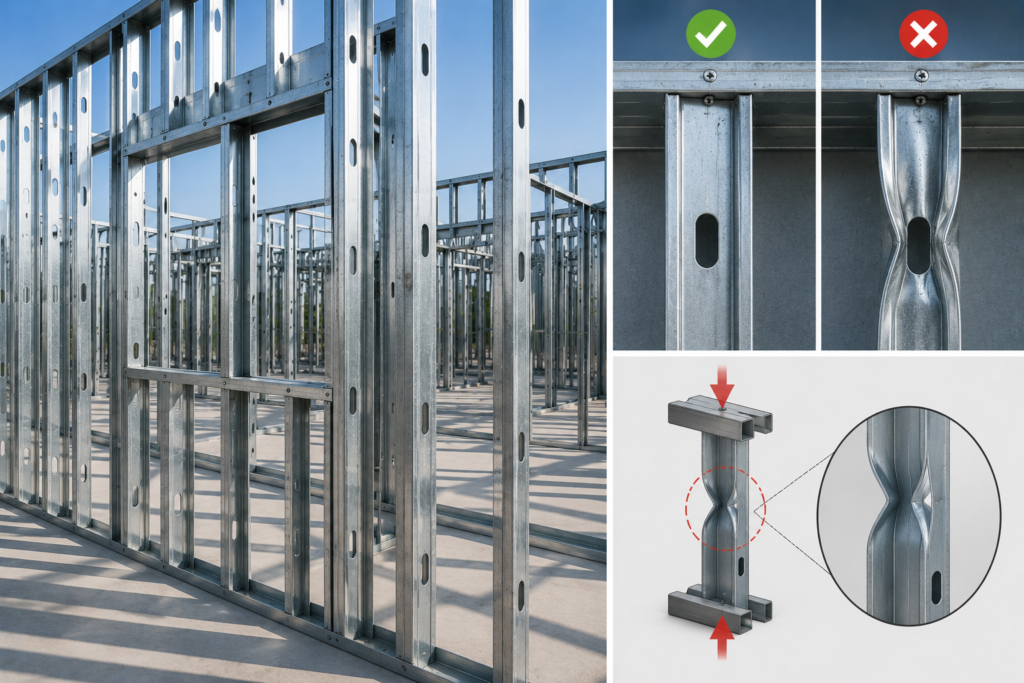
In Canadian cities, builders often rely on cold-formed steel studs for condominiums, multiplex infill and laneway homes. While steel framing offers strength and fire resistance, it transmits noise more easily than wood. Achieving soundproof steel framing in these developments is challenging but essential. Thin metal studs can carry voices, music and traffic noise between adjacent units, so even a basic shared wall can seem loud without proper treatment. Steel-stud walls are hollow and rigid, which amplifies vibration. Unlike wood studs, steel has little natural sound absorption. Builders must compensate by adding mass and damping materials (such as extra layers of gypsum board and insulation). Occupant comfort and privacy depend on effective soundproofing. Proper design and detailing of steel-stud walls ensures compliance with noise-control objectives and keeps multi-family dwellings quiet and comfortable.
Inadequate sound control can result in unhappy occupants, noise complaints and even costly retrofit work. Addressing acoustics from the design stage prevents these issues and delivers higher-quality buildings.
Canadian Sound Insulation Code Requirements (STC/ASTC)
Canadian building codes specify high sound ratings for walls between dwelling units. The National Building Code (NBC) and provincial codes generally mandate a minimum STC of 50 for separating walls and floors in multi-unit housing. In practice, this is often achieved by demonstrating an Apparent STC (ASTC) of about 47 when flanking paths are included. For particularly noisy locations – for example, walls next to elevator shafts or mechanical chases – even higher STC values (55 or more) are recommended. Many developers exceed these minima. For example, in Ontario it is common to design party walls to STC 55 or higher, anticipating buyer demand for quiet condos. In reality, an assembly rated at STC 50 in the lab may measure several points lower on site due to flanking paths or minor air leaks. Designers often use modeling tools (such as NRC’s SoundPATHS) to predict the actual performance of steel-wall assemblies. The goal is always to achieve true acoustic separation, not just the theoretical lab number.
Key Strategies to Improve Sound Performance
Builders have several proven techniques to boost the acoustic performance of steel-stud walls. Key strategies include:
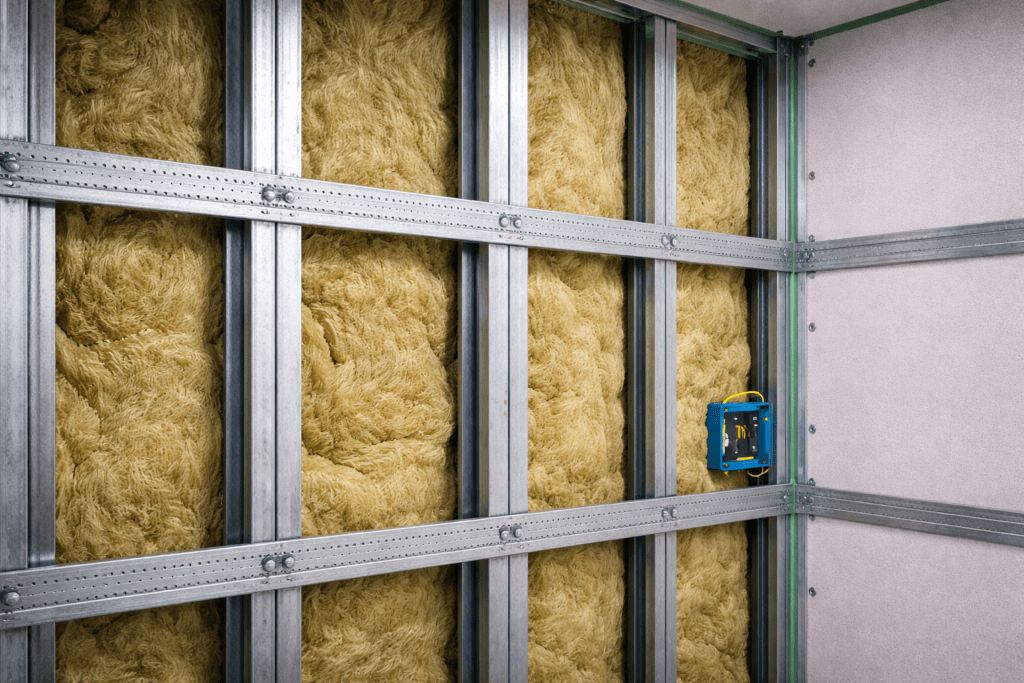
Dense Acoustic Insulation: Fill each stud cavity with high-density mineral wool batts. Stone wool or glass wool insulation is denser than typical fiberglass, so it adds mass and absorbs sound more effectively. Use full-depth batts (e.g. 3½″ or 5½″ thick) and press them tight against the gypsum board and metal, with no gaps or voids. Mineral wool is also non-combustible and moisture-resistant, making it ideal for multi-family walls. Properly packed insulation dramatically reduces airborne noise transmission through the wall.
Acoustic Sealant: Seal all joints, gaps and penetrations in the wall assembly. Sound will leak through tiny cracks at the top and bottom plates, through drywall seams, and around electrical boxes if left unsealed. Applying an acoustical caulk along drywall edges, around outlets and at any interface (walls, floor or ceiling) creates an airtight barrier. This greatly improves sound isolation, because even a small hole can drop the STC rating by dozens of points.
Decoupling (Resilient Channels/Clips): Use resilient metal channels or isolation clips between the studs and the drywall. These products act like springs that break the vibration path. When drywall is mounted on channels or clips instead of directly on the studs, the wall can flex slightly and absorb energy. This reduces both airborne and impact noise. It is important to attach channels on only one drywall plane (one side of the wall) and to follow the manufacturer’s spacing guidelines. Avoid screws that pierce through the channel into the stud, because this defeats the decoupling benefit.
Additional Mass (Double Drywall & MLV): Increase mass to block sound. Attach two layers of 5/8″ gypsum board on each side of the wall, with a viscoelastic damping layer (for example, Green Glue) between them to add inertia. Each extra board of drywall increases mass and helps resist low-frequency noise. Alternatively, install a layer of mass-loaded vinyl (MLV) – a heavy, flexible membrane – in the wall cavity. For example, attach MLV to the studs or place it between drywall layers. The combination of dense insulation plus added gypsum (and/or MLV) creates a heavy, damp wall assembly that meets or exceeds code requirements.
Partner with LSF Pro for Acoustic Excellence
Designing steel-framed walls for acoustic comfort takes careful planning. LSF Pro’s experts can help optimize your framing layouts and insulation systems to meet STC/ASTC targets and building codes. By integrating the right insulation, sealants and decoupling methods at the design stage, LSF Pro ensures your multi-unit and infill projects deliver the quiet, comfortable homes residents expect. Contact LSF Pro today to optimize your framing design for superior acoustic comfort and code compliance.