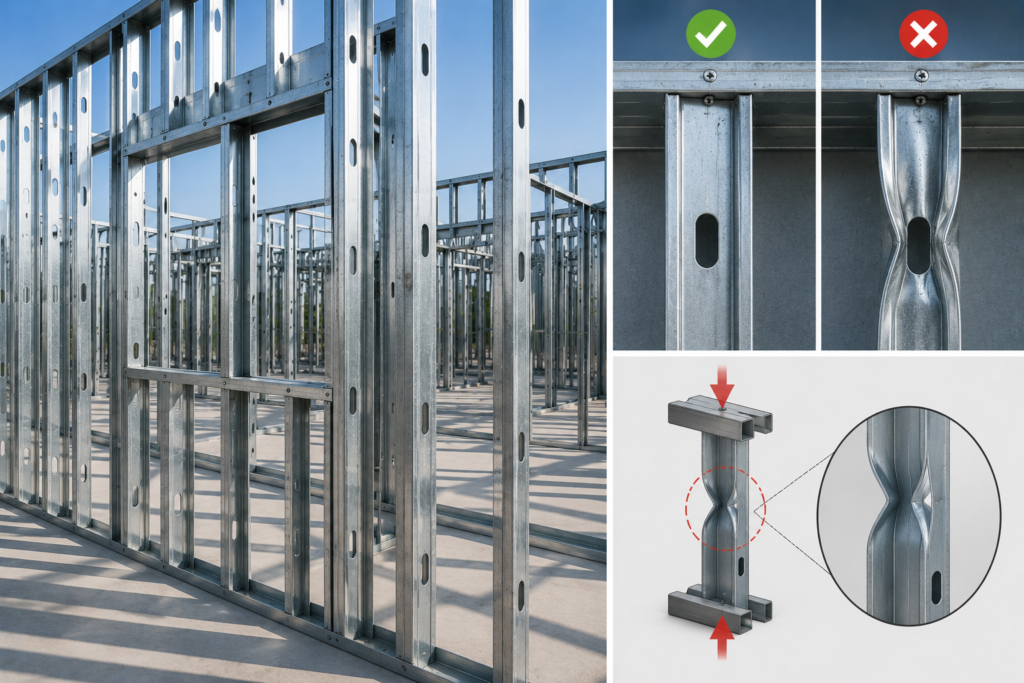
When builders think about structural failures in light steel framing, they usually focus on stud strength, connections, or load capacity. Very few think about web crippling in cold-formed steel.
Yet web crippling is one of the most important failure modes engineers consider when designing cold-formed steel structures. It can occur even when the steel member itself appears more than strong enough to carry the load.
The reason it is often overlooked is simple: web crippling is usually hidden inside the framing system. By the time visible signs appear, the structural problem may already exist.
For builders and developers across Ontario, understanding web crippling can help prevent costly design mistakes and improve overall structural performance.
What Is Web Crippling?
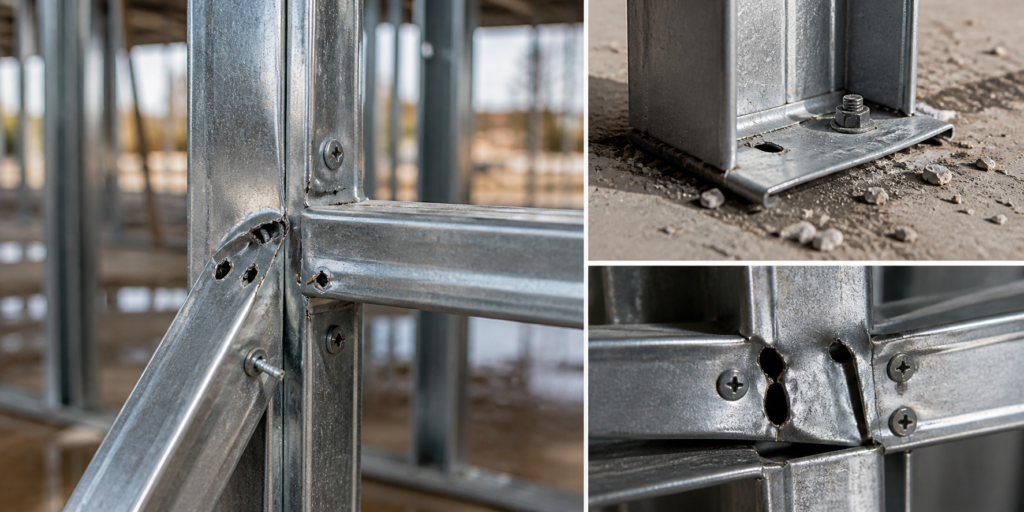
Web crippling occurs when a concentrated load causes localized failure in the web of a cold-formed steel member.
Unlike bending failure or overall buckling, web crippling affects a small area where loads are introduced into the member.
In simple terms, the web becomes overstressed and deforms near a support or point load.
This failure typically occurs:
- Under concentrated loads
- Near supports
- At bearing locations
- Around heavily loaded connections
Because cold-formed steel members use relatively thin material, they are particularly sensitive to these localized stresses.
Why Cold-Formed Steel Is Vulnerable
Cold-formed steel framing achieves efficiency through geometry rather than mass.
The steel itself is strong, but the webs are relatively thin. This allows members to remain lightweight while still carrying significant loads.
The tradeoff is that localized forces become more important.
When a heavy load is applied over a small bearing area, the web may deform before the rest of the member reaches its full capacity.
This is why web crippling in cold-formed steel must be evaluated separately from overall member strength.
A stud or track can have sufficient load capacity and still experience web crippling.
Where Web Crippling Commonly Occurs
One of the most common locations is at load-bearing wall tracks.
When loads from studs above transfer into a track below, the concentrated force can create high localized stresses in the track web.
The same issue can occur:
- Beneath headers
- At floor joist bearing points
- Around heavily loaded openings
- At concentrated roof loads
- Under point-loaded connections
In many cases, the member appears undamaged until the load increases enough to create visible deformation.
Why Builders Rarely Notice It
The reason most builders never think about web crippling is because it is largely an engineering issue.
Unlike visible framing errors such as missing screws or misaligned studs, web crippling develops internally at specific load transfer locations.
The framing may look perfectly acceptable from the outside.
Even experienced installers may not recognize a potential web crippling condition without understanding how loads are being transferred through the system.
That is why engineers pay close attention to bearing conditions during design.
Concentrated Loads Are the Real Problem
Web crippling is not usually caused by large overall building loads.
It is caused by concentrated loads.
Imagine placing a heavy object on a thin sheet of metal.
The sheet may support the weight if it is spread out across a large area. But if that same load is concentrated into a very small point, deformation becomes much more likely.
The same principle applies to cold-formed steel framing.
The size of the bearing area often matters just as much as the load itself.
How Opening Design Can Create Crippling Risks
Door and window openings frequently create conditions where web crippling becomes a concern.
Headers transfer loads into jamb studs, which then concentrate those forces into tracks and supporting members below.
If bearing details are inadequate, localized stresses can exceed the web’s capacity.
This is one reason why proper header and jamb design is so important in light steel framing systems.
The issue is not always the header itself. Sometimes the supporting members become the weak point.
Why Larger Buildings Face Greater Risk
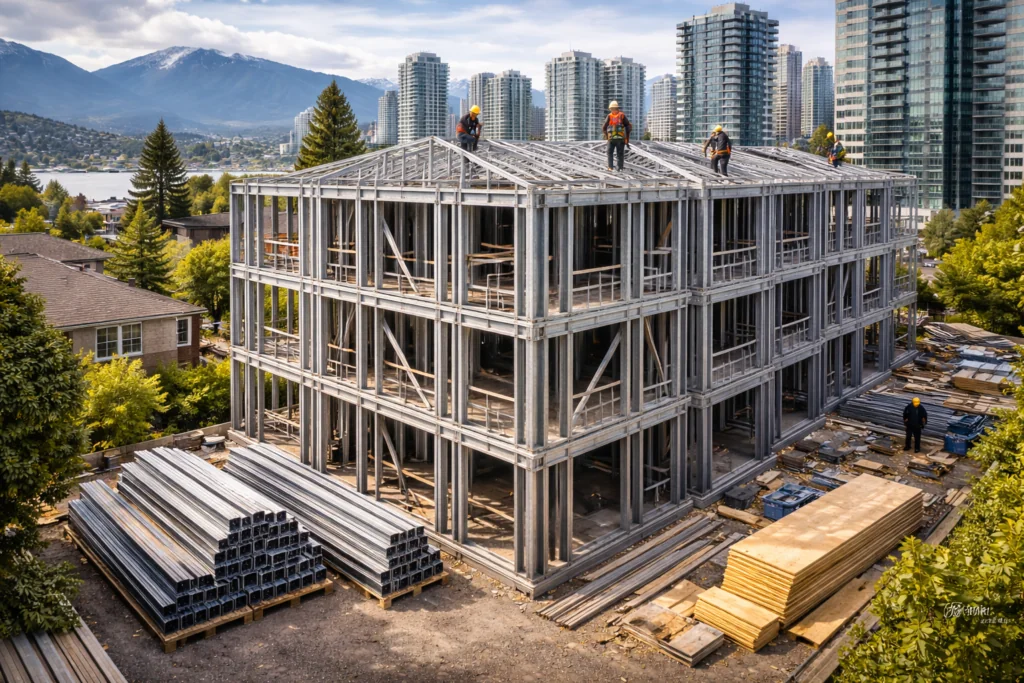
As buildings become taller and loads increase, web crippling becomes more critical.
Multi-unit residential projects often contain:
- Larger openings
- Higher wall loads
- Greater floor loads
- More concentrated transfer points
These conditions increase the likelihood of localized web stresses.
Engineers account for this by carefully evaluating bearing conditions throughout the structure.
Builders who understand this concept are better equipped to appreciate why certain reinforcement details are specified.
Common Field Mistakes That Increase Risk
Field modifications can make web crippling problems worse.
For example:
- Cutting portions of tracks
- Modifying bearing areas
- Removing reinforcement
- Altering connection locations
These changes may reduce the effective load distribution area and increase localized stresses.
What appears to be a small adjustment can significantly affect structural performance.
This is one reason unauthorized field modifications should always be avoided around heavily loaded framing elements.
How Engineers Prevent Web Crippling
Fortunately, web crippling is a well-understood engineering problem.
Several strategies are commonly used to prevent it.
Engineers may increase bearing length, use thicker members, add reinforcement, or distribute loads more effectively through the framing system.
In some situations, special stiffeners or built-up assemblies may be specified to increase local capacity.
The goal is always the same: spread loads over a larger area and reduce localized stress concentrations.
Why Prefabricated Systems Help
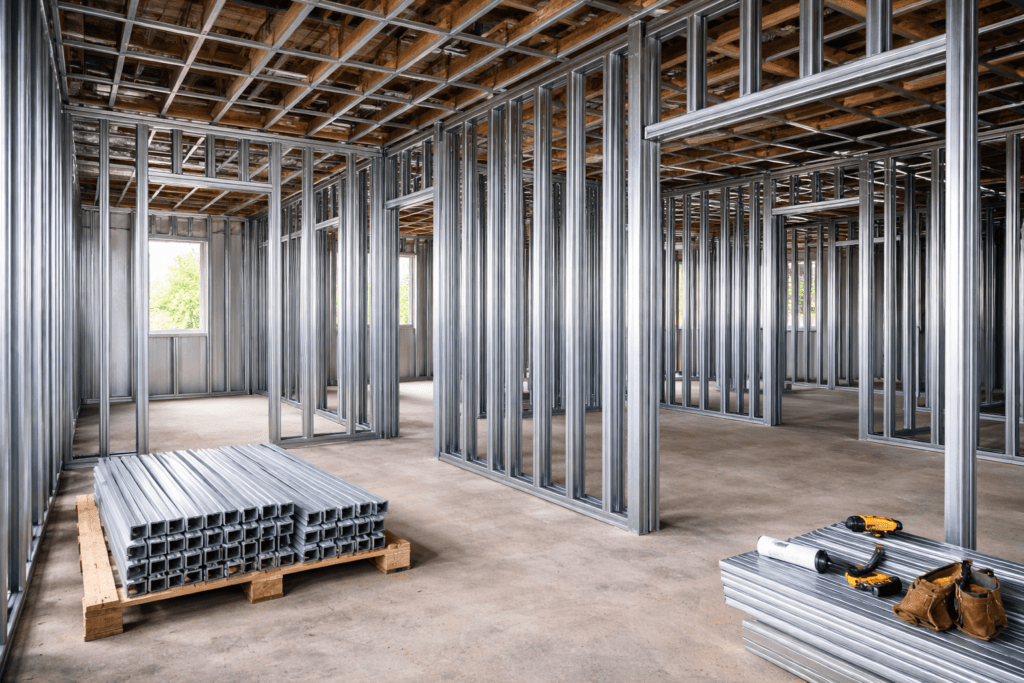
Prefabricated and engineered framing systems reduce many of the conditions that lead to web crippling problems.
Because load paths, bearing conditions, and reinforcement details are coordinated during design, there is less reliance on field decisions.
This improves consistency and ensures that critical structural details are installed as intended.
For Ontario projects, where schedule pressure can sometimes lead to site improvisation, this provides an important layer of protection.
Why This Matters in Ontario Construction
Ontario’s push toward faster housing delivery means many projects are becoming larger and more complex.
As building loads increase and framing systems become more optimized, understanding failure modes such as web crippling becomes increasingly important.
Builders do not need to perform engineering calculations themselves, but they should understand why certain details exist.
Many reinforcement requirements that appear excessive at first glance are actually protecting against localized failures that are difficult to detect.
Practical Takeaway
Web crippling in cold-formed steel is one of the most overlooked structural failure modes in light steel framing.
It often occurs at concentrated load locations where thin steel webs experience high localized stresses.
Because it is not always visible, it can easily be misunderstood or ignored during construction.
Understanding how loads transfer through the framing system helps builders appreciate the importance of bearing details, reinforcement, and engineered design requirements.
Small details often prevent major structural problems.
Work with LSF Pro Structures
At LSF Pro Structures, we design and manufacture engineered light steel framing systems that account for critical structural behaviors such as web crippling, load transfer, and localized bearing conditions.
Our integrated design and manufacturing approach helps ensure every component performs as intended under real-world loads.
If you’re planning a project and want confidence in both structural performance and construction efficiency, contact LSF Pro Structures today.