Modern steel framing depends on materials that resist corrosion, maintain structural strength, and perform reliably for decades. Because of these requirements, manufacturers use galvanized metal sheet as the base material for cold-formed steel framing components.
Builders and developers rely on galvanized steel sheets because they protect structural framing from moisture, corrosion, and environmental damage. As a result, structures built with these materials maintain durability and stability over long service lives.
Understanding how galvanized metal sheets work helps explain why they remain one of the most important materials in modern steel construction.
What Is a Galvanized Metal Sheet
A galvanized metal sheet is a steel sheet coated with a protective layer of zinc.
Manufacturers apply this zinc coating during the steel production process. The coating creates a barrier that prevents moisture and oxygen from reaching the steel surface.
Because of this protective layer, galvanized sheets resist rust and corrosion far better than untreated steel.
Cold-formed steel framing manufacturers use galvanized sheets as the starting material to produce:
Steel studs
Steel tracks
Structural channels
Framing connectors
Therefore, the durability of the framing system begins with the quality of the galvanized metal sheet used in production.
How Galvanization Protects Steel
Galvanization protects steel through two important mechanisms.
First, the zinc coating acts as a physical barrier. It separates the steel from moisture and oxygen that cause corrosion.
Second, zinc provides sacrificial protection. If the surface becomes scratched, the zinc corrodes before the steel underneath.
Because of this process, even small surface damage does not immediately expose the steel to rust.
As a result, galvanized metal sheet provides long-term corrosion resistance in demanding construction environments.
Why Galvanized Metal Sheet Is Used for Steel Framing
Cold-formed steel framing requires materials that remain stable and durable over time. Galvanized sheets provide several key advantages that make them ideal for this purpose.
Strong Corrosion Resistance
The zinc coating protects steel from humidity, condensation, and rain exposure.
This protection becomes especially important in Canadian climates, where buildings experience snow, moisture, and freeze-thaw cycles.
Long Structural Lifespan
Galvanized metal sheets maintain their strength for many years.
Because the zinc coating slows corrosion, steel components remain structurally reliable throughout the life of the building.
Consistent Material Quality
Steel sheets are manufactured with precise thickness and coating levels.
As a result, framing components formed from these sheets maintain consistent performance across entire building systems.
Low Maintenance Requirements
Unlike many structural materials, galvanized steel does not require additional coatings or chemical treatments after installation.
Therefore, steel framing systems built from galvanized sheets require minimal maintenance over time.
Typical Coatings Used on Galvanized Steel Sheets
Galvanized metal sheets used in construction follow standardized coating specifications.
Common coating levels include:
G40 coating for interior framing applications
G60 coating for structural framing systems
G90 coating for exterior structural assemblies
These numbers represent the amount of zinc applied to the sheet surface.
Higher coating levels provide stronger corrosion protection. For this reason, many exterior steel framing systems rely on G90 galvanized metal sheet for improved durability.
Selecting the appropriate coating ensures the steel performs reliably in the intended environment.
From Galvanized Sheet to Framing Components
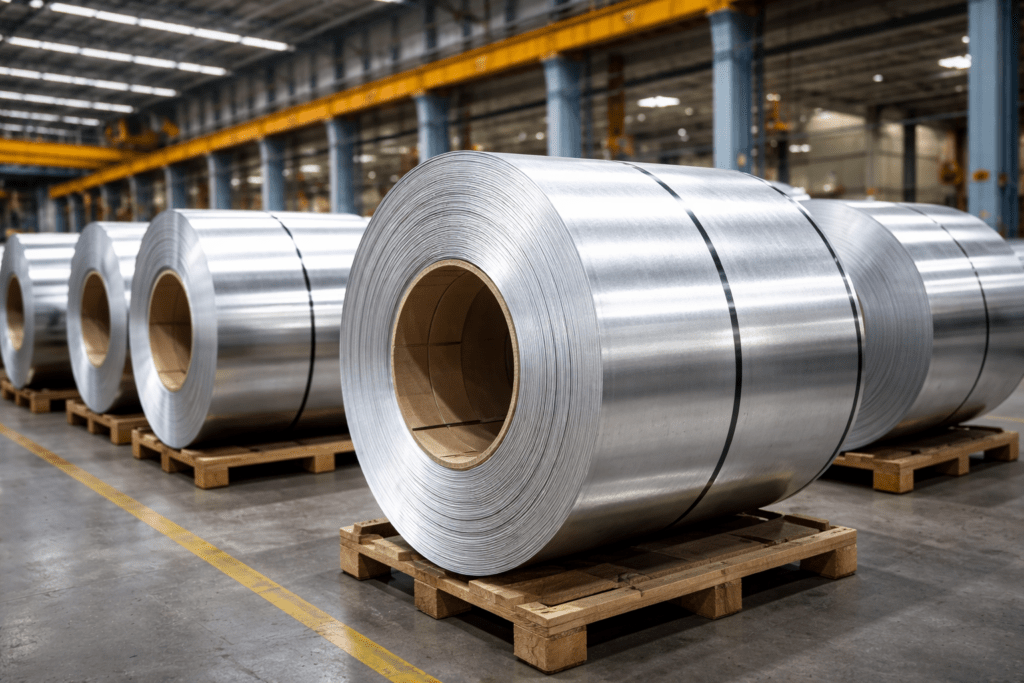
Cold-formed steel framing begins with large coils of galvanized metal sheet.
Manufacturers feed these coils into roll-forming machines that shape the steel into framing profiles.
During this process, the steel sheet becomes structural components such as studs and tracks.
Because the sheet already includes corrosion protection, the finished framing components maintain that protective coating.
This manufacturing method allows builders to use lightweight structural elements while preserving durability.
Applications of Galvanized Steel Sheets in Construction
Galvanized metal sheets support many structural and architectural applications.
In steel framing construction, they commonly appear in:
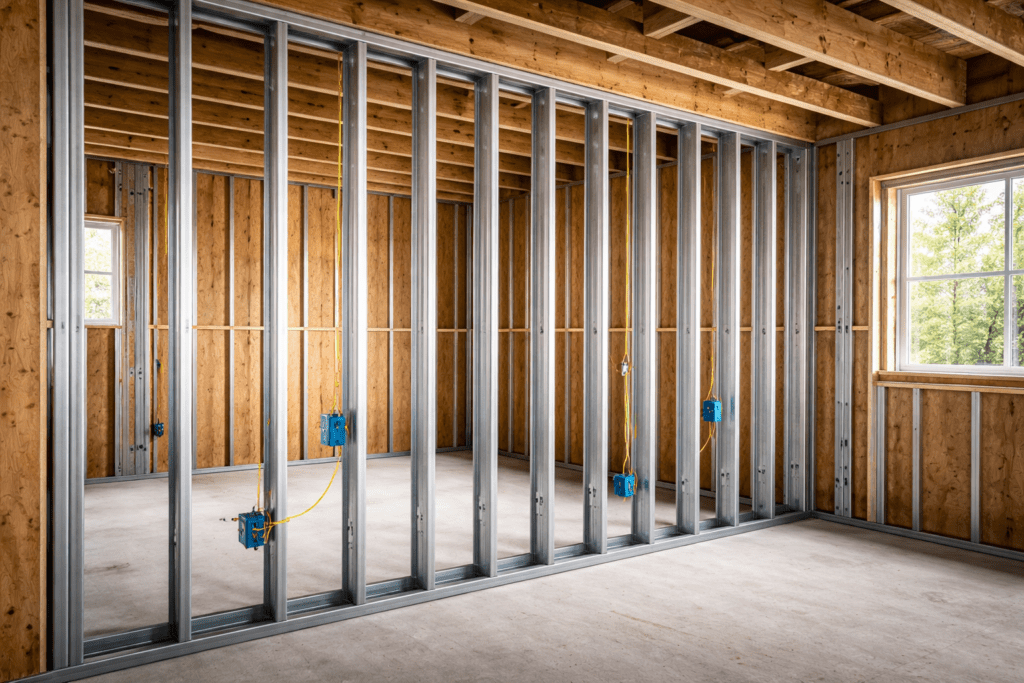
Structural wall systems
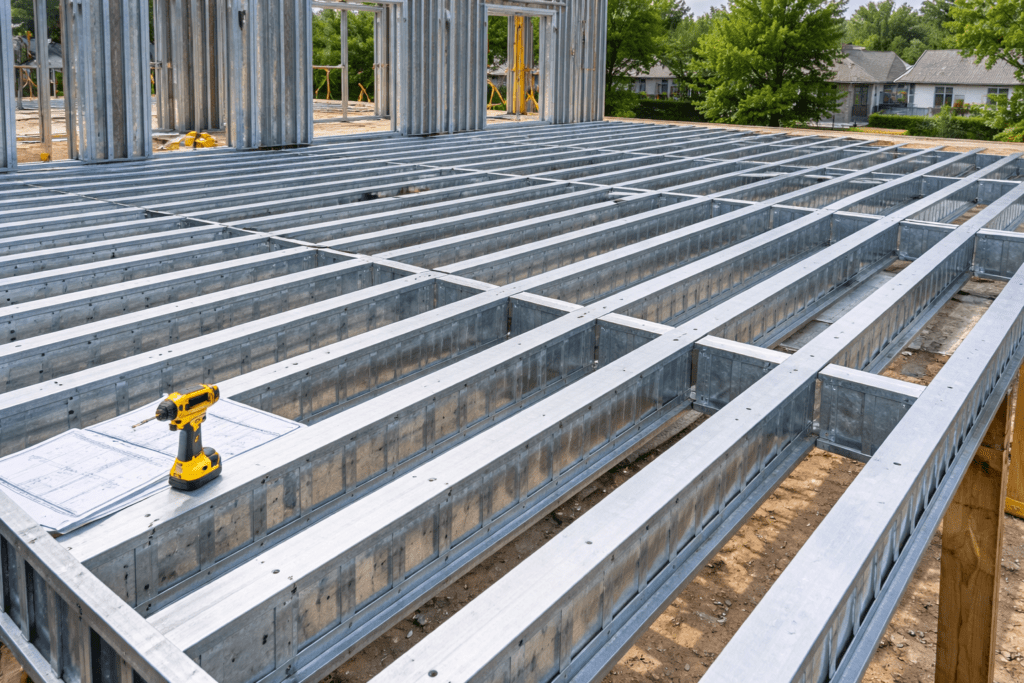
Floor framing components
Interior partition walls
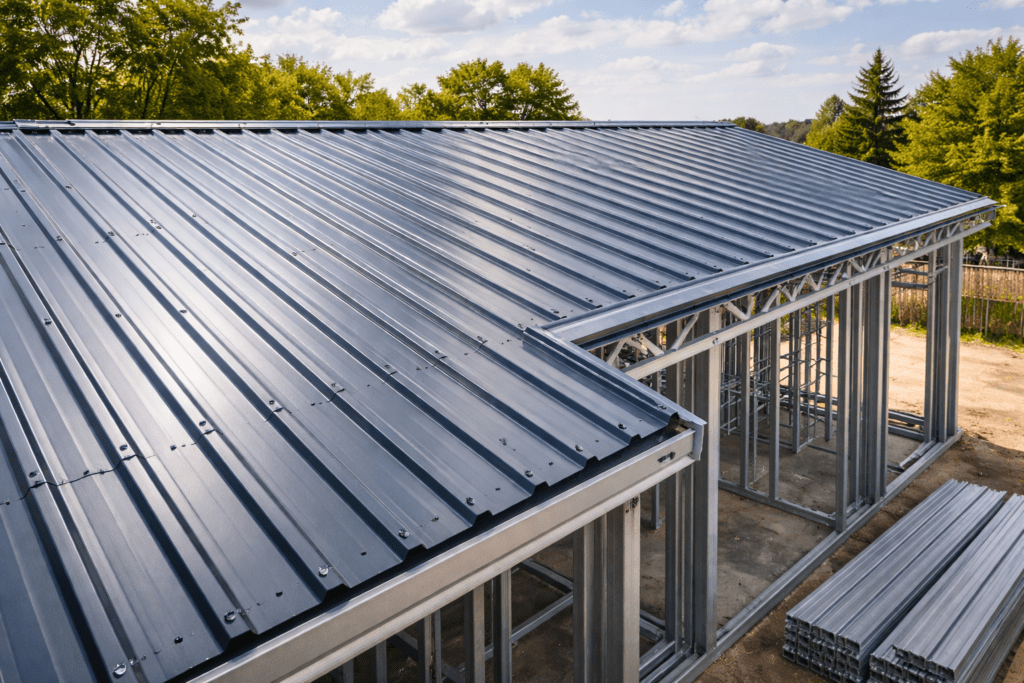
Exterior load-bearing walls
Modular building structures
Because galvanized steel resists corrosion and maintains strength, it performs well in both interior and exterior construction environments.
For builders, this reliability makes galvanized sheets an essential material in modern structural systems.
Why Material Quality Matters
The performance of steel framing systems depends heavily on the base material used to manufacture the components.
High-quality galvanized metal sheet ensures that:
Steel studs maintain structural strength
Framing systems resist corrosion
Buildings maintain long-term durability
Developers and contractors therefore pay close attention to the material specifications used in cold-formed steel framing.
Using properly galvanized steel sheets supports both structural safety and long service life.
Final Thoughts
Galvanized metal sheet forms the foundation of modern cold-formed steel framing systems. The zinc coating protects steel from corrosion while maintaining strength and structural reliability.
Because of these advantages, builders across Canada rely on galvanized steel sheets to produce durable framing components for residential and commercial buildings.
When high-quality galvanized metal sheet is used in steel framing, the result is a structural system that remains strong, stable, and resistant to environmental damage for decades.