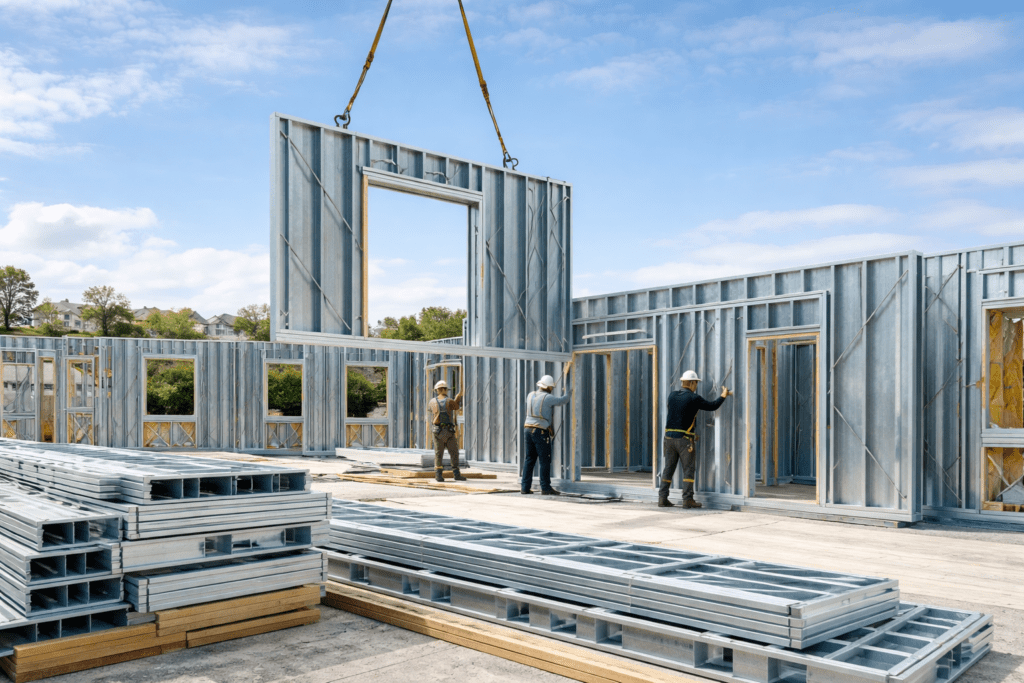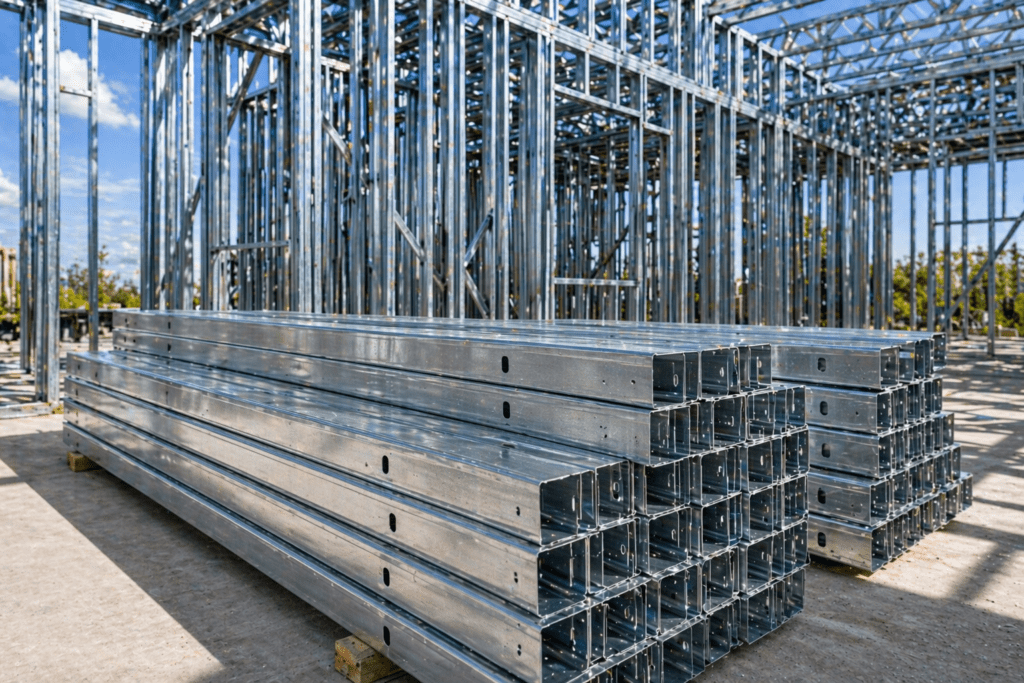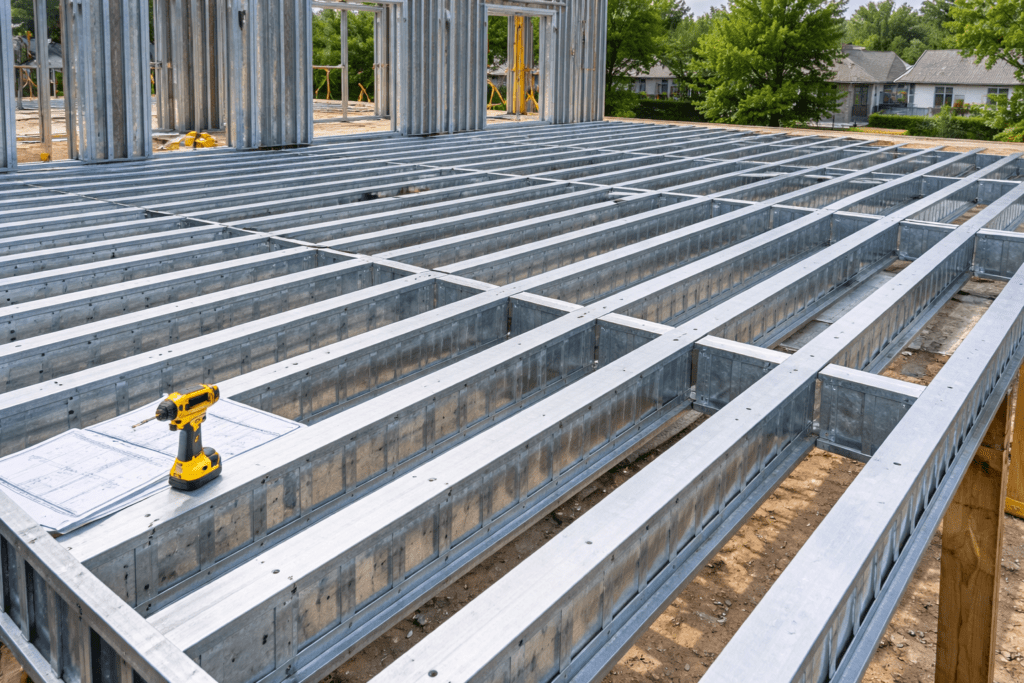
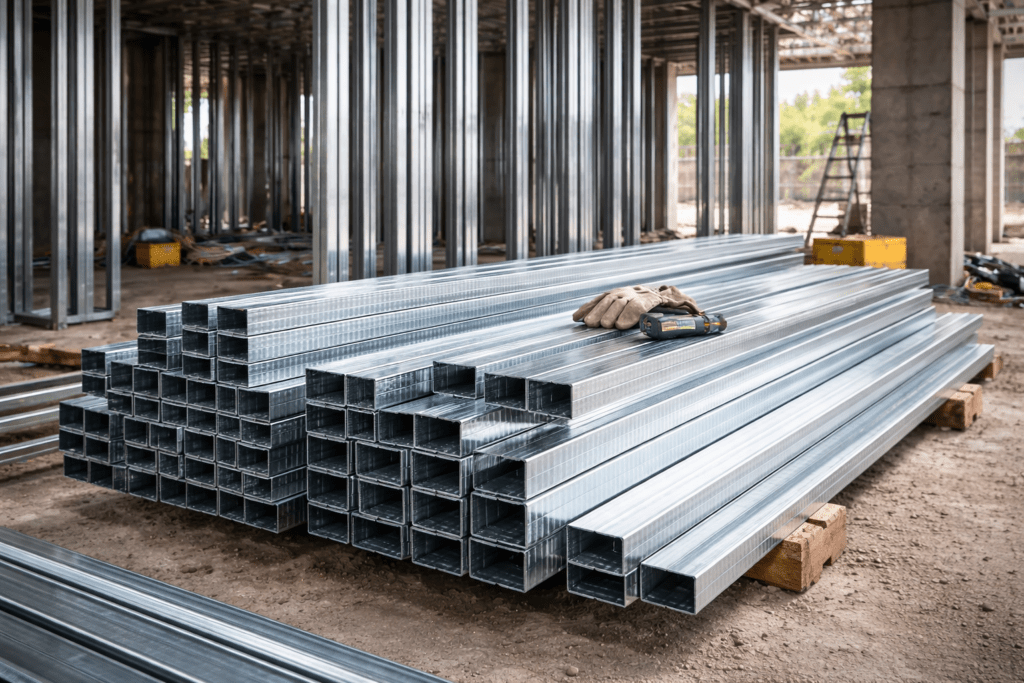
Steel used in modern construction must withstand moisture, temperature changes, and long building lifespans. Therefore, builders rely heavily on galvanized materials for structural framing systems.
Cold-formed steel components used in construction typically include a zinc coating that protects the metal from corrosion. Because of this protection, galvanized steel framing maintains strength and durability for decades.
As a result, builders widely use galvanized structural components in residential and commercial construction across Canada.
What Is Galvanized Steel in Construction
Galvanized steel refers to structural steel coated with zinc to prevent corrosion.
The zinc layer creates a barrier between the steel and environmental elements such as water and oxygen. As a result, rust cannot easily form on the metal surface.
For example, manufacturers commonly produce the following construction components using galvanized steel:
Structural studs
Steel tracks
Framing channels
Structural connectors
Manufacturers usually apply the zinc coating to steel coils before they roll-form the material into framing profiles.
Because of this manufacturing process, every component receives consistent corrosion protection.
How Galvanization Protects Structural Steel
The galvanization process protects steel through two mechanisms.
First, the zinc coating blocks moisture and oxygen from contacting the steel surface. Therefore, rust formation slows dramatically.
Second, zinc provides sacrificial protection. If the surface becomes scratched, the zinc corrodes first instead of the steel.
As a result, the underlying metal remains protected even when minor damage occurs.
Because of this dual protection system, galvanized structural steel performs well in demanding environments.
Common Galvanized Coatings Used in Framing
Steel used in framing systems typically includes standardized zinc coatings.
Common coating levels include:
G40 for light interior applications
G60 for standard structural framing
G90 for exterior framing systems
These numbers indicate how much zinc covers the steel surface.
Higher coating levels provide stronger corrosion resistance. Therefore, many cold-formed steel systems used in Canada rely on G90-coated material for exterior walls.
Choosing the correct coating level helps maintain structural durability over the long term.
Benefits of Using Galvanized Steel for Framing
Builders prefer galvanized steel for several practical reasons.
Strong Corrosion Resistance
The zinc layer protects steel from rust caused by humidity, rain, and condensation.
This protection becomes especially important in Canadian climates. Buildings must handle snow, moisture, and seasonal temperature swings.
Long Structural Lifespan
Zinc-coated steel maintains its structural properties for many decades.
In contrast, untreated metals deteriorate much faster when exposed to moisture.
Minimal Maintenance
Manufacturers apply the protective coating during production. Therefore, contractors do not need additional treatments after installation.
As a result, steel framing systems require minimal long-term maintenance.
Precise Manufacturing
Cold-formed steel components maintain consistent dimensions during production.
Because of this precision, contractors can install framing systems faster and with fewer adjustments.
Galvanized Steel vs Untreated Structural Steel
Untreated steel begins to rust when moisture reaches the surface.
Over time, corrosion weakens the material and reduces structural reliability.
However, zinc-coated steel prevents this process. The protective layer shields the metal from environmental exposure.
Because of this protection, galvanized components maintain structural performance much longer than untreated steel.
For framing systems, this difference becomes critical. Builders need materials that remain strong throughout the building lifespan.
Where Galvanized Steel Is Used in Construction
Galvanized steel appears in many construction applications.
For example, builders commonly use it in:
Residential framing systems
Multi-unit apartment buildings
Interior partition walls
Exterior structural walls
Commercial framing systems
Because galvanized components resist corrosion, they perform well in both interior and exterior environments.
As a result, many modern construction projects rely on galvanized steel framing systems.
Why Galvanized Steel Works Well With Cold-Formed Framing
Cold-formed steel framing uses thin but high-strength steel sections.
However, these structural elements require corrosion protection to ensure long-term performance.
Galvanization provides this protection without adding significant weight.
Therefore, builders can use lightweight framing systems while maintaining strong durability.
Because of this combination of precision, strength, and corrosion resistance, galvanized steel remains ideal for modern framing systems.
Final Thoughts
Galvanized steel plays a key role in modern building systems. The zinc coating protects structural components from corrosion and environmental damage.
As a result, builders rely on galvanized steel framing for durability, reliability, and long service life.
For residential and commercial construction, galvanized steel continues to provide one of the most dependable structural materials available.