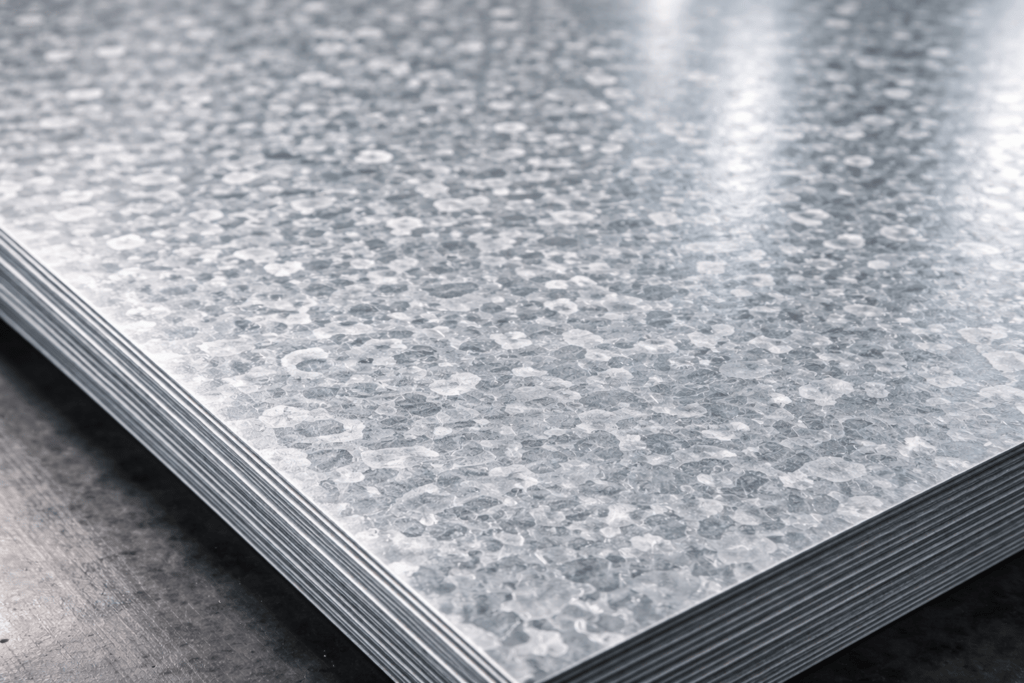
Galvanized steel is one of the most widely used materials in modern construction across Canada. From structural framing to exterior components, it plays a critical role in ensuring durability, corrosion resistance, and long-term performance.
For builders and developers in Ontario, understanding how galvanized steel works is essential. It directly affects structural lifespan, compliance with Canadian standards, and overall project reliability.
This guide breaks down coatings, standards, and real-world uses of galvanized steel in construction.
What Is Galvanized Steel?
Galvanized steel is steel that has been coated with a layer of zinc to protect it from corrosion. This coating acts as a barrier between the steel and environmental elements such as moisture and oxygen.
The process of galvanization significantly extends the life of steel. Instead of rusting quickly when exposed to the elements, galvanized steel maintains its structural integrity over time.
This makes it especially valuable in Canada, where buildings must withstand moisture, snow, and temperature fluctuations.
How the Galvanization Process Works
The most common method used in construction is hot-dip galvanizing. In this process, steel components are submerged in molten zinc, creating a bonded protective layer.
This coating is not just applied on the surface. It forms a metallurgical bond with the steel, which makes it highly durable and resistant to damage.
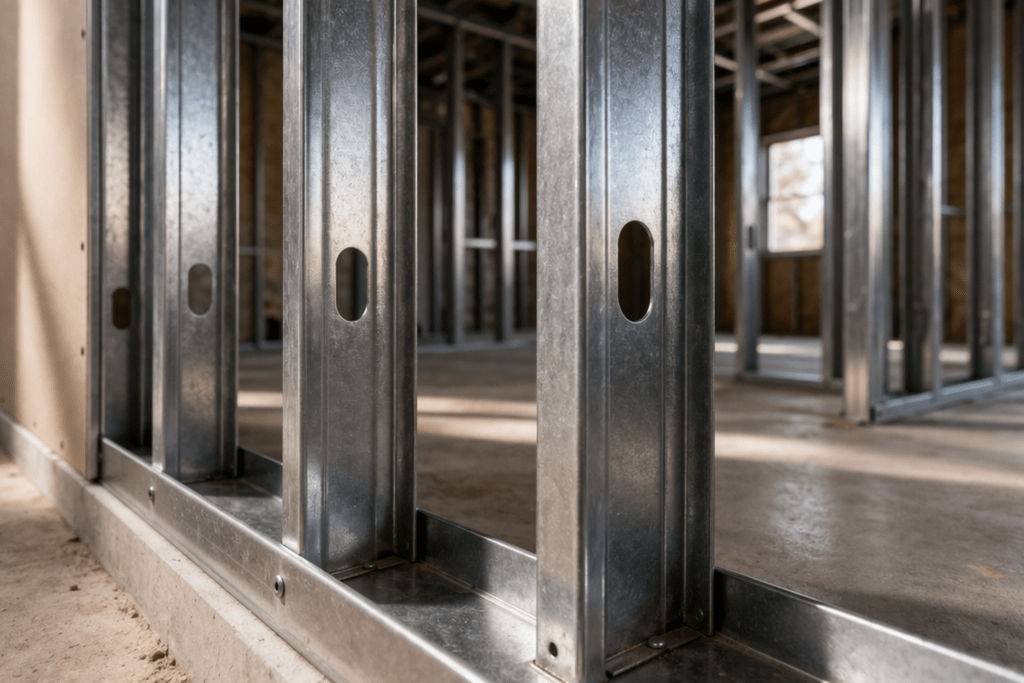
In light steel framing, coil-coated galvanization is also widely used. Steel sheets are coated before being formed into studs and tracks, ensuring consistent protection across all components.
The result is a uniform, long-lasting coating that protects the steel throughout its lifecycle.
Understanding Zinc Coatings and Designations
Not all galvanized steel is the same. The level of protection depends on the thickness of the zinc coating.
In Canada, coatings are often defined by designations such as Z275. This number refers to the mass of zinc coating applied to the steel, measured in grams per square meter.
Higher coating levels provide greater corrosion resistance, which is critical in environments with high moisture exposure.
For light steel framing in Ontario, Z275 is commonly used because it provides a strong balance between protection and cost efficiency.
Choosing the correct coating is essential for ensuring long-term durability.
Canadian Standards for Galvanized Steel
Galvanized steel used in construction must meet strict standards to ensure quality and performance.
Two of the most important standards are ASTM A653 and ASTM A1003.
ASTM A653 applies to galvanized steel sheets and defines coating requirements, strength, and material properties. It ensures that the steel has the necessary corrosion resistance for construction use.
ASTM A1003 focuses specifically on steel used in cold-formed structural members, such as steel studs. It ensures that these components meet strength and durability requirements.
In addition to ASTM standards, Canadian projects must comply with CSA and building code requirements. These standards work together to ensure that steel performs reliably in real-world conditions.
Why Galvanized Steel Is Essential in Canadian Construction
Canada’s climate creates challenges that require durable materials.
Moisture is one of the biggest threats to steel. Without protection, steel will rust over time, weakening the structure.
Galvanized steel prevents this by providing a protective zinc layer. Even if the coating is scratched, the zinc continues to protect the steel through a process called sacrificial protection.
Temperature changes also impact materials. Steel expands and contracts, but galvanized coatings remain stable, maintaining protection throughout these cycles.
This reliability makes galvanized steel a preferred choice for long-term construction projects in Ontario.
Applications of Galvanized Steel in Construction
Galvanized steel is used across many areas of construction.
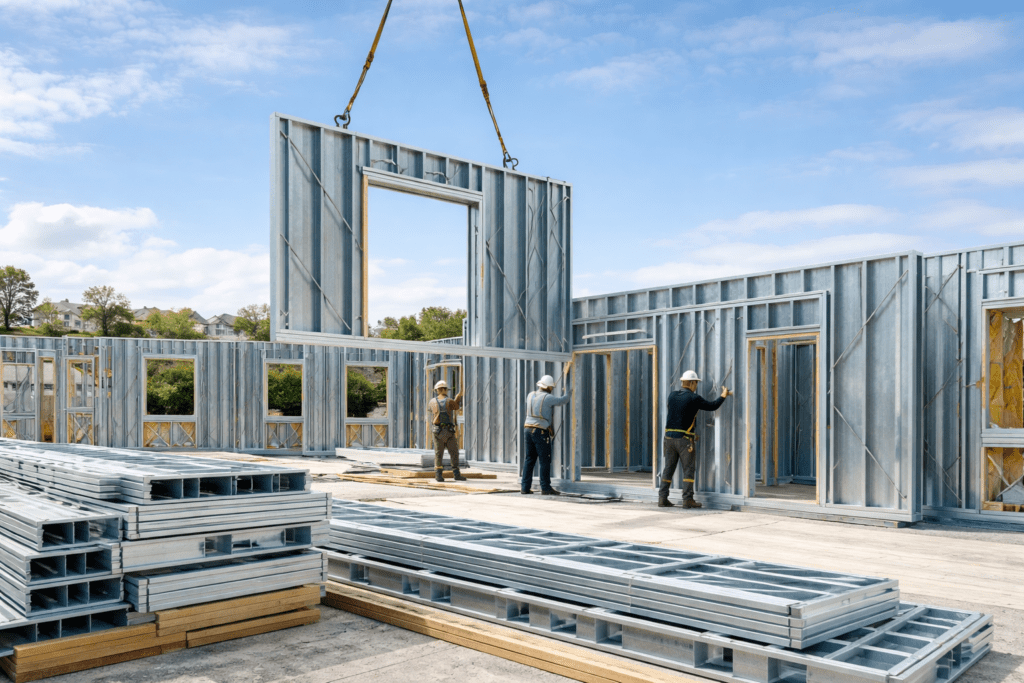
In light steel framing, it is used for studs, tracks, and structural components. The coating ensures that these elements remain strong and corrosion-resistant over time.
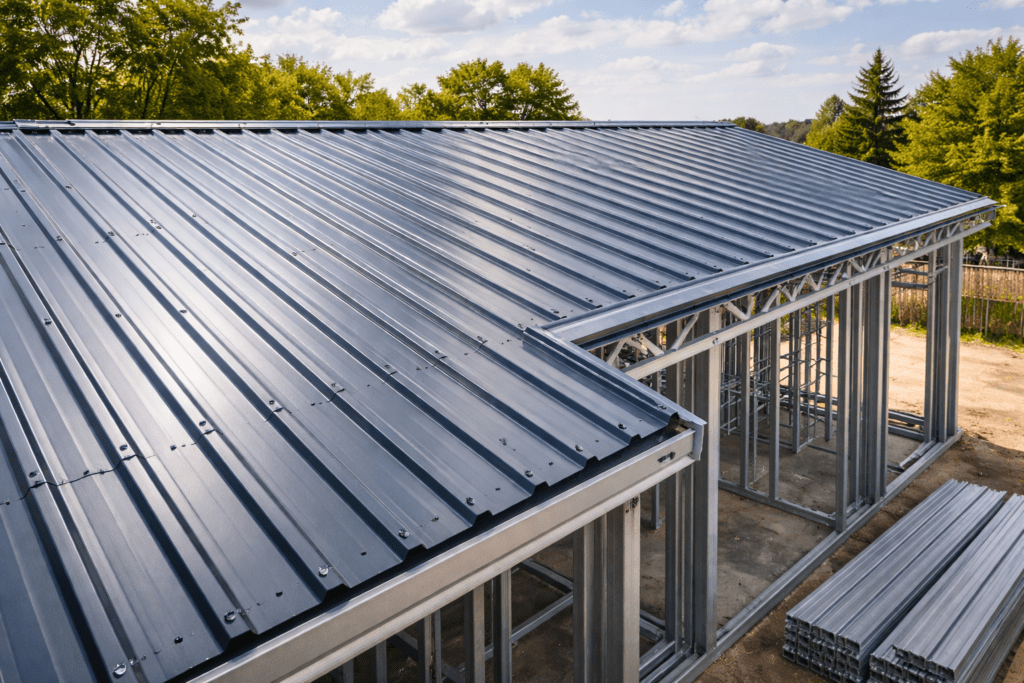
Exterior applications also rely heavily on galvanized steel. This includes roofing systems, cladding supports, and structural connections exposed to weather.
In commercial and industrial construction, this steel is used for structural supports, mechanical systems, and infrastructure components.
Its versatility and durability make it suitable for both interior and exterior use.
Galvanized Steel vs Non-Coated Steel
The difference between galvanized and non-coated steel is significant.
Non-coated steel is vulnerable to corrosion. Once exposed to moisture, rust begins to form, which weakens the material and reduces its lifespan.
Galvanized steel eliminates this issue. The zinc coating protects the steel and extends its usable life by decades in many cases.
While galvanized steel may have a higher upfront cost, it reduces maintenance, repair, and replacement costs over time.
For most construction projects in Canada, using non-coated steel is not a practical option.
Common Mistakes When Using Galvanized Steel
One common mistake is assuming all galvanized steel offers the same level of protection. Different coating levels provide different performance, and choosing the wrong one can lead to premature corrosion.
Another issue is improper handling. Damaging the coating during installation can reduce its effectiveness. While zinc offers some self-protection, excessive damage can still create weak points.
Lack of compliance with standards is also a risk. Using materials that do not meet ASTM or CSA requirements can lead to inspection failures and long-term performance issues.
Proper selection, handling, and installation are essential for maximizing the benefits of galvanized steel.
The Future of Galvanized Steel in Canada
As construction methods evolve, galvanized steel will continue to play a key role.
With the growth of prefabrication and light steel framing, demand for high-quality, corrosion-resistant materials is increasing.
Builders are looking for systems that offer durability, efficiency, and compliance with Canadian standards. Galvanized steel meets all of these requirements.
Its role will only expand as construction moves toward more advanced and efficient building systems.
Build with Confidence Using LSF Pro Structures
Galvanized steel is a critical component of modern construction, but its performance depends on proper design, material selection, and execution.
LSF Pro Structures provides precision-engineered steel framing systems using high-quality galvanized steel that meets Canadian standards. Every component is built for durability, accuracy, and long-term performance.
If you want to ensure your project is built with reliable materials and compliant systems, contact LSF Pro Structures today and build with confidence.