The labour shortage in construction is no longer a future concern. It is already affecting project timelines, costs, and overall industry capacity across Ontario and Canada.
Builders are facing delays not because of lack of demand, but because there are not enough skilled workers available to execute projects efficiently. As housing demand continues to rise, this gap is becoming one of the biggest barriers to growth.
Cold-formed steel (CFS), also known as light steel framing, is emerging as a practical solution. It does not eliminate the labour shortage, but it changes how construction is done, making projects less dependent on large on-site crews.
Understanding the Labour Shortage in Canada
The labour shortage in construction is driven by several factors.
An aging workforce is one of the main causes. Many experienced tradespeople are retiring, while fewer younger workers are entering the industry. At the same time, construction demand continues to increase, especially in Ontario where housing supply is under pressure.
Skilled trades such as framing, drywall, and finishing are particularly affected. These roles require experience and precision, which cannot be replaced easily.
As a result, builders are struggling to maintain schedules, and projects are taking longer to complete.
How the Labour Shortage Impacts Construction Projects
The effects of the labour shortage are visible across all types of projects.
Delays are becoming more common. Without enough workers, framing stages take longer, which pushes back every other phase of construction.
Costs are also increasing. Higher demand for skilled labor leads to higher wages, which directly impacts project budgets.
Quality can also suffer. When crews are rushed or understaffed, mistakes become more likely. This leads to rework, failed inspections, and additional delays.
These challenges are forcing builders to rethink traditional construction methods.
What Is Cold-Formed Steel Framing?
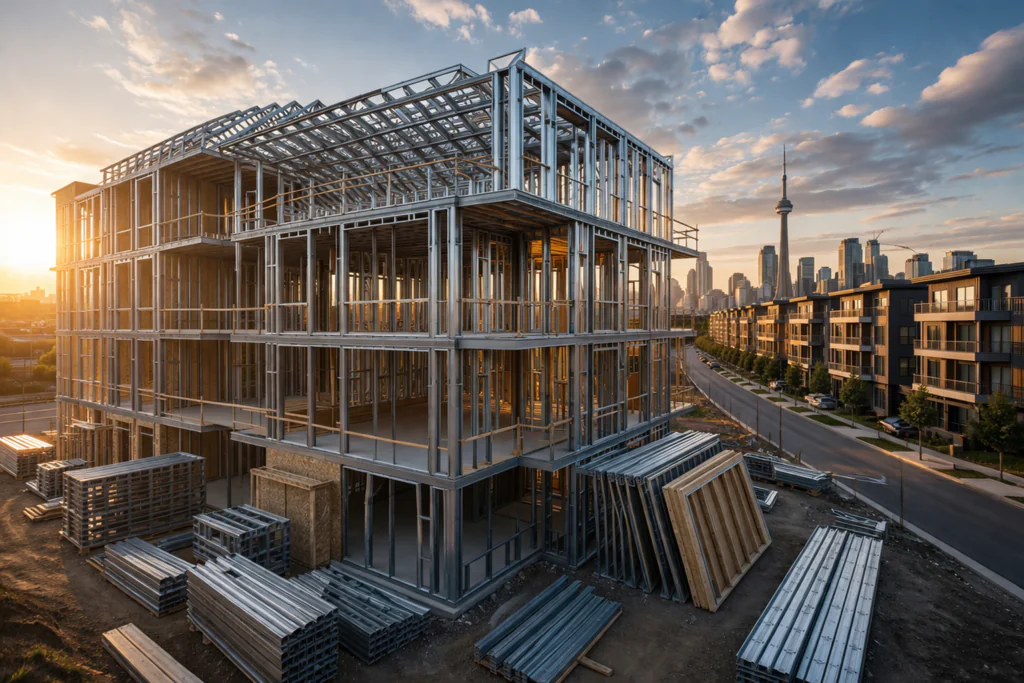
Cold-formed steel framing uses thin sheets of galvanized steel that are formed into structural components such as studs, tracks, and joists.
These components are engineered and often prefabricated before arriving on-site. This means that much of the work is done in a controlled manufacturing environment rather than on the job site.
The result is a system that emphasizes precision, efficiency, and repeatability.
How Cold-Formed Steel Reduces Labour Demand
Cold-formed steel does not remove the need for labor, but it reduces how much labor is required on-site.
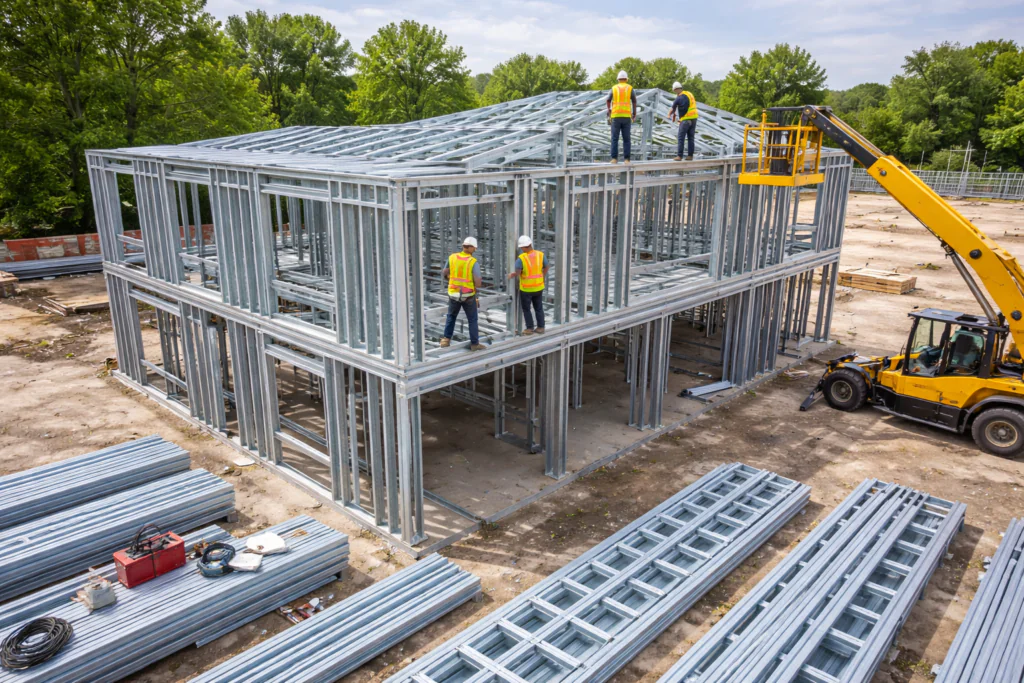
One of the biggest advantages is prefabrication. Components can be manufactured off-site and delivered ready for assembly. This reduces the need for cutting, measuring, and adjustments during installation.
Installation itself is faster. Steel components are lightweight and consistent, which allows crews to work more efficiently with fewer workers.
Because the system is engineered, there is less guesswork. Workers follow clear plans, which reduces errors and improves productivity.
In a market where skilled labor is limited, these efficiencies make a significant difference.
Shifting Work from Site to Manufacturing
One of the most important changes brought by cold-formed steel is the shift in where work happens.
Traditional construction relies heavily on on-site labor. Cold-formed steel moves a large portion of that work into manufacturing facilities.
This has several advantages:
- Controlled working conditions
- Consistent production quality
- Reduced dependency on site-based crews
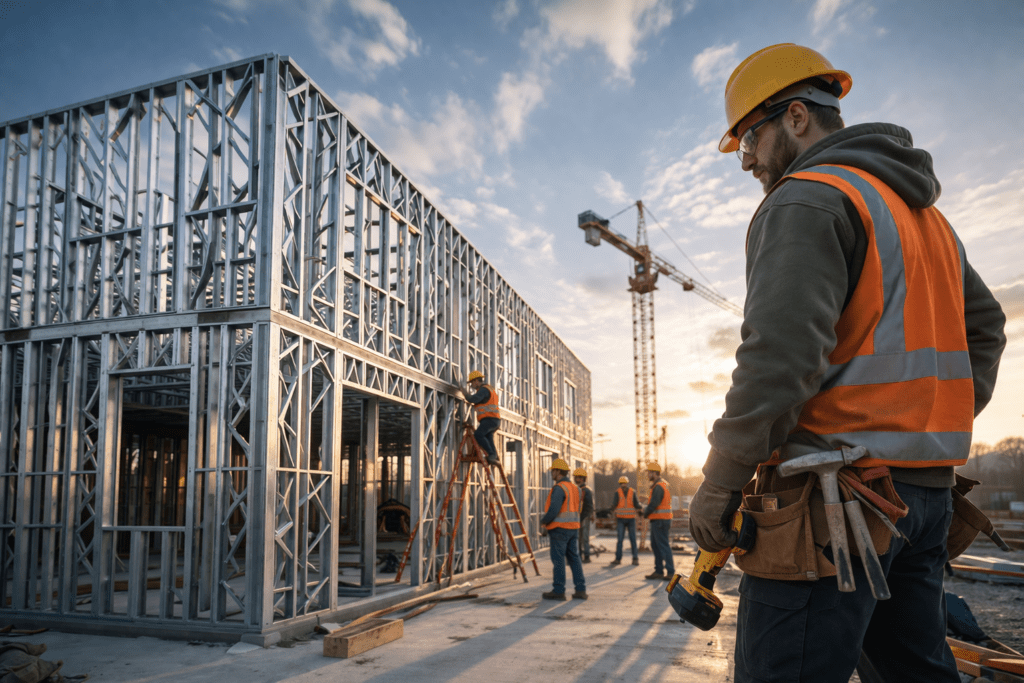
Instead of needing large teams on-site, builders can rely on smaller, more efficient installation crews.
This shift is key to addressing the labour shortage in construction.
Improving Speed Without Increasing Workforce
Speed is critical in today’s construction environment.
Cold-formed steel allows projects to move faster without requiring more workers. Since components are pre-engineered and ready to install, framing stages can be completed in a shorter time.
This helps builders meet tight deadlines and respond to increasing demand for housing and commercial space in Ontario.
Faster construction also reduces exposure to delays caused by weather and scheduling conflicts.
Maintaining Quality with Fewer Workers
One of the concerns with reducing labor is the potential impact on quality. Cold-formed steel addresses this issue through precision manufacturing.
Every component is produced to exact specifications. This ensures consistency across the entire structure.
With fewer on-site adjustments required, the risk of human error is reduced. This leads to better overall quality and fewer issues during inspections.
In a labour-constrained environment, maintaining quality while using fewer workers is a major advantage.
Limitations and Considerations
Cold-formed steel is not a complete replacement for all construction methods.
Skilled workers are still required for installation, design coordination, and project management. The system also requires proper planning and accurate drawings before production begins.
Builders must adapt their processes to fully benefit from cold-formed steel. This includes early design coordination and working with experienced suppliers.
However, these requirements are manageable and are outweighed by the long-term benefits.
The Future of Construction in Canada
The labour shortage is expected to continue over the next decade. As demand for housing and infrastructure grows, the gap between available workers and required labor will increase.
Cold-formed steel is positioned to play a major role in addressing this challenge.
By improving efficiency, reducing on-site labor requirements, and enabling prefabrication, it offers a practical path forward for the construction industry.
Builders who adopt these systems will be better equipped to handle future demand.
Build Smarter with LSF Pro Structures
The labour shortage in construction is not going away. Builders need solutions that allow them to do more with fewer resources.
LSF Pro Structures provides precision-engineered cold-formed steel framing systems designed to improve efficiency and reduce labor dependency. Every component is built to support faster installation and consistent performance.
If you want to stay competitive in a changing construction market, now is the time to adapt.
Contact LSF Pro Structures today and build smarter, faster, and with greater control.