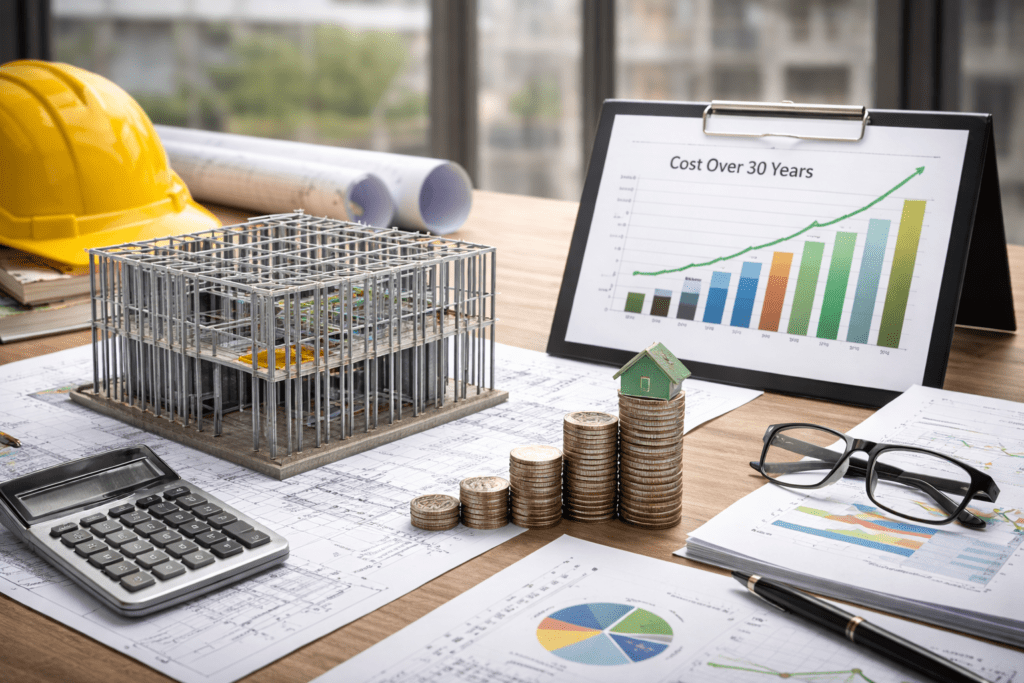
Upfront construction cost tells only part of the story. Developers and property investors in Canada increasingly evaluate buildings based on lifecycle performance. The real question is not what framing costs today. The real question is what it costs over 30 years.
When analyzing cold formed steel total cost of ownership, the long-term numbers often tell a different story than initial material comparisons.
Let’s break it down.
What Total Cost of Ownership Means in Construction
Total cost of ownership includes every cost a building generates during its lifespan, not just construction expenses.
This includes:
Initial material and labor
Maintenance and repairs
Moisture-related damage
Structural movement issues
Insurance implications
Tenant turnover costs
Long-term asset value
Developers who focus only on upfront framing price often miss the long-term financial impact.
Initial Construction Cost: Steel vs Alternatives
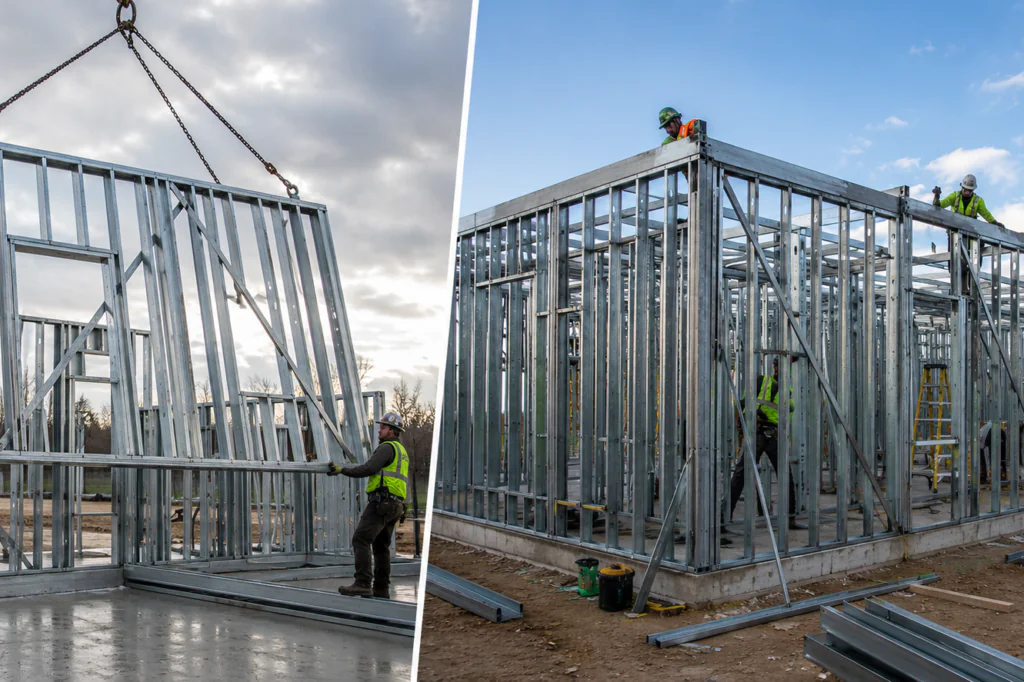
Cold-formed steel framing can appear slightly higher in material cost compared to wood in some residential applications. However, this comparison ignores several important factors:
Reduced material waste
Lower rework rates
Faster installation
Smaller foundation requirements due to lighter weight
Greater dimensional precision
When evaluating project-wide cost instead of raw material price, the gap often narrows significantly.
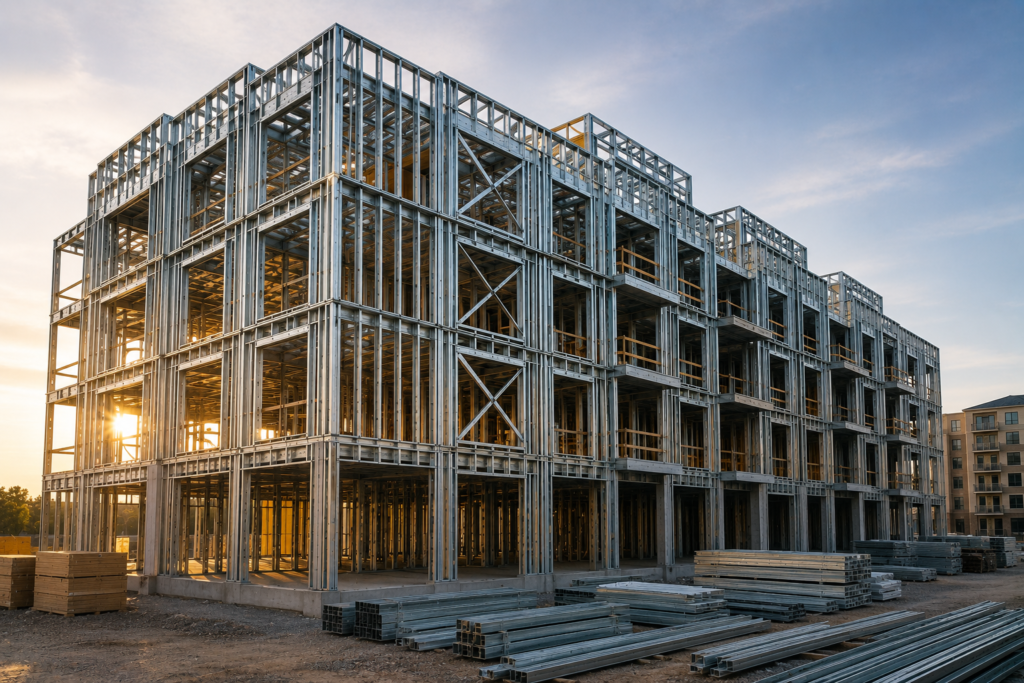
In mid-rise or multi-unit developments, foundation savings and schedule compression can offset material differences quickly.
Maintenance and Structural Stability Over Time
One of the largest contributors to long-term building cost is maintenance.
Wood framing can experience:
Shrinkage
Warping
Cracking
Moisture damage
Mold development
These issues lead to drywall cracking, door misalignment, and warranty claims.
Cold-formed steel framing maintains dimensional stability. It does not shrink, twist, or absorb moisture.
Over 30 years, this stability reduces:
Cosmetic repairs
Structural adjustments
Tenant complaints
Ongoing maintenance expenses
Fewer structural problems mean lower lifecycle cost.
Moisture and Mold Resistance
Moisture remains one of the most expensive risks in Canadian buildings. Freeze-thaw cycles, snow loads, and humid interior environments increase stress on structural systems.
Steel does not:
Rot
Support mold growth
Degrade from moisture exposure
This significantly reduces the risk of mold remediation and structural repair.
Insurance claims related to moisture damage can be costly. Steel framing reduces exposure to those risks.
When calculating cold formed steel total cost of ownership, moisture resistance plays a major role.
Insurance and Risk Management
Insurance providers assess structural risk.
Non-combustible steel framing often:
Reduces fire risk perception
Improves structural durability
Lowers long-term claim probability
While premiums vary by project type and insurer, durable and stable structural systems strengthen risk profiles.
Lower risk equals stronger asset security.
Reduced Structural Movement and Warranty Claims
In multi-unit residential buildings, minor structural movement leads to significant warranty claims.
Common issues in traditional framing include:
Nail pops
Drywall cracking
Uneven floor transitions
Door frame shifting
Steel framing minimizes movement. That stability reduces post-construction callbacks.
Fewer warranty claims protect profit margins and developer reputation.
Longevity and Asset Value Preservation
Real estate investors think long term.
Cold-formed steel framing provides:
Corrosion-resistant galvanized protection
Structural predictability
Long lifespan with minimal degradation
Buildings that maintain structural integrity preserve resale value.
Over decades, durable structural systems support stronger asset appreciation.
Cold formed steel total cost of ownership improves because the structure performs consistently without major rehabilitation.
Operational Efficiency in Multi-Unit Buildings
In rental or condo developments, operational efficiency matters.
Stable framing reduces:
Sound transmission issues caused by structural movement
Interior finish deterioration
Repair frequency between tenants
Reduced operational disruption supports stronger occupancy rates.
Developers seeking predictable long-term returns often prefer systems that reduce operational surprises.
Comparing 30-Year Cost Impact
When comparing framing systems over three decades, consider:
Initial construction efficiency
Structural maintenance cost
Moisture-related repair risk
Insurance and liability exposure
Warranty and callback frequency
Asset resale value
While initial pricing may appear similar across systems, long-term cost performance often favors durability and precision.
Cold-formed steel framing offers predictable performance across all six categories.
Why Developers Are Thinking Beyond Upfront Cost
Canadian construction markets continue to tighten margins. Investors demand stronger returns and lower risk.
Developers who evaluate cold formed steel total cost of ownership recognize that durability, reduced maintenance, and structural consistency create long-term financial advantages.
Short-term savings can disappear quickly when maintenance and repair costs accumulate.
Long-term stability protects investment.
Final Thoughts: Is Steel Cheaper Over 30 Years?
The answer depends on project type, climate exposure, and operational goals. However, in many multi-unit and mid-rise residential developments, cold-formed steel framing provides lower lifecycle risk and reduced maintenance cost.
When analyzing total cost of ownership rather than upfront material price, steel framing often proves financially competitive or superior over 30 years.
If your next development requires durability, predictability, and long-term asset protection, cold-formed steel framing deserves serious evaluation.