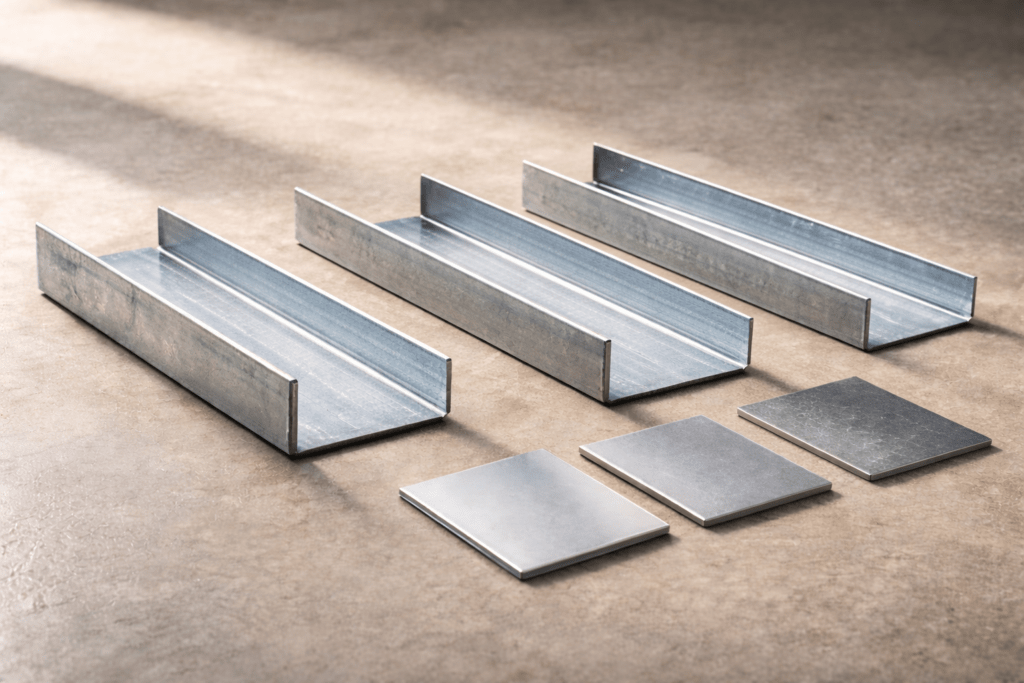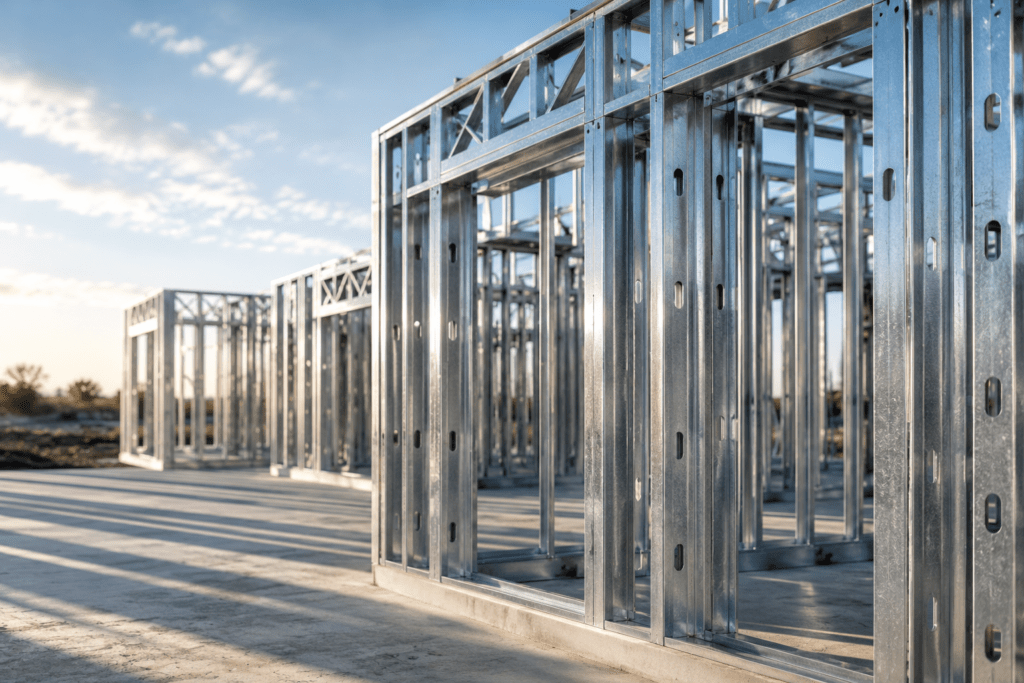
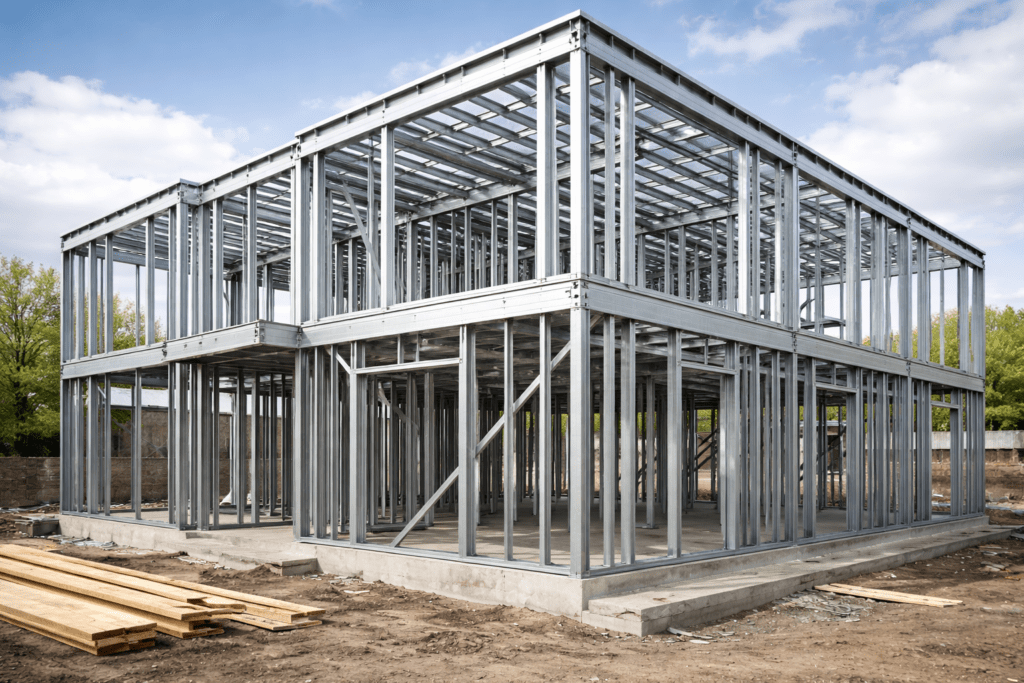
Modern construction continues to evolve as builders search for stronger and more reliable structural systems. Because of these demands, many developers now rely on steel frame construction for residential and commercial projects.
A steel structural system uses manufactured steel components to form the skeleton of a building. These elements support floors, walls, and roofs while maintaining long-term stability.
As a result, steel framing has become a key part of modern building design.
What Is a Steel Frame Structure
A steel frame structure uses steel members to create the primary load-bearing skeleton of a building.
The structure typically includes:
Vertical studs or columns
Horizontal beams or tracks
Floor framing components
Roof framing elements
Together, these parts distribute structural loads throughout the building and transfer them safely to the foundation.
Because manufacturers produce steel components with high precision, the structure maintains strong alignment during installation.
Why Builders Choose Steel Framing
Many builders now prefer steel framing systems because they offer several practical advantages.
Strong Structural Performance
Steel provides excellent strength compared to its weight. Even lightweight sections can support significant structural loads.
Therefore, builders can construct strong structural systems without using excessively heavy materials.
Dimensional Stability
Steel does not shrink, warp, or twist over time.
Because of this stability, buildings framed with steel maintain consistent dimensions throughout their lifespan. This reduces drywall cracks, door alignment issues, and structural movement.
Precise Manufacturing
Manufacturers produce steel components using advanced machinery.
As a result, every structural element maintains consistent dimensions. This accuracy helps contractors assemble structural systems faster.
Steel Frame vs Wood Framing
Many developers compare steel structures with traditional wood framing.
Although wood remains common in residential construction, steel provides several important advantages.
First, steel does not support mold growth or insect damage. Therefore, buildings avoid issues such as rot or termite problems.
Second, steel maintains stable dimensions in changing humidity conditions. Wood framing often expands or shrinks as moisture levels change.
Finally, steel components arrive with precise shapes and sizes. This accuracy reduces construction waste and improves installation efficiency.
Because of these benefits, many developers now consider steel framing as an alternative to wood.
Where Steel Frame Construction Is Used
Steel structural systems appear in many types of buildings.
Common applications include:
Residential housing projects
Multi-unit apartment buildings
Commercial developments
Interior partition systems
Modular construction projects
Because steel offers both strength and design flexibility, architects can adapt it to a wide range of building designs.
In addition, many prefabricated wall systems rely on steel structures for consistent manufacturing quality.
Fire Resistance and Structural Safety
Steel construction also supports strong fire safety performance.
Steel is a non-combustible material. Therefore, it does not contribute fuel during a fire.
When combined with properly designed wall assemblies, steel framing systems can achieve high fire resistance ratings.
In addition, engineered steel structures provide reliable structural support under demanding conditions.
This combination of safety and durability makes steel an attractive material for modern construction.
Sustainability Benefits of Steel Structures
Steel also supports environmentally responsible construction.
Most structural steel products contain recycled material. Because steel is highly recyclable, buildings framed with steel reduce environmental impact.
In addition, precise manufacturing reduces material waste during construction.
Steel structures can also last for decades, which reduces the need for major structural repairs over time.
Final Thoughts
Steel framing continues to transform modern construction. It offers durability, structural reliability, and precise manufacturing that improves building performance.
Builders rely on steel frame systems because they maintain stability, resist moisture damage, and support long-lasting structures.
As construction technologies continue to advance, steel framing will remain one of the most reliable solutions for residential and commercial buildings.