Choosing the right structural system defines the cost, schedule, and long-term performance of a building. For mid-rise residential, mixed-use, and large-scale multi-unit projects in Canada, the debate often comes down to one comparison: light steel framing vs concrete.
Both systems perform well in specific applications. However, when developers evaluate cost efficiency, speed of construction, and structural optimization, clear differences emerge.
This guide breaks down those differences so builders and developers can make informed decisions.
Structural Weight and Foundation Impact
Concrete is heavy. That weight directly affects foundation design.
Heavier structures require:
Larger footings
Deeper excavation
Increased reinforcement
Higher concrete volume
More engineering coordination
Light steel framing offers a significantly lower structural weight. Steel studs and floor systems reduce overall dead load, which leads to:
Smaller foundations
Lower excavation cost
Reduced soil pressure
Simpler structural calculations
On projects with challenging soil conditions, weight reduction can generate substantial savings.
When comparing light steel framing vs concrete, foundation impact often shifts the cost balance early in the planning stage.
Construction Speed and Project Timeline
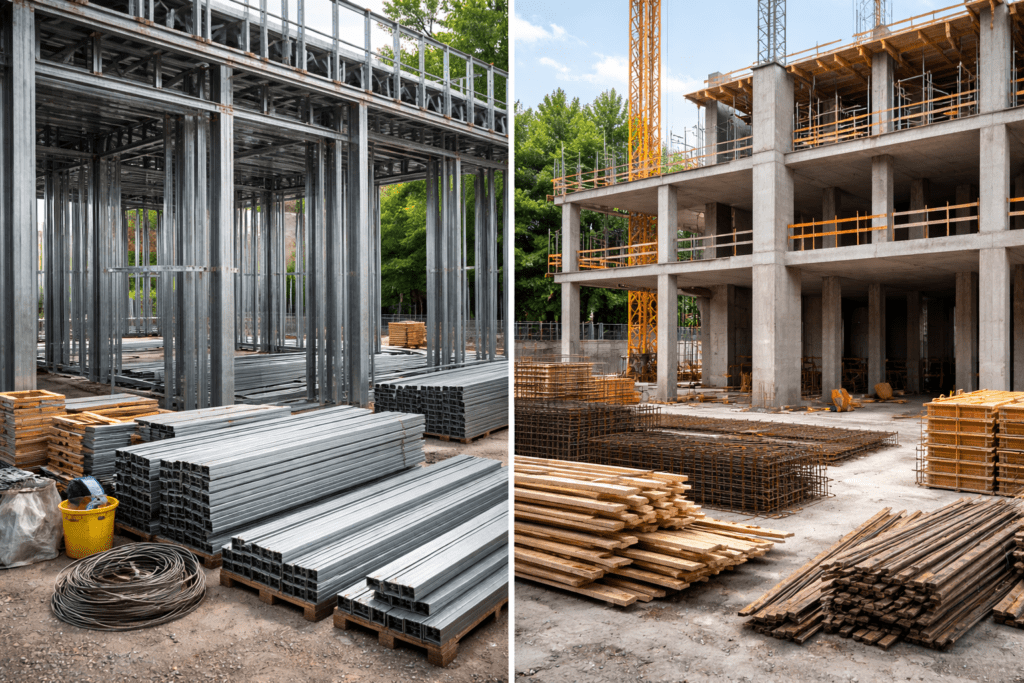
Concrete construction requires sequential steps:
Formwork installation
Reinforcement placement
Concrete pouring
Curing time
Form removal
Each phase depends on weather conditions and inspection approvals. Curing alone can delay progress.
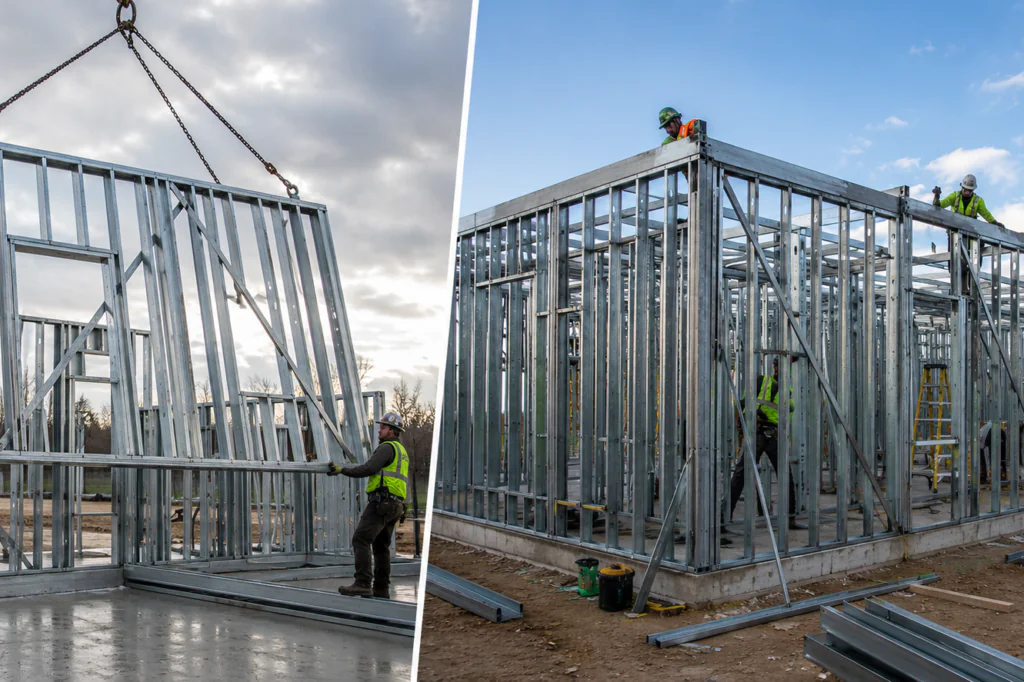
Light steel framing installs faster because:
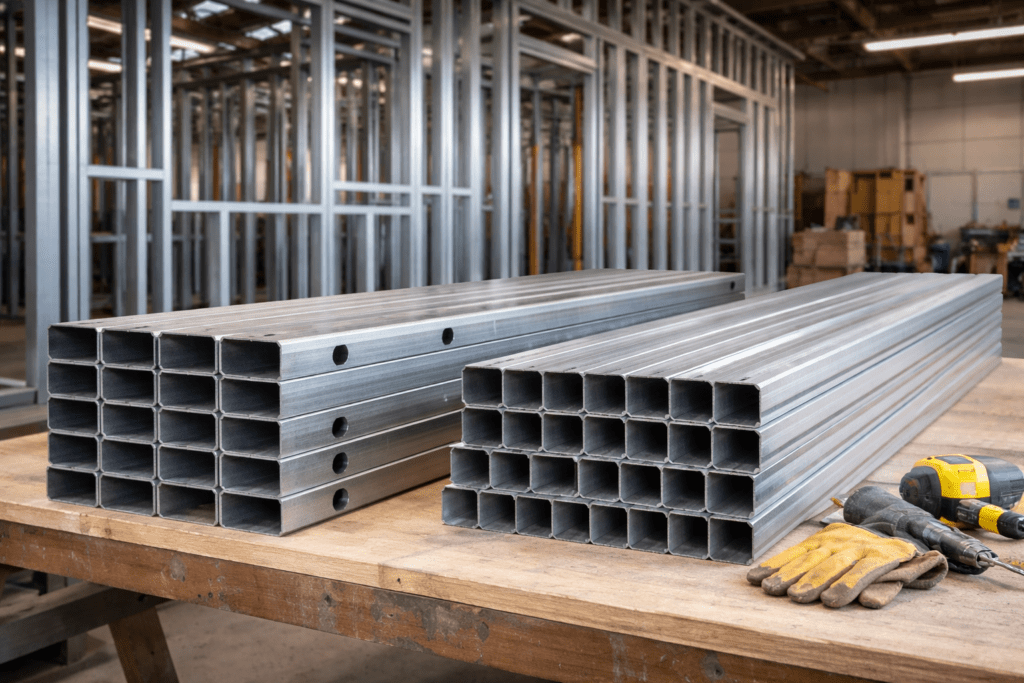
Components arrive pre-cut
No curing time is required
Installation crews move floor by floor quickly
Weather impact is reduced
Steel framing allows other trades to begin sooner. That overlap compresses overall project timelines.
For developers, faster completion improves cash flow and accelerates occupancy.
Labor Requirements and Site Efficiency
Concrete construction demands specialized labor, including formwork crews and finishing teams. Labor shortages in Canada increase scheduling risk.
Light steel framing typically requires:
Framing installers
Mechanical fastening
Standardized assembly processes
Steel framing generates cleaner job sites and reduces material staging complexity.
In high-density urban builds, efficient site organization matters. Steel systems simplify logistics.
Material Cost vs Total Project Cost
Concrete often appears cost-effective per cubic meter. However, material cost alone does not reflect total project expense.
Concrete projects incur additional costs such as:
Formwork rental
Extended labor hours
Weather-related delays
Larger crane requirements
Increased foundation spending
Light steel framing offers:
Predictable manufacturing cost
Reduced foundation expense
Faster installation
Lower site waste
Reduced rework
When comparing light steel framing vs concrete, total project cost often favors steel in mid-rise and multi-unit developments.
Developers should evaluate cost holistically rather than focusing on material price alone.
Structural Efficiency and Design Flexibility
Concrete provides excellent compressive strength and works well in high-rise applications. However, it limits flexibility once poured.
Light steel framing supports:
Precise load-bearing calculations
Engineered shear walls
Efficient multi-storey stacking
Easier modifications during design
Because steel components are digitally modeled before fabrication, design adjustments occur earlier in the process.
This reduces mid-project structural changes.
For residential buildings up to mid-rise levels, steel framing provides strong structural efficiency without the mass of concrete systems.
Environmental and Sustainability Considerations
Concrete production generates significant carbon emissions. Cement manufacturing remains one of the largest industrial contributors to global CO₂ output.
Light steel framing offers:
Lower material waste
Recyclable components
Reduced on-site debris
Precision manufacturing
Steel framing supports waste reduction and sustainable construction strategies.
Developers pursuing ESG targets or green certifications often favor systems that reduce environmental impact.
Moisture, Shrinkage, and Long-Term Performance
Concrete can crack due to shrinkage and temperature variation. Repairing structural cracks can increase long-term maintenance costs.
Light steel framing:
Does not shrink
Maintains dimensional stability
Resists warping
Performs consistently over time
This stability supports drywall integrity and finishing quality.
For multi-unit housing, long-term structural consistency reduces warranty claims and tenant complaints.
Ideal Applications for Each System
Concrete performs best in:
High-rise towers
Underground parking structures
Heavy load-bearing infrastructure
Light steel framing performs exceptionally well in:
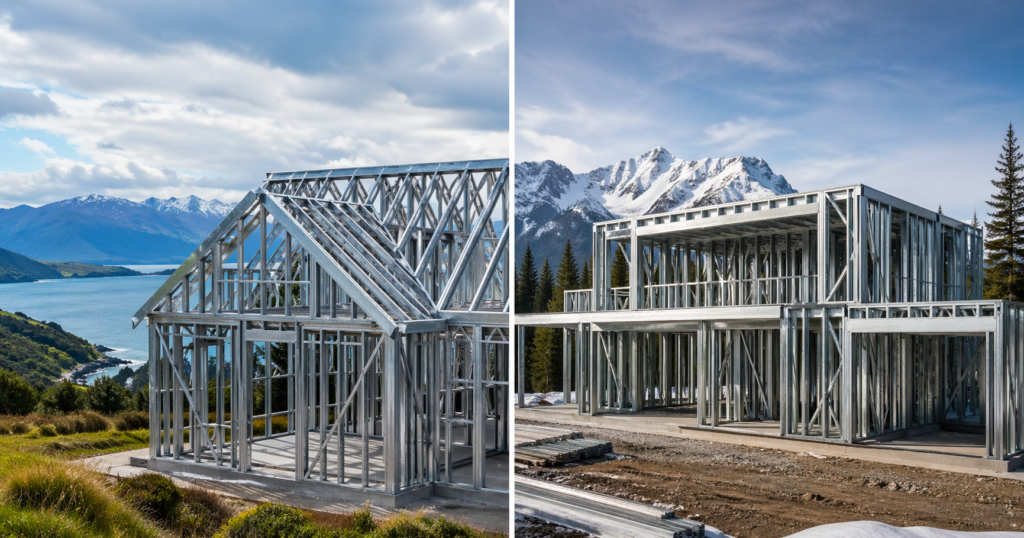
Mid-rise residential
Mixed-use developments
Modular construction
Laneway and infill housing
Multi-unit housing up to mid-rise levels
Understanding project scope determines the right choice.
Which System Delivers Greater Efficiency?
The light steel framing vs concrete decision depends on building height, soil conditions, budget constraints, and timeline goals.
However, for many mid-rise and residential developments in Canada, light steel framing delivers:
Faster completion
Lower foundation cost
Reduced site waste
Improved schedule control
Greater structural efficiency
Developers seeking speed, predictability, and controlled cost often find steel framing aligns better with modern construction demands.
Final Thoughts on Light Steel Framing vs Concrete
Concrete remains a powerful structural material. Yet in many Canadian residential and mixed-use projects, light steel framing offers a more agile and cost-efficient solution.
When evaluating structural systems, consider total project cost, timeline impact, foundation requirements, and long-term performance.
If your next project requires structural efficiency without unnecessary weight and delay, light steel framing deserves serious consideration.