Canadian builders are experiencing a shift in how they approach framing new projects. For decades, wood studs were the default choice, but cold-formed steel framing – also known as light steel framing (LSF) – is quickly gaining traction across Canada. Builders and construction professionals are discovering that this innovative method offers a host of benefits that traditional wood framing simply can’t match. From faster build times to superior strength and fire safety, cold-formed steel is proving to be a game-changer for residential and commercial construction. In this post, we’ll explore what cold-formed steel framing is, why it’s ideally suited for Canada’s building needs, and the key reasons more Canadian builders are making the switch. We’ll also look at how companies like LSF Pro support builders with ready-to-assemble steel framing kits, making it easier than ever to build with steel.
What is Cold-Formed Steel Framing?
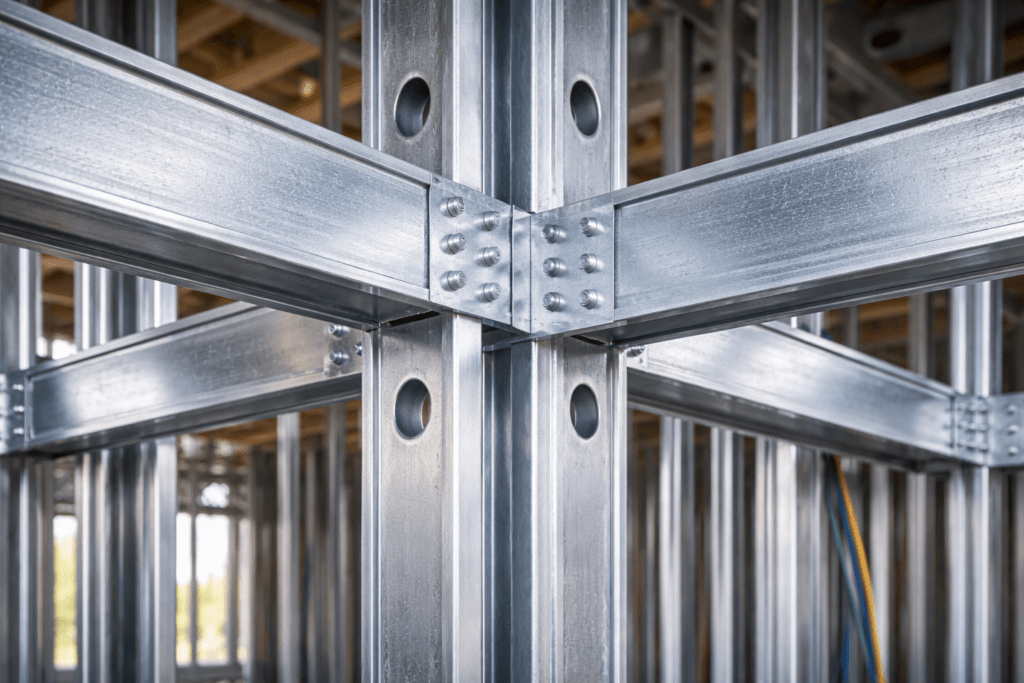
Cold-formed steel framing (CFS) refers to construction using structural components made from thin sheets of steel that are shaped (formed) at room temperature. These steel sheets are galvanized (coated to prevent rust) and precision-rolled into studs, joists, tracks, and trusses – the equivalent of the pieces you’d normally create from wood, but in high-strength steel. Essentially, cold-formed steel provides the “skeleton” of a building, just like dimensional lumber does, except it’s metal instead of wood.
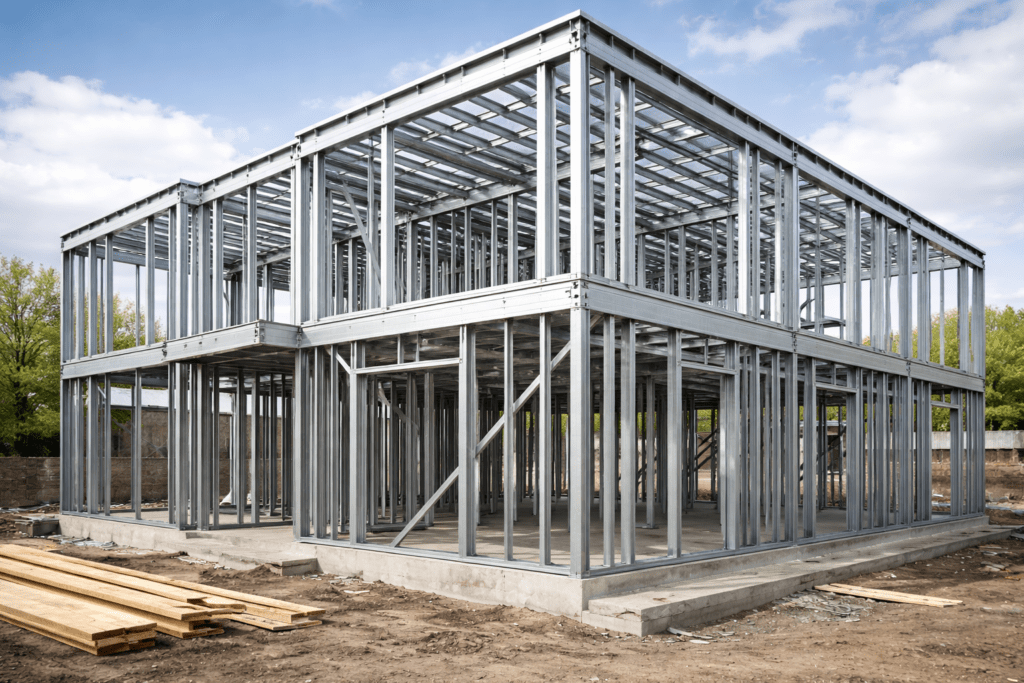
The term “cold-formed” simply means the steel is formed without heat (unlike heavy structural steel beams that are hot-rolled). This process creates lightweight but incredibly strong framing members. Cold-formed steel framing has been used for years in commercial and industrial buildings (think steel stud office partitions or high-rise interior walls), and it’s now increasingly used in Canadian housing, apartments, and light commercial projects. LSF components are designed using advanced software and manufactured with tight tolerances. The result is an engineered framing system where every stud and track is consistent, straight, and labeled for assembly. Builders can use cold-formed steel for everything from load-bearing wall framing and floor joists to roof trusses and entire modular panels.
In short, cold-formed steel framing is a modern alternative to wood framing that offers comparable design flexibility – you can build houses, multi-unit developments, and even mid-rise buildings with it – but with significant performance advantages. Let’s dive into those benefits and see why it’s so compelling for Canada’s construction industry.
Advantages of Cold-Formed Steel Framing Over Wood
When comparing cold-formed steel framing to traditional wood framing, several clear advantages emerge. These advantages are driving many builders to rethink their go-to materials. Below, we break down some of the key benefits of CFS/LSF systems and how they give builders an edge:
Faster Construction and Higher Efficiency
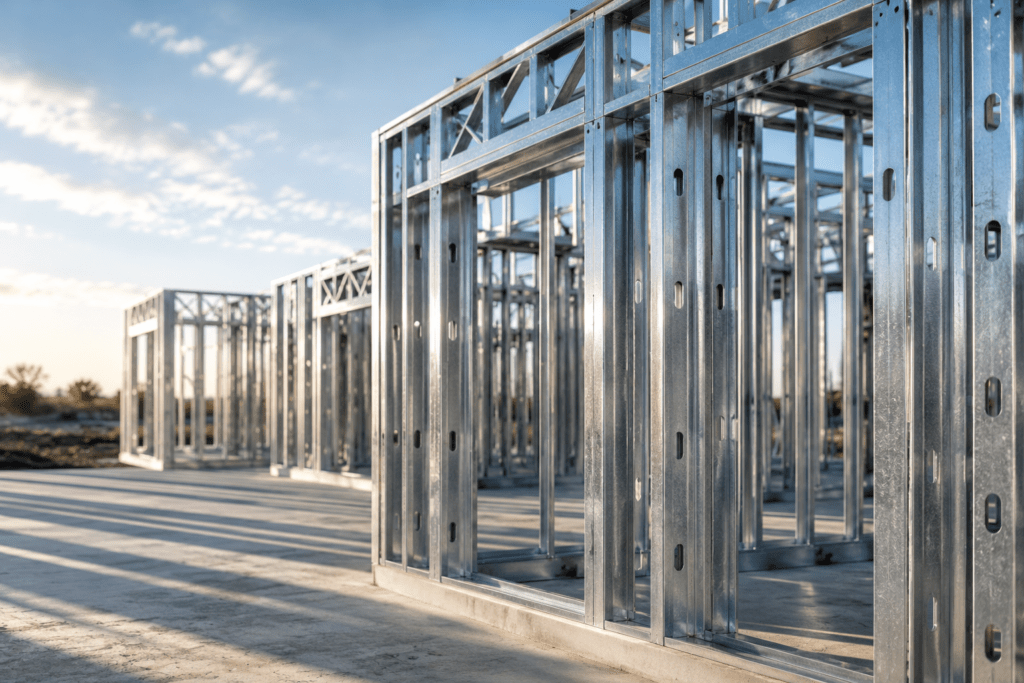
One of the biggest reasons builders are switching to steel framing is speed. Projects can be completed significantly faster with cold-formed steel. Why? The components arrive prefabricated and ready to assemble. There’s no need to spend days on site measuring and sawing wood lumber for every wall. Instead, steel studs and tracks are precision-cut in the factory to the exact lengths required, with pre-punched holes for utilities and exact fitment. Crew members essentially bolt or screw the pieces together following the plan – it’s almost like assembling an easy kit.
This streamlined process can cut framing time by 30–50% or more compared to stick-building with wood. Walls that might take a week to layout and cut in wood can often be framed in a couple of days with pre-cut steel. Many builders report that using panelized steel systems lets them dry-in a structure (get the roof on) much sooner, which means interior trades can start earlier and overall project timelines shrink.
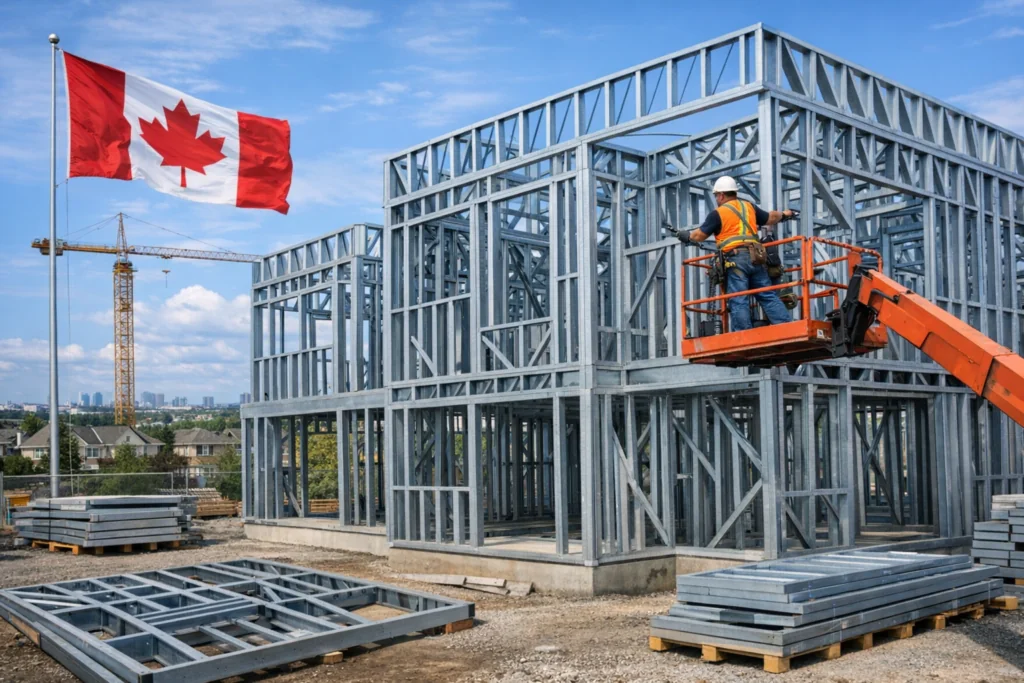
Faster framing not only saves labor costs, but is also crucial in Canada’s climate. Our construction season can be short, especially in colder regions – you want the building enclosed before harsh weather hits. Cold-formed steel helps by minimizing weather delays. Since a lot of the fabrication work is done off-site, there are fewer interruptions due to rain or freezing temperatures. Entire wall sections or floor cassettes can be built under controlled factory conditions, then shipped to the job site for rapid installation. With less cutting and adjusting needed on site, crews spend less time exposed to the elements. The lightweight nature of steel pieces (steel framing is roughly 30%–50% lighter than equivalent wood framing) also makes them easier to handle and lift into place, requiring smaller crews or equipment. Overall, by building faster and more efficiently, Canadian contractors can finish projects sooner and take on more builds in a season – a huge competitive advantage.
Superior Strength and Durability
Cold-formed steel may be light in weight, but it’s tremendously strong and durable. Steel has the highest strength-to-weight ratio of any common building material, meaning a thin steel stud can carry loads that would require a much bulkier piece of wood. For builders, this translates to strong, sturdy structures that stand up to Canada’s demands. Steel framing can easily support heavy snow loads on roofs and withstand strong winds. In areas prone to hurricanes or tornados, steel studs won’t split or snap like wood might; they can bend and hold together under stress, giving buildings added resilience and safety.
Durability is another big plus. Steel won’t rot, warp, or crack over time. Wood framing is vulnerable to moisture – if water infiltrates a wall, it can lead to rot or mold, compromising the structure and indoor air quality. In Canada’s wet coastal climates or even just through freeze-thaw cycles, wood can degrade or change shape. Steel is inorganic and does not absorb moisture, so it avoids these issues. It’s also impervious to termites and other pests. While certain parts of Canada have less termite activity than warmer countries, many regions (including Southern Ontario and British Columbia) do have insects that can attack wood structures. Using steel framing means never worrying about termites or carpenter ants eating away at your building, and no need for chemical treatments.
Moreover, steel’s dimensional stability means it stays straight and true. It won’t shrink or swell due to humidity or temperature changes. This ensures that walls remain plumb and floors level for the long haul. There are far fewer issues like nail pops, drywall cracks, or doors out of alignment that often occur as wood studs dry out or twist. Builders who switch to steel often find that their completed projects feel more solid and result in fewer customer complaints down the line. Overall, the longevity of cold-formed steel framing gives confidence that the structure will perform for many decades with minimal maintenance.
Consistent Quality and Precision
Anyone who has framed with lumber knows that wood can be a bit of a wildcard. Lumber varies in quality – some studs come straight, others arrive crooked or with knots and splits that you need to work around. By contrast, cold-formed steel components are manufactured to strict standards and uniform quality. Every steel stud coming off the line is identical in dimensions, holes are punched exactly where they need to be, and there’s no such thing as a bent or crown in the material (unless it was mishandled). This high degree of precision means that when you build with steel, everything fits together exactly as designed.
Construction with CFS is often done using CAD drawings and sometimes even BIM (Building Information Modeling) to pre-plan every connection. Because of this, when the pieces arrive, there’s virtually no guesswork for the framers. They don’t have to shave a bit here or “persuade” a piece there – it all aligns by design. The result is extremely square, plumb, and true construction. Corners are 90 degrees, walls are straight, and dimensions are accurate to a few millimeters. This precision pays off in many ways: drywall installs flatter (fewer pops or bows), floors are level (no shimming needed for finish flooring), and overall there’s less rework needed by other trades.
For builders, the consistent quality of steel framing means fewer errors and fewer callbacks. Since the framing doesn’t settle or move as it dries, there’s a lower chance of things like drywall cracks appearing months after completion (which in wood-framed homes often leads to warranty service calls). One Ontario home builder noted that after switching from wood to steel framing, their post-construction drywall repairs dropped dramatically – the steel-framed homes simply held their shape better through the seasons. Fewer defects and callbacks not only save money, but also keep your customers happier with the end product.
Another benefit is reduced material waste. With computer-optimized fabrication, each piece of steel is cut to the exact length needed. This means you’re not ending up with piles of off-cuts and scraps as you do when cutting lumber on site. In a typical wood build, a significant percentage of lumber ends up in the dumpster due to cuts, warping, or defects. Steel framing systems, on the other hand, often come with less than 5% waste – and any small scraps of steel can be recycled. You’re paying for materials that actually become part of the building, which is both cost-effective and environmentally friendly.
Fire Resistance and Safety Benefits
Fire safety is a crucial consideration for any builder, and here cold-formed steel has a clear advantage: steel is non-combustible. Unlike wood, steel framing will not catch fire or contribute fuel to a blaze. This makes steel-framed structures inherently safer in the event of a fire and also easier to engineer for fire code compliance. In many Canadian jurisdictions, building codes place limits on wood frame construction for multi-storey buildings unless extensive fireproofing is applied. With steel framing, it’s much simpler to meet and exceed those fire code requirements, because the structure itself isn’t flammable.
For example, mid-rise apartments or condos in Canada often require non-combustible construction for 4, 6 or more storeys – historically this meant using concrete or steel. Now, light-gauge steel framing is allowing these projects to be built more like traditional wood framing, but with the fire safety of steel. Even in single-family homes, using steel studs can provide extra peace of mind for homebuyers concerned about fire resilience, especially in wildfire-prone regions or for buildings in close proximity where fire spread is a risk.
Using steel framing can also lower insurance costs during construction and for the finished building. Many insurers recognize that a site built with non-combustible framing has a far lower risk of a catastrophic fire (for instance, those unfortunate news stories of wood-framed housing complexes burning down during construction are far less likely when the frame is steel). Builders may find their course-of-construction insurance premiums are reduced, and owners of steel-framed buildings likewise can see savings on property insurance. Beyond costs, it’s simply a safer approach – both for construction crews (no piles of wood to become a fire hazard on site) and for future occupants.
Cost Predictability and Long-Term Savings
It’s common to ask: “Doesn’t steel framing cost more than wood?” In terms of pure material price per stud, steel studs can be a bit more expensive than wood at times. However, focusing only on the sticker price of materials doesn’t give the full picture. Builders switching to cold-formed steel framing are finding that overall project costs are often comparable to wood – and in some cases lower – once you factor in all the efficiencies and savings.
For one, as described above, you save on labor costs because of faster assembly. Time is money, and completing the framing stage weeks faster can cut down on payroll, site supervision, and even financing costs (a quicker build means lower interest on construction loans). Crews working with prefabricated steel panels can often do more in a day than they would with stick-built wood, which means fewer man-hours per project. And while a bit of training is needed for carpenters to get comfortable with steel (like using self-tapping screws instead of nails, and learning to cut steel with snips or specialty saws), the learning curve is short. Once up to speed, many framers actually appreciate working with steel – the components are lighter and there are no splinters, for one thing!
Secondly, material waste is greatly reduced, as mentioned. Wasting 15-20% of lumber due to off-cuts, defects, or ordering “extra just in case” is essentially money thrown away. Steel framing packages are engineered so almost every piece is used, and any small leftovers can be recycled as scrap value. Less waste also means less money spent on dumpster fees and cleanup.
Another financial factor is price stability. Lumber prices in Canada have seen wild swings in recent years – shortages and market fluctuations caused huge spikes that wreaked havoc on builders’ budgets. Steel prices do fluctuate as well (they’re tied to global steel markets), but historically steel has been more stable and predictable in supply. Also, steel studs aren’t affected by things like insect infestations or forest fires causing regional shortages, which can happen with lumber supply. By choosing steel, builders can add a bit more predictability to their cost planning and are less likely to face sudden price surges that blow the budget.
Long-term, a steel-framed building can save money for both the builder and the owner. Maintenance and warranty claims are lower – as we noted, there are fewer repairs needed for warped framing, drywall issues, or structural problems down the road. A well-built steel structure can easily last for many decades (50+ years) with minimal structural issues, meaning fewer surprises for the owner and fewer warranty callbacks for the builder. Furthermore, the superior fire resistance can reduce lifecycle costs (insurance, as discussed). All these factors contribute to a strong value proposition: even if you pay a bit more upfront for steel materials, you often save money overall through efficiency and quality.
Suited to Sustainable Building
Today’s construction industry also places a high value on sustainability. Here, cold-formed steel framing shines as well. Steel is one of the most recycled materials on the planet – most steel studs contain a high percentage of recycled content (often 70% or more recycled steel). And when a steel-framed building eventually reaches the end of its life, the steel can be fully recycled again into new steel products. This circular life means less raw resource extraction compared to wood framing, which relies on timber harvesting.
Additionally, because steel framing is precise and produces minimal waste, it makes for a cleaner job site and less landfill waste. Builders pursuing green building certifications or simply looking to reduce their environmental footprint can appreciate that using steel saves trees and cuts down on construction debris. With Canada’s growing emphasis on sustainable construction and energy efficiency, light-gauge steel fits well: it enables high-performance designs (e.g. it’s easy to add continuous insulation over steel frames to create very energy-efficient envelopes) and aligns with the push for more durable, long-lasting buildings.
Built for Canada’s Climate and Codes
Canada’s climate and regulatory environment present unique challenges that cold-formed steel framing is well-equipped to handle. Our country spans frigid winters, heavy snow regions, coastal rains, and everything in between – plus we have strict building codes focused on safety and durability. Here’s why CFS framing is especially suited to Canadian conditions:
Weather Resilience: Steel framing stands up to extreme weather without degradation. In sub-zero cold, it doesn’t become brittle or shrink. In hot, humid summers, it doesn’t expand or warp. For areas with heavy snowfall, steel’s strength can handle the weight loads on roofs and can be engineered for large spans (great for open-concept designs or commercial spaces). If you’re building in a region with high winds or even seismic activity (like parts of BC or Quebec), light steel framing provides excellent structural performance and ductility, often exceeding what a wood frame can do in those situations.
Moisture and Mold Resistance: Canadian buildings must manage moisture carefully to avoid mold and rot, especially with our mix of cold winters and damp springs/falls. Steel framing gives an advantage here – since steel studs do not absorb water, you avoid one of the main starting points for mold growth inside walls. There’s no risk of rot if some moisture does get in. Plus, steel won’t swell or buckle if it gets wet during construction; once it dries, it’s as strong as ever. This makes steel a reliable choice for coastal construction (think the rainy West Coast) and any place where you want longevity.
Short Building Season Solutions: In many parts of Canada, the window for construction (especially for framing and exterior work) is limited by winter weather. Because cold-formed steel components can be prefabricated off-site, builders can get a jump start on projects even when site conditions aren’t ideal. For example, wall panels can be assembled in a factory during the winter and then quickly erected on site come spring. The speed of steel framing installation means you can close up buildings faster, mitigating the impact of a short season. Fewer weather-related delays and a quicker time to get the structure enclosed are major benefits for Canadian builders trying to maximize each construction season.
Building Code Compliance: Canadian building codes are increasingly emphasizing energy efficiency, fire safety, and innovative materials. Light steel framing is fully recognized by the National Building Code of Canada and provincial codes as an acceptable structural method, and it’s actually enabling code advancements. For instance, building codes allow mid-rise buildings (up to 6 storeys or more) to be constructed with non-combustible light gauge steel framing without the need for additional fireproofing that a wood building might require. Engineering advances have even demonstrated steel-framed buildings in the 10–12 storey range, which is expanding possibilities for developers beyond what traditional wood can do in that height.
In terms of energy codes, while steel is a highly conductive material (which means insulation strategies need to account for thermal bridging), modern designs solve this with continuous exterior insulation and other techniques. Steel framing thus can meet or exceed the energy performance requirements across Canada when detailed correctly. And as codes push for tighter, more resilient building envelopes, the precision of steel (no gaps or shrinkage forming unintended air leaks) actually helps achieve high performance.
Fire and Safety Codes: As discussed, using steel simplifies meeting non-combustibility requirements, which is particularly advantageous for multi-unit residential, commercial, or mixed-use buildings in urban centers. Cities like Toronto, Vancouver, etc., have dense neighborhoods where fire spread is a serious concern – building with non-combustible structure adds a layer of safety. Some municipalities or insurance underwriters also look favorably on steel for projects like schools, hospitals or senior housing due to its fire resistance and robustness.
Overall, cold-formed steel framing aligns extremely well with Canada’s construction goals: build faster to address housing needs, build safer and stronger to meet rigorous codes, and build smarter to handle climate challenges. These are big reasons why many Canadian builders are transitioning to steel framing in their projects.
Why Canadian Builders Are Switching to Steel Framing
Given all the advantages outlined above, it’s no surprise that builders across the country are adopting cold-formed steel framing. But let’s summarize the key drivers behind this industry shift. Why exactly are more builders moving away from wood and embracing steel? Here are some of the top reasons:
Speed to Market: In construction, time is money. Steel framing’s prefab approach means projects go up faster, allowing builders to complete jobs quicker and take on more projects annually. This is crucial in addressing tight deadlines and Canada’s housing demand – finishing homes and buildings faster means you can deliver keys to owners sooner (and start the next project).
Fewer Delays and Disruptions: Because so much of the steel fabrication is done off-site, builders face fewer on-site delays. Weather interruptions are minimized (since the actual assembly on site is quick). Also, materials are delivered ready-to-use, so there’s no waiting on lengthy lumber shipments or dealing with wood shortages. The predictability of steel supply and the fact that components arrive labeled and sorted means construction schedules are more reliable.
Improved Quality & Customer Satisfaction: Builders want happy clients and solid reputations. Steel framing helps by reducing defects and warranty issues. As mentioned, issues like warped studs causing drywall cracks, or floors bouncing due to lumber variability, virtually disappear with steel. Homeowners and commercial clients appreciate getting a building that feels extremely sturdy and needs fewer post-build fixes. For the builder, that means fewer call-backs and warranty expenses, and more referrals from satisfied customers.
Compliance with Fire Codes: As building codes get stricter about fire safety (for example, requirements for non-combustible structure in certain building types or taller buildings), steel framing is an easy way to comply. Builders are choosing steel to ensure their projects meet or exceed fire code without the headaches of applying sprays or claddings required to fireproof wood. It’s a forward-looking choice that keeps projects in line with modern safety standards.
Versatility for Different Projects: Light-gauge steel is incredibly versatile – it works for single-family homes, multi-family developments, commercial builds, and even additions/renovations. Builders who adopt steel framing can expand into new types of projects. For example, you might start using steel for custom homes and then realize you can also use it for that 5-storey apartment building project you have, or for modular prefab structures, etc. The ability to use one framing approach across various project types is efficient. With engineering support, steel framing can go taller and cover wider spans than wood, giving builders more design flexibility in what they can offer clients.
Less Risk on Site: Construction sites can be risky places – fires, theft, material damage, etc. Steel framing lowers some of those risks. There’s no risk of a pile of steel studs spontaneously catching fire, whereas stacks of lumber are a known fire hazard during construction. Steel components are also less attractive to thieves (lumber theft became an issue when prices spiked; steel is harder to resell in that way). And since steel parts are durable and don’t warp if rained on, there’s less risk of material loss due to bad weather. All this contributes to a smoother construction process with fewer surprises.
Lower Overall Costs & More Predictable Budgeting: Builders are in business to make a profit, and the bottom line matters. Many who switch to steel find that although the initial material cost might be a bit higher, the total costs often come out equal or lower. Fewer labor hours, fewer delays, almost no waste, and fewer callbacks can more than make up the difference. Additionally, because steel prices are relatively stable, builders can bid projects with more confidence that costs won’t skyrocket mid-build (unlike with volatile lumber markets). This leads to more predictable margins and fewer budget overruns, a huge benefit for anyone managing project finances.
In essence, Canadian builders are switching to cold-formed steel framing because it allows them to build better and build smarter. It addresses many pain points – tight timelines, quality control, safety requirements, and cost management – all while delivering a superior finished product. It’s not just a trend but a practical solution to modern construction challenges.
LSF Pro: Supporting Builders with Ready-to-Assemble Steel Framing Kits
Making the transition to cold-formed steel framing might seem daunting to some builders used to wood, but that’s where LSF Pro comes in. LSF Pro is a Canadian leader in light steel framing solutions, and our mission is to make it easy for builders to reap the benefits of steel without hassle. We provide ready-to-assemble steel framing kits and comprehensive support for projects of all sizes – from a backyard garden suite to multi-unit housing developments.
What does an LSF Pro framing kit include? We work with your plans and engineering requirements to fabricate custom steel components for your project. Every stud, joist, track, and truss is precision cut and punched to the exact specifications needed. We can even produce entire wall panels or trusses in our facility. These components are then packaged and shipped to your job site with clear labels and assembly drawings. It’s essentially a “building frame in a box” delivered to you, with all the pieces ready to go. Your crew can then follow the provided layout to quickly bolt the frame together. There’s no guesswork and no need for specialty on-site fabrication – we’ve handled that for you.
LSF Pro uses high-quality, Canadian-sourced steel and fabricates everything in-house to ensure top-notch quality control. Our team includes engineers and technicians who ensure that the framing system meets all applicable building codes and structural requirements for your region. We consider factors like snow loads, wind loads, and seismic conditions in the design, so you can be confident the steel frame will pass inspections and perform exceptionally. If you’re new to steel framing, we also provide guidance and support to your construction team, sharing best practices for assembly and answering any questions along the way. In fact, many carpenters are pleasantly surprised at how straightforward it is to assemble our kits – if you can frame with wood, you can frame with LSF Pro’s steel, and you might even find it easier due to the precision and pre-cut parts.
By partnering with LSF Pro, Canadian builders get the efficiency of prefabricated steel framing without needing their own factories or expensive equipment. We essentially become your off-site fabrication shop. This means you can take on more projects and ensure they stay on schedule, because your framing will go up quickly and smoothly. We’ve helped builders construct single-family homes, laneway suites, apartment complexes, and commercial buildings using our light steel systems, with excellent results in speed and quality. Our kits reduce on-site waste and labor, and they virtually eliminate the framing errors that can happen with traditional methods.
Ultimately, LSF Pro is here to support your success in building with cold-formed steel. We handle the complex parts – design, manufacturing, logistics – and leave you with a simplified assembly process on site. The learning curve is small, and our clients often become repeat customers after seeing how much easier and more predictable their projects become with steel framing kits. We’re proud to be part of the growing adoption of steel framing in Canada’s construction scene, and we’re ready to help your team make the switch confidently.
Ready to Build Faster and Smarter? – Contact LSF Pro Today
Cold-formed steel framing is transforming how Canadians build – offering speed, strength, consistency, and peace of mind that traditional wood framing can’t always guarantee. If you’re a builder or contractor looking to improve your project timelines, reduce risks, and deliver higher-quality work, now is the perfect time to make the switch to steel framing. LSF Pro is here to make that transition seamless for you.
Ready to get started with cold-formed steel? Reach out to LSF Pro for a consultation or quote on our ready-to-assemble steel framing solutions. Our team will work with you from planning to delivery, ensuring you have everything needed for a successful build. Join the many forward-thinking Canadian builders who have already embraced light steel framing and are reaping the rewards – faster builds, fewer headaches, and sturdier structures. Build smarter, build stronger, and build with confidence using LSF Pro’s steel framing kits. Contact us today to kick off your next project with the power of light steel framing on your side.