When it comes to interior wall systems, the quality of the final result depends heavily on one critical step: drywall installation on light steel framing. Even if the steel framing is perfectly designed and installed, poor drywall practices can lead to cracks, uneven finishes, and long-term performance issues.
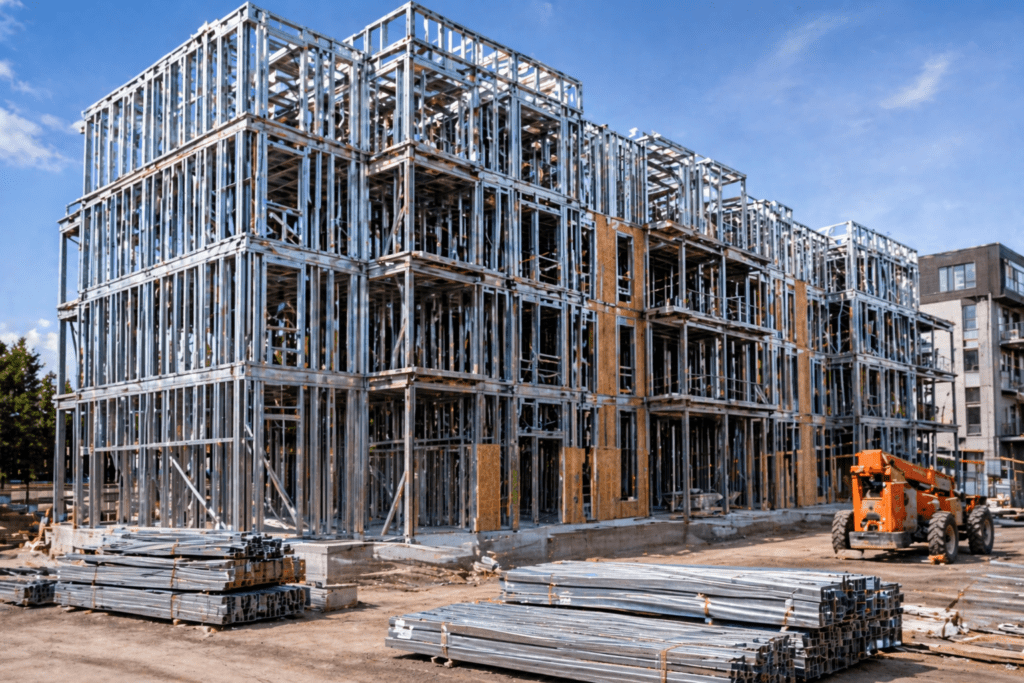
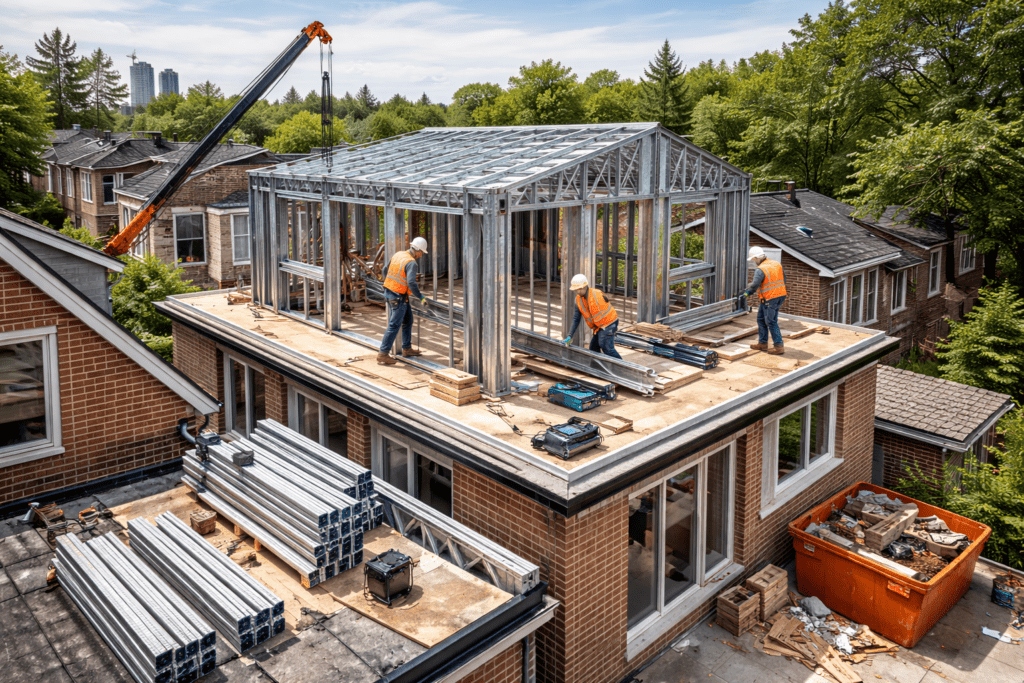
In Ontario and across Canada, builders are increasingly using light gauge steel framing for its precision and durability. However, drywall behaves differently on steel compared to wood. Understanding these differences is essential to achieve both structural integrity and a clean, professional finish.
This guide outlines practical, field-tested best practices to ensure drywall performs as expected on light steel framing systems.
Why Drywall Installation Is Different on Steel Framing
Drywall installation on steel framing is not the same as on wood studs. Steel does not shrink, twist, or warp like wood, which is a major advantage. However, it also requires more precision during installation.
Because steel studs are thinner and harder than wood, fastening methods, spacing, and alignment become more critical. Screws must engage properly without stripping, and framing must be straight and consistent to avoid visible imperfections.
In addition, steel framing transfers movement differently. Any deflection or improper fastening can lead to cracking at joints or screw pops over time.
For this reason, drywall installation on light steel framing must follow stricter standards and more controlled practices.
Ensuring Proper Framing Alignment Before Installation
The quality of drywall installation starts before the first sheet is installed. Steel framing must be properly aligned, plumb, and securely fastened.
Even minor inconsistencies in stud alignment can result in visible waviness on finished walls. Unlike wood, steel does not allow for easy correction during installation, so accuracy at this stage is critical.
Stud spacing must also be consistent, typically at 16 or 24 inches on center, depending on the design. Any deviation can affect the rigidity of the drywall and lead to performance issues.
Before installing drywall, always verify that:
- Studs are straight and properly aligned
- Tracks are securely anchored
- All bracing and bridging are in place
A well-prepared framing system makes the rest of the process significantly easier and more reliable.
Choosing the Right Screws and Fastening Technique
Fastening is one of the most important aspects of drywall installation on light steel framing. Using the wrong screws or improper technique can compromise both strength and finish.
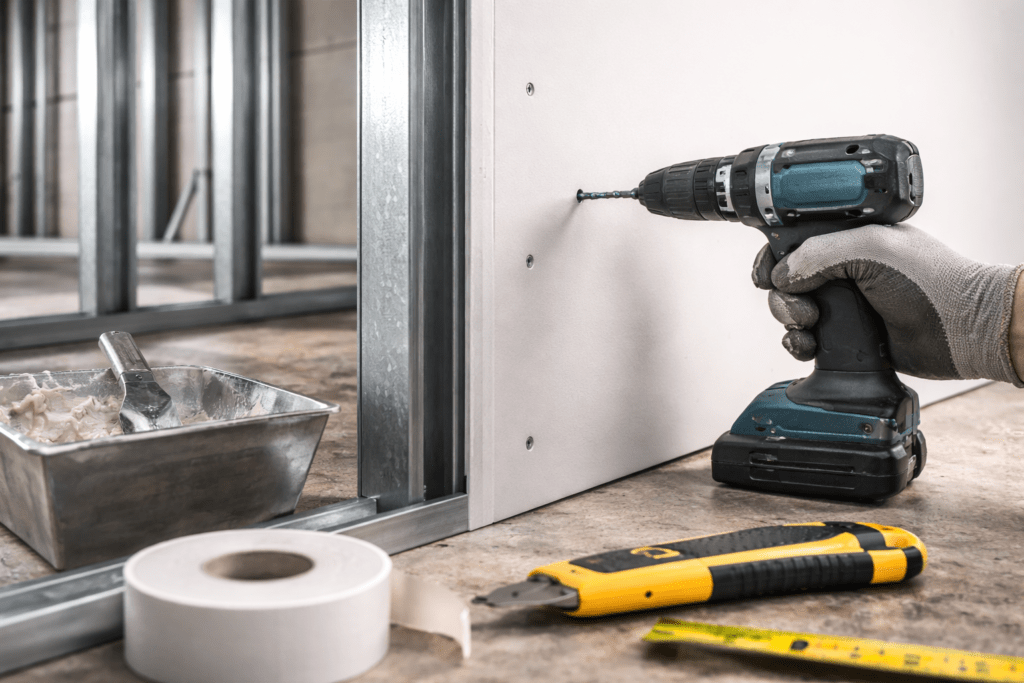
Self-drilling drywall screws designed for steel framing must be used. These screws are specifically engineered to penetrate steel studs without pre-drilling.
Screw length must be selected based on the thickness of both the drywall and the steel. In most cases, screws should penetrate the steel stud sufficiently to ensure a secure hold without overdriving.
Proper screw spacing is also essential. Screws are typically installed at regular intervals along studs and edges to distribute load evenly and prevent movement.
Overdriving screws is a common mistake. This damages the drywall surface and reduces holding strength. Each screw should sit slightly below the surface without breaking the paper face.
Managing Deflection and Movement
One of the key challenges in drywall installation on steel framing is managing deflection. Steel studs, especially in taller walls, can flex under load.
If this movement is not properly controlled, it can lead to cracking in the drywall over time.
Deflection track systems are often used in load-bearing walls to allow vertical movement without transferring stress to the drywall. These systems are particularly important in multi-story buildings across Ontario, where structural movement is more pronounced.
In addition, proper joint treatment and control joints must be used to accommodate movement and reduce the risk of cracking.
Understanding how the framing system behaves under load is essential for long-term performance.
Achieving a Smooth and Professional Finish
A high-quality finish depends on both installation technique and attention to detail.
Drywall sheets should be installed tightly and aligned properly to minimize gaps. Joints must be taped and finished using appropriate compounds and techniques to create a smooth surface.
Because steel framing is more consistent than wood, it provides an excellent base for achieving a flat finish. However, this also means that any installation errors become more visible.
Lighting conditions in the space can further highlight imperfections. For this reason, careful finishing and inspection are required to meet professional standards.
In commercial and high-end residential projects, achieving a clean finish is just as important as structural performance.
Common Mistakes to Avoid
Several common mistakes can compromise drywall performance on steel framing.
One issue is using wood screws instead of screws designed for steel. This often results in poor fastening and long-term failure.
Another mistake is inconsistent screw spacing, which can lead to uneven load distribution and visible defects.
Failing to account for deflection or movement can cause cracking at joints, especially in taller walls.
Finally, poor framing alignment at the beginning of the process often leads to finishing problems that are difficult to correct later.
Avoiding these mistakes requires attention to detail and a clear understanding of how drywall interacts with steel framing.
Why This Matters for Ontario Builders
In Ontario’s competitive construction market, quality and efficiency are critical. Builders are expected to deliver projects that meet strict standards while maintaining tight timelines.
Proper drywall installation on light steel framing ensures that walls perform well, look professional, and meet all building code requirements. It also reduces the need for repairs and callbacks, which can impact both cost and reputation.
As light gauge steel continues to replace traditional framing methods, mastering drywall installation becomes an essential skill for builders and contractors.
Work with LSF Pro Structures
At LSF Pro Structures, we support builders across Ontario with high-quality light steel framing solutions designed for real-world construction. Our systems are engineered for accuracy, efficiency, and compatibility with drywall installation best practices.
If you are planning a project and want to ensure proper drywall installation on light steel framing, contact LSF Pro Structures today.